
Indo Islamic Heritage


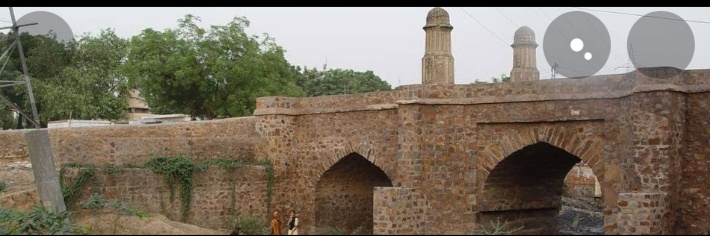
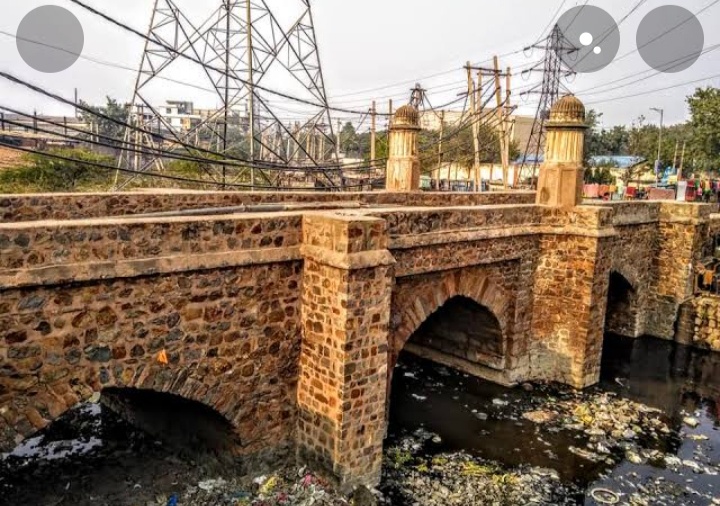
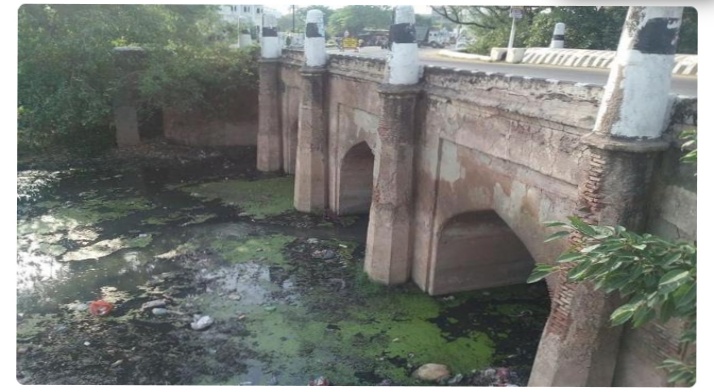
The Mughal Bridge, also known as Badshahi Pul, is a historical bridge built during the reign of Shah Jahan in the 17th century. Mentioned in Jahangir's memoirs (Tuzk-e-Jahangiri), it was constructed to facilitate travelers. The bridge features Mughal architectural elements, with three arches made of stone, and is strengthened by four domed tops with buttresses on either side. Located near National Highway 1, it is still a structurally sound bridge but remains in a dilapidated condition despite being protected by the Haryana Government.
The Mughal Bridge, constructed during the reign of Shah Jahan in the 17th century, is a fine example of Mughal architecture. Known locally as Badshahi Pul or the Old Badshahi Bridge, it was built between 1540 and 1544 AD to aid in the passage of travelers along an important route. The bridge has three stone arches, and its architectural integrity is reinforced by four domed structures and buttresses on either side. The bridge stands as a testament to the engineering and architectural brilliance of the Mughal Empire. Despite its historical significance, the bridge is in a deteriorated condition, though it is protected by the Haryana Government. Located near National Highway 1, it is a reminder of the connectivity and infrastructure development during the Mughal period.
Year of Built: 17th century
Address: 5CC8+GF5, Jamaitgarh Alias Kh, Punjab 144630, India
Country: India
State: Haryana
District: Karnal
Pincode: 144630
Longitude: 76.9862
Latitude: 29.6854