
Indo Islamic Heritage


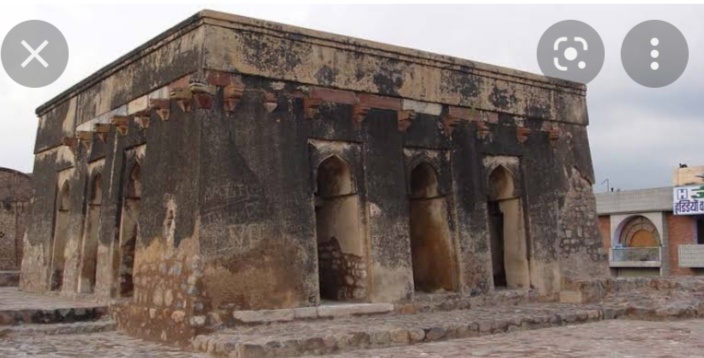
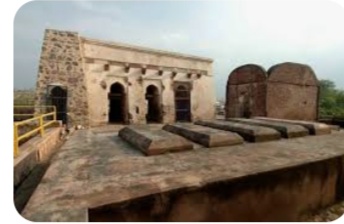
Gurjari Mahal, located in Hisar, Haryana, is a historic palace built by Sultan Firoz Shah Tughlaq in the 14th century for his beloved, Gurjari. This architectural marvel exemplifies Tughlaq-era design, featuring massive tapering walls, lime plaster finishes, and a distinctive baradari (pavilion) with twelve arches. The palace complex includes underground chambers and remnants of an Islamic garden, reflecting the grandeur of its time. Although only portions of the original structure remain, Gurjari Mahal stands as a testament to the rich cultural heritage and history of the region.
Gurjari Mahal is a significant monument situated in Hisar, Haryana, India. Constructed between 1351 and 1388 AD by Sultan Firoz Shah Tughlaq, the palace was dedicated to his beloved, Gurjari, a local resident from a pastoral community. The legend narrates that during one of his hunting expeditions, Firoz Shah encountered Gurjari, who captivated him with her beauty and grace. When she declined to accompany him to Delhi, the Sultan chose to establish his royal seat in Hisar and built this magnificent palace in her honor. Architecturally, Gurjari Mahal is a fine example of Tughlaq-era design, characterized by its robust construction and functional aesthetics. The palace is built on a rectangular platform, accessible via a ramp leading to the upper level. The most prominent feature is the baradari, a square pavilion with twelve arches?three on each side?used historically for social gatherings. The baradari stands on a high plinth and is supported by four pillars, with each bay crowned by a hemispherical dome adorned with paneling work in lime plaster. The exterior walls above the arches are embellished with intricately carved red sandstone brackets, showcasing the artisanship of the period. Beneath the platform lie three underground chambers, one of which is believed to have served as a hammam (bathhouse), indicating the emphasis on luxury and comfort in royal quarters. The palace was originally surrounded by gardens to the north, which have since been replaced by modern developments. Between Gurjari Mahal and the main fort complex, there once existed an Islamic garden, now the site of Jindal Park, notable for flying a 207-foot high Indian flag. In addition to its architectural splendor, the site holds historical significance due to the presence of nine graves on the upper level. These include five sarcophagi on an elevated open-air platform, two on a nearby lower platform, and two brick shrines within a roofless brick structure. Dating back to the 17th or 18th century during the Mughal era, these graves add a layer of historical intrigue to the monument. Constructed primarily using rubble and mortar, Gurjari Mahal reflects the construction techniques of its time. Despite the ravages of time, portions of the palace remain intact and have been declared a Centrally Protected Monument by the Archaeological Survey of India. However, the palace is currently closed to the public, and efforts toward its preservation continue. Gurjari Mahal stands as a testament to the rich cultural heritage of Hisar and offers insight into the architectural and historical landscape of the Tughlaq dynasty. Its enduring structures narrate tales of royal romance, architectural innovation, and the historical evolution of the region. As such, it remains a significant monument for historians, architects, and cultural enthusiasts alike.
Year of Built: 1351-1388 AD
Address: Gurjari Mahal, Tayal Bagh Colony, Hisar, Haryana 125011, India
Country: India
State: Haryana
District: Hisar
Pincode: 125001
Longitude: 75.7217
Latitude: 29.1497