
Indo Islamic Heritage


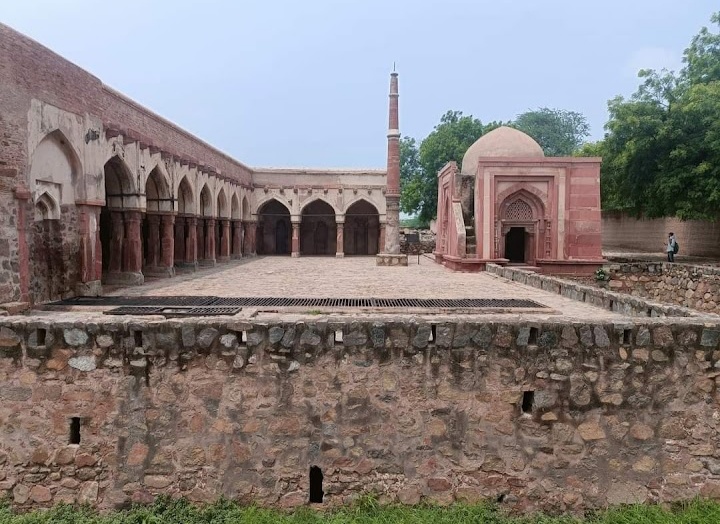
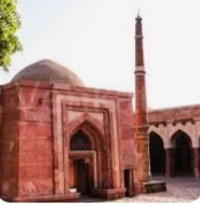
Lat Ki Masjid, constructed between 1351 and 1358 by Firoz Shah Tughlaq, is a notable example of Tughlaq architecture located in Hisar, Haryana, India. The mosque features a unique combination of structures, including an L-shaped ablution tank and a 'Lat' (pillar), which is a segment of an Ashokan pillar bearing inscriptions in Mauryan Brahmi script. The prayer hall comprises nine bays with arches supported by pillars adorned with floral and geometrical designs, possibly repurposed from earlier Hindu temples. The mosque's historical significance and architectural uniqueness make it a prominent heritage site in the region.
Lat Ki Masjid, situated in Hisar, Haryana, stands as a testament to the architectural ingenuity of the Tughlaq dynasty during the 14th century. Commissioned by Sultan Firoz Shah Tughlaq between 1351 and 1358, the mosque exemplifies the fusion of Islamic architectural principles with indigenous design elements. The mosque derives its name from the 'Lat' (pillar) positioned in its northeastern courtyard. This pillar is a fragment of an Ashokan edict, dating back to 250?232 BCE, featuring inscriptions in Mauryan Brahmi script. The presence of this pillar underscores the historical continuity and the practice of integrating earlier cultural symbols into Islamic architecture. Architecturally, the mosque is constructed using a combination of red and buff sandstone, along with rubble masonry coated with thick plaster. The main prayer hall consists of nine bays, each defined by arches supported on pillars. These pillars are intricately carved with floral and geometrical motifs, suggesting they may have been repurposed from pre-existing Hindu temples, reflecting a common practice of material reuse during that era. The western wall of the prayer hall houses a meticulously carved qibla, indicating the direction of Mecca, and a pulpit (minbar) from which sermons were delivered. Above each entrance, stone jali screens allow natural light to filter into the interior, creating a serene ambiance conducive to prayer and reflection. Adjacent to the mosque is an L-shaped ablution tank, essential for the ritual purification performed by worshippers before prayers. The mosque's flat roof, originally featuring stone brackets, has undergone modifications, including the addition of a lime-plastered dome, indicative of architectural adaptations over time. The integration of the Ashokan pillar within the mosque complex is particularly noteworthy. Historical records suggest that the pillar was transported from its original location, possibly the Agroha Mound, and reassembled at the mosque site. This act of incorporating ancient relics into new religious structures was symbolic, representing the continuity and amalgamation of diverse cultural and religious traditions. Lat Ki Masjid is not only a place of worship but also a monument encapsulating the historical and cultural syncretism of medieval India. Its architectural features offer insights into the construction techniques and aesthetic sensibilities of the Tughlaq period. The mosque's preservation allows contemporary visitors to appreciate the rich tapestry of India's Islamic heritage and the historical narratives embedded within its walls.
Year of Built: 1351?1358
Address: 5P8C+F65, Opposite the bus stand, Shastri Nagar, Hisar, Haryana 125001, India
Country: India
State: Haryana
District: Hisar
Pincode: 125001
Longitude: 75.7217
Latitude: 29.1497