
Indo Islamic Heritage


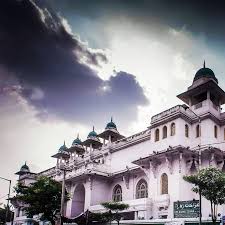
Azakhana e Zehra, also known as a house of mourning or Ashurkhana, was built during the reign of Nizam VII, Osman Ali Khan, and dedicated to his mother, Amtul Zehra Begum. The grand monument was designed by architect Zain Yar Jung. The hall, with a seating capacity of 25,000, features a 45-feet high teak rafter ceiling without supporting pillars. It includes unique elements of Osmanian architecture, such as onion-shaped domes, pointed arches, and large rectangular kiosks with domed chhatris. The building offers a dedicated space for women mourners to observe the Muharram rites.
Azakhana e Zehra, an Ashurkhana (house of mourning), was constructed during the reign of Nizam VII, Osman Ali Khan, as a tribute to his mother, Amtul Zehra Begum. This grand architectural marvel stands as a testament to the Nizam?s reverence for his mother and his commitment to preserving the Shia tradition. The monument was designed by the renowned architect Zain Yar Jung (Zainuddin Husain Khan) and constructed to provide a space for mourning during the Muharram period, a time when Shia Muslims commemorate the martyrdom of Imam Hussain, the grandson of Prophet Muhammad. The architecture of Azakhana e Zehra reflects the opulence and distinctive style of early 20th-century Hyderabad. Upon entering, visitors encounter a small portico that leads into the expansive main hall. The hall is notable for its open plan, with no supporting pillars despite the enormous height of the teak rafter ceiling, which reaches an impressive 45 feet. This feat of construction highlights the skill and ingenuity involved in the design of the building. The total space of the Azakhana is estimated to be around 4,500 square yards, offering ample room for the seating of 25,000 people. The building?s interior is adorned in light green and yellow tones, which create a serene and somber atmosphere conducive to mourning and reflection. The upper stories are equipped with jalis (lattice screens) that allow women mourners to observe the proceedings of the Muharram majlis (gatherings) without being seen, respecting the social customs and traditions of the time. The architecture of the Azakhana is classified under the Osmanian style, which became synonymous with early 20th-century Hyderabad. The distinctive elements of this style include the excessive use of onion-shaped domes, pointed arches, and large rectangular kiosks with domed chhatris (cupolas) adorning the corners of the parapet. These features not only add to the beauty of the structure but also symbolize the influence of Mughal and Persian architectural traditions on the region. Azakhana e Zehra continues to be an important site for Shia Muslims in Hyderabad, particularly during Muharram, when thousands gather for mourning rituals. The building stands not only as a place of reflection and reverence but also as an architectural legacy of the Nizam?s era, showcasing the grandeur and cultural richness of the time.
Year of Built: Early 20th century (Reign of Nizam VII Osman Ali Khan)
Address: Darul Shifa Rd, Darulshifa, Hyderabad, Telangana 500024, India
Country: India
State: Telangana
District: Hyderabad
Pincode: 500024
Longitude: 78.4725
Latitude: 17.3672