
Indo Islamic Heritage


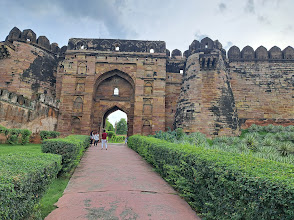
Shahi Qila is a historic fort located in the Rizvi Khan area of Jaunpur, representing one of the city’s most important architectural and political landmarks associated with the medieval Sharqi Sultanate.
Shahi Qila, situated in the historic city of Jaunpur, is one of the most significant surviving monuments of the region’s medieval history and architectural heritage. Strategically located near the banks of the Gomti River, the fort reflects the political and military importance of Jaunpur during the period of the Delhi Sultanate and later under the Sharqi dynasty, when the city emerged as a major centre of Islamic culture, governance, scholarship, and architecture in North India. The foundation of the fort is traditionally attributed to Firoz Shah Tughlaq in the fourteenth century, after whom Jaunpur developed into an important provincial centre. During the fifteenth century, under the rule of the Sharqi Sultans, the fort gained additional prominence as Jaunpur became the capital of the independent Sharqi Sultanate. From this stronghold, the Sharqi rulers governed a powerful kingdom that rivalled the influence of Delhi in political and cultural significance. Historically, Shahi Qila functioned as a royal residence, administrative centre, military stronghold, and symbol of state authority. The fort complex likely contained palaces, audience halls, residential quarters, mosques, gateways, and defensive structures designed to support both governance and security. Its elevated position near the river enhanced its strategic value and reinforced its visual dominance within the urban landscape of medieval Jaunpur. Architecturally, the fort reflects a combination of Tughlaq and Sharqi design traditions characterized by massive gateways, fortified walls, strong geometric composition, and the use of locally available building materials. One of the most striking surviving features of the fort is its monumental entrance gateway, which demonstrates the imposing architectural style associated with medieval Indo-Islamic military structures. Despite the effects of time and partial ruin, many portions of the fort continue to display the grandeur and engineering sophistication of the period. The fort also holds immense cultural and historical value because of its association with the flourishing intellectual and artistic environment of Sharqi Jaunpur. During this era, the city earned recognition as the “Shiraz of India” due to its achievements in Islamic scholarship, Persian learning, music, architecture, and religious culture. Shahi Qila formed an important part of this broader urban and political landscape. Today, the monument stands as one of Jaunpur’s principal heritage sites and attracts historians, archaeologists, students, tourists, and visitors interested in medieval Indian history and architecture. The fort remains a powerful symbol of Jaunpur’s historical importance and continues to represent the city’s rich legacy of political authority, cultural refinement, and architectural achievement.
Year of Built: Not Available
Address: Rizvi khan, Rizwikhan, Jaunpur, Uttar Pradesh 222001
Country: India
State: Uttar Pradesh
District: Jaunpur
Pincode: 222001
Longitude: 82.6831° E
Latitude: 25.7486° N