
Indo Islamic Heritage


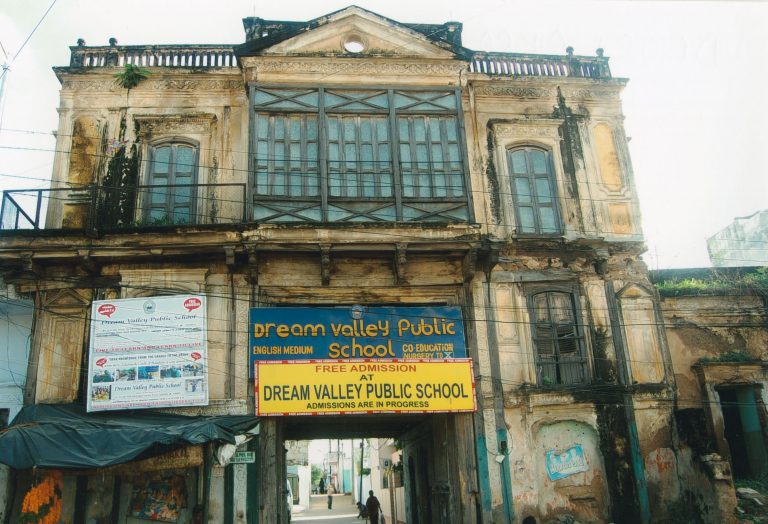
The Deori of Nawab Akram Ali is a remarkable Indo-European gateway built in the early 20th century, located on Karwan e Saruwan Road. It is a remnant of the grand Deori of Nawab Akram Ali Khan, an Asaf Jahi noble, showcasing a fusion of architectural styles. The structure features a two-storied design with Roman pediments and floral stucco patterns, along with stone corbels and a wooden paneled balcony replacing the traditional Naqarkhana. This gateway stands as a testament to Hyderabad's rich architectural history and the decline of the once-prosperous diamond trade.
The Deori of Nawab Akram Ali stands as an architectural relic of the once-thriving Asaf Jahi nobility and the grandeur of Hyderabad?s historical past. Located on the Karwan e Saruwan Road, this impressive Indo-European style gate was built in the early 20th century. It forms a small but significant part of the larger Deori complex associated with Nawab Akram Ali Khan, an influential noble in the post-Qutb Shahi period. Following the decline of the Qutb Shahi dynasty, the diamond trade in Hyderabad gradually diminished, and the merchants who once flourished in the region disappeared. As a result, the grandeur of the Deori complex fell into obscurity, leaving only the majestic gate as a reminder of its former glory. The structure itself is a two-storied building, with notable architectural features that include a wooden-paneled balcony, which replaced the traditional Naqarkhana (a chamber for announcing news or events). The top of the gateway is crowned by a Roman-style pediment, a nod to the fusion of European elements into local architectural traditions. Floral and vegetal motifs in stucco embellish the entablature, contributing to the intricate design of the monument. Another distinctive feature of the Deori is the presence of stone corbels, which are similar to those found in the Golconda Tombs. These corbels support the chajjas (overhangs) on the first story, further enhancing the structure?s visual appeal. The combination of European and traditional local designs represents the architectural blending that characterized the era of Hyderabad?s elite. Unfortunately, much of the original Deori has been lost to time, with only the gate standing as a remnant of what was once a grand structure. The site is historically significant, not just as an architectural marvel, but also as a symbol of Hyderabad?s rich cultural heritage and the changes that swept the region in the early 20th century.
Year of Built: 1900s
Address: Deodhi Mohd Karam Ali Khan, Subji Mandi, Tuljaram Nagar, Hyderabad, Telangana 500006, India
Country: India
State: Telangana
District: Hyderabad
Pincode: 500006
Longitude: 78.4899
Latitude: 17.3872