
Indo Islamic Heritage


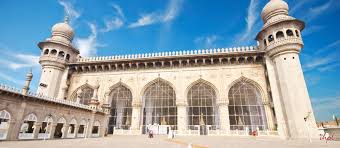
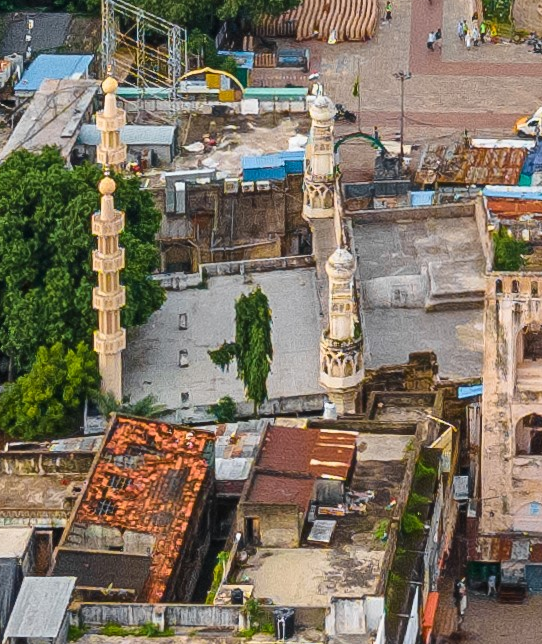
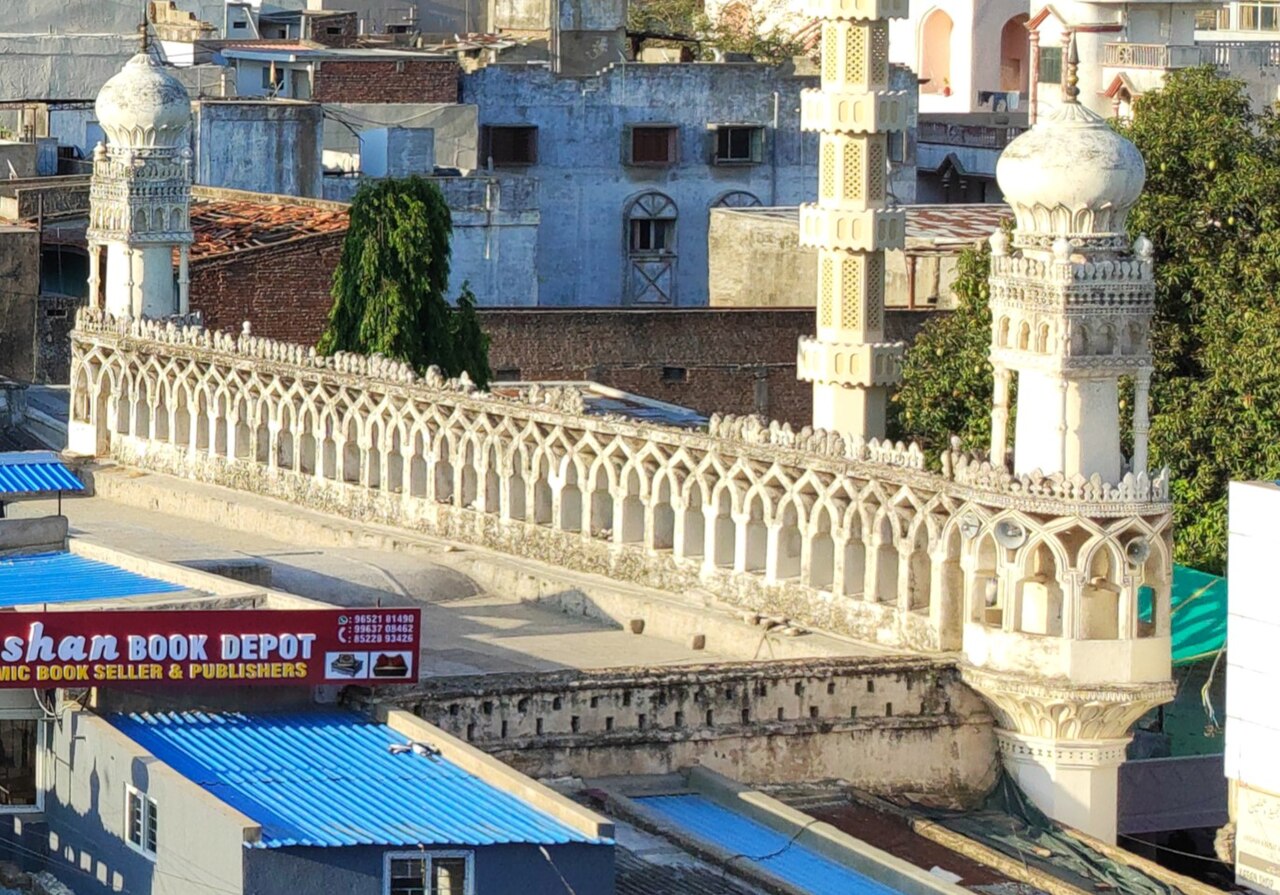
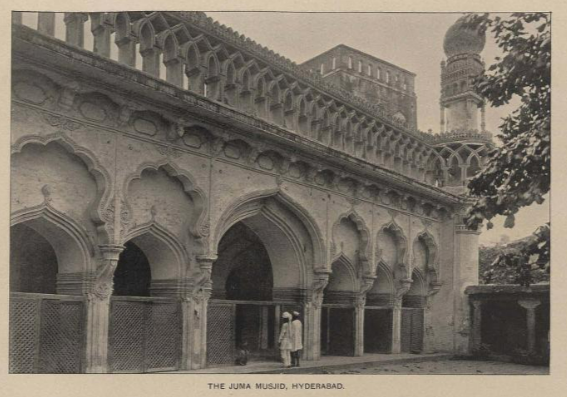
The Jama Masjid was initially the main congregational mosque of Hyderabad, constructed at a cost of 200,000 rupees. As Hyderabad's population grew, the Mecca Masjid was built, yet the Jama Masjid remained a principal site for worship. The mosque also housed a school and a monastery.
The Jama Masjid in Hyderabad, Telangana, is a historically significant mosque situated northeast of the Charminar, accessed through a narrow lane. Built in 1597?98 CE, around the time Hyderabad was founded by Muhammad Quli Qutb Shah, the mosque holds the distinction of being one of the earliest mosques in the city and a vital example of early Qutb Shahi architecture with Mughal influences. Architectural Design The mosque is located within a rectangular courtyard measuring approximately 74 x 70 feet (22.5 x 21.3 m). The courtyard contains a cistern at the northeastern end and the ruins of a hammam. A narrow colonnade with nine openings runs along the northern side. The mosque's entrance is through a pillar-and-lintel portal featuring a superimposed cusped arch, which leads to a narrow lane approaching the mosque from the west?an unusual design feature. The facade of the mosque features seven arches. Each arch has two sections: The lower section forms the arched entrances. The upper section, about three feet above the lower, rests on struts projecting from the piers. The central arch, taller and wider, extends nearly to the facade's top and features a pointed upper arch. The remaining six arches are cusped, similar to the entrance portal. A stone chajja (awning) supported by brackets runs above the arches, topped by an ornamental parapet. The minarets, located at the front corners of the mosque, are square and capped with galleried circular tops, each crowned with a small tomb-like structure. The relatively short height of the minarets might have been intentional to emphasize the grandeur of the nearby Char Kaman and Charminar. Interior Layout The interior comprises a double hall, measuring 72 feet 6 inches (22.10 m) in length and 32 feet 6 inches (9.91 m) in breadth. Its flat roof is supported by a row of arches resting on pillars. The mosque accommodates approximately 750 worshippers. Inscriptions The mosque is renowned for its calligraphy: A Persian inscription in Nastaliq script is carved onto a black basalt tablet above the main entrance. It contains verses praising Allah and mentions the mosque's construction under Amin-ul-Mulk, with a chronogram dating it to 1006 Hijri (1597?98 CE). Esteemed scholars like H.K. Sherwani and Ghulam Yazdani regard this inscription as a masterpiece of Nastaliq script in the Deccan, comparable to the finest examples globally. A second inscription, in the Thuluth script, is found along the mihrab and its surrounding walls. It includes verses 137 and 138 of the second chapter of the Quran, along with the artist's name and the year of inscription. Restorations In the 19th century, under the rule of Asaf Jah III, the mosque underwent significant restoration. Scholars speculate that the cusped arches on the facade may have been added during this period. Despite these changes, the mosque retains its historic essence as a testament to Hyderabad's early architectural heritage. Today, surrounded by bustling shops and encroachments, the Jama Masjid remains a remarkable symbol of the city's Islamic and architectural legacy.
Year of Built: 16th Century
Address: 43, 22-5, Charminar Rd, Char Kaman, Pathar Gatti, Hyderabad, Telangana
Country: India
State: Telangana
District: Hyderabad
Pincode: 500002
Longitude: 78?28′29
Latitude: 17?21′42