
Indo Islamic Heritage


The Nearest Bus Stand is the Nagore Town Bus Stop/Grand Bazaar Junction, situated at 0.35 km, the Nearest Railway Station is the Nagore Railway Station (NCR), situated at 0.95 km, the Nearest Major Rail Hub is the Nagapattinam Junction Railway Station (NGT), situated at 5.4 km. The Nearest International Airport is Tiruchirappalli International Airport (TRZ), located 143.0 km from the mosque.
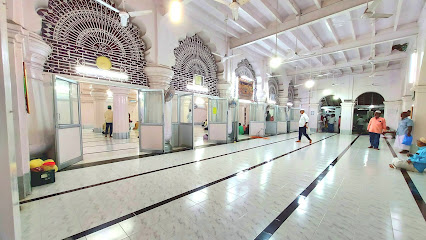
The Nawab Jamia Masjid stands as an ancient spiritual pillar, a premier house of Friday congregational worship, and a monumental testament to the royal Islamic legacy of South India. Located at door number 85/27A in the revered historic port town of Nagore, this majestic heritage complex holds a deeply prestigious position within the Nagapattinam district of Tamil Nadu. Positioned along the culturally rich Coromandel Coast, this mosque serves as a principal theological anchor for local merchant families, maritime traders, and thousands of spiritual pilgrims traversing the region. Historical and Religious Significance The grand mosque complex holds immense architectural, cultural, and theological prestige, acting as an active multi-generational chronicle of royal patronage and coastal social welfare. A Legacy of Royal Patronage: The mosque carries a deep historical connection to the Nawabs of the Carnatic (the Wallajah dynasty), who were legendary patrons of Islamic architecture, education, and Sufi institutions across the Madras Presidency. Built to provide a grand, enduring space for scriptural excellence near the sacred precinct of the Nagore Sheriff, the institution has historically functioned as an elite centre for spiritual instruction and community leadership. Establishment: Deeply woven into the early 19th-century landscape of the Carnatic and Tanjore maritime era, the permanent grand structural masonry complex of the mosque was formally established in 1818. Constructed using traditional lime mortar, thick native stone walls, and heavy timber to withstand the humid tropical coastal weather, the campus has been systematically preserved and modernised internally by its trustees to safely handle large contemporary assemblies. Sunni Tradition: Operating under the Ahlus Sunnat Wal Jama'at (Sunni) tradition, which aligns with the deep-rooted theological tapestry of coastal Tamil Nadu, the mosque maintains a disciplined, strictly punctual schedule for the five obligatory daily prayers (Salah). The Friday Congregational Assembly: As a premier Khutba Palli (Jamia Masjid), its weekly Friday Jumu'ah assemblies draw massive crowds of local traders, maritime workers, and visiting seekers who visit the town for spiritual rejuvenation. The sermons are delivered in clear, classical Tamil, focusing deeply on personal moral rectitude, commercial honesty, social justice, and the practical application of faith within family and civic life. Educational and Social Hub: The mosque administration effectively coordinates a well-structured evening Madrasa, ensuring that local youth receive a solid foundation in Quranic recitation, classical Arabic phonetics, and prophetic history. Concurrently, the managing trust functions as a central coordination point for localised philanthropic campaigns, managing extensive charity networks to distribute food security relief and seasonal economic aid to underprivileged coastal families. Ramadan and Coastal Hospitality: During the holy month of Ramadan, the entire complex transforms into a vibrant hub of localised devotion. It hosts extensive nightly Taraweeh prayers and manages large-scale, traditional Iftar (fast-breaking) arrangements, widely celebrated for serving rich communal Nombu Kanji to commuters, residents, and travelling seekers alike. Location and Accessibility: The grand heritage mosque is strategically positioned within the core municipal and historical grid of Nagore, keeping the main prayer halls beautifully insulated from heavy marketplace noise while remaining completely accessible to local transit lines. Traveller's Note: The Nawab Jamia Masjid features an awe-inspiring, traditional Indo-Islamic coastal architectural design characterised by high ceilings, thick masonry arches, a spacious main prayer hall engineered for natural cross-ventilation, and tidy, organised facilities for ritual purification (Wudu). Renowned across the district for its profoundly quiet, orderly, and deeply meditative environment, it provides an unparalleled journey into the living history of early Islam along the coast. Visitors are cordially welcomed for all five daily prayers, and traditional modest attire is expected when stepping inside the sacred premises.
Year of Built: 1818
Address: Nagore
Country: India
State: Tamil Nadu
District: Nagapattinam
Pincode: 611002
Longitude: 79.84217726082345
Latitude: 10.818798712332454