
Indo Islamic Heritage


The Nearest Bus Stand is the Dahegaon (Rangari) Local Junction Stop, situated at 0.2 km, the Nearest Central Terminus is the Khapa MSRTC Bus Station, situated at 7.5 km, the Nearest Railway Station is the Patansaongi Railway Station (PTS), situated at 14.0 km, the Nearest Major Rail Hub is the Nagpur Junction Railway Station (NGP), situated at 32.5 km, and the Nearest International Airport is the Dr. Babasaheb Ambedkar International Airport, Nagpur (NAG), situated at 41.0 km from the mosque.
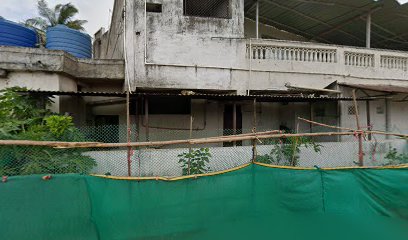
The Jama Masjid Dahegaon stands as a historically unique architectural house of prayer, a paramount house of collective Friday worship, and an indispensable community anchor within the rural-urban fringe of Dahegaon (Rangari) in Maharashtra. Situated along the developing industrial and agrarian corridors of the northern Nagpur-Wardha transit belt (often listed transitively under broader regional connectivity maps), this prominent mosque complex serves as a vital socio-religious nucleus. It effectively coordinates the daily spiritual discipline, scriptural integrity, and localised community fellowship for multi-generational farming families, local market traders, and peripheral resident groups across the territory. Historical and Religious Significance The mosque complex holds an essential structural, cultural, and theological position within the locality, beautifully capturing the timeless symbiosis between agrarian lifestyle expansion and collective Islamic devotion. The Spiritual Anchor of Dahegaon: As a designated Jama Masjid (Grand Congregational Mosque), the sanctuary holds immense religious authority across the zone. Unlike smaller neighbourhood prayer halls designed solely for daily localised prayers, this institution functions as the central focal point where smaller rural congregations converge for the weekly Friday Jumu'ah assemblies and massive bi-annual festive prayers (Eid al-Fitr and Eid al-Adha). Anchored in Regional Trade Expansion: The history of the mosque is intimately bound to the mid-to-late 20th-century socio-economic shift of the Dahegaon (Rangari) sector, renowned for its traditional cotton, textile dyeing roots (Rangari), and agricultural trading marketplace grids. Conceived by community elders to provide a centralised house of unified worship so that local farmers, market hands, and traders would not have to travel long distances to urban centres, the sanctuary has evolved over decades into a primary spiritual refuge. Establishment: Meeting the steady post-independence residential density and rapid agricultural market growth of the perimeter, the permanent masonry structure of the mosque was formally established in 1976. Built completely through community-focused local funding, voluntary neighbourhood labour, and philanthropic contributions from regional trading guilds, the property features a naturally well-ventilated layout designed to handle large assemblies safely. Sunni Tradition: Operating under the general guidance of the local Ahlus Sunnat Wal Jama'at (Sunni) tradition, matching the deep-rooted theological tapestry of central-eastern Maharashtra, the mosque acts as a primary spiritual authority for the local Jamath. It maintains a highly disciplined and strictly punctual schedule for the five obligatory daily prayers (Salah). The Friday Khutbah: As the primary neighbourhood and commercial congregational venue for the immediate enclaves, its weekly Friday assemblies draw substantial crowds from the adjacent agricultural fields and market lines. The sermons are delivered in clear, highly articulate Urdu, focusing closely on absolute monotheism (Tawheed), business integrity in the marketplace, family values, rectitude, and neighbourly civic social responsibilities. Educational & Social Anchor: The mosque administration coordinates a well-structured evening Madrasa, ensuring that local youth receive a solid foundation in Quranic recitation, classical Arabic phonetics, and prophetic history. Concurrently, the managing trust oversees localised philanthropic campaigns and charity networks to distribute food security relief and seasonal economic aid to underprivileged families residing in the district's peripheral sectors. Location and Accessibility: The heritage mosque enjoys a comfortable position within the semi-urban layout of Dahegaon (Rangari), keeping its inner prayer lines beautifully insulated from heavy street noise while remaining fully integrated into local public road routes. Traveller's Note: The Jama Masjid Dahegaon features a clean, highly functional traditional architectural layout highlighted by a naturally well-ventilated main prayer hall, simple, elegant minarets, a striking central dome, and tidy, organised facilities for ritual purification (Wudu). Renowned across the local block for its quiet, orderly, and deeply meditative environment outside of congregational hours, it provides an exceptionally peaceful retreat for travellers and commuters looking for a space to reflect away from busy regional highways. Visitors are cordially welcome for all five daily prayers, and traditional modest attire is expected when stepping inside the sacred premises.
Year of Built: 1976
Address: Dahegaon (Rangari)
Country: India
State: Maharashtra
District: Bhind
Pincode: 441113
Longitude: 79.07692794548088
Latitude: 21.296388337522732