
Indo Islamic Heritage


The Nearest Bus Stand is the Main Bazaar Chowk/Desaiganj Local Stop, situated at 0.25 km; the Nearest Railway Station is the Wadsa Railway Station (WSA) (Branch Line/Local Hub), situated at 0.8 km; the Nearest Central Terminus is the Desaiganj MSRTC Central Bus Stand, situated at 1.1 km; the Nearest Major Rail Junction is the Gondia Junction Railway Station (G) (Main Line), situated at 103.0 km. The Nearest Airport is the Dr. Babasaheb Ambedkar International Airport, Nagpur (NAG), situated at 138.0 km from the mosque.
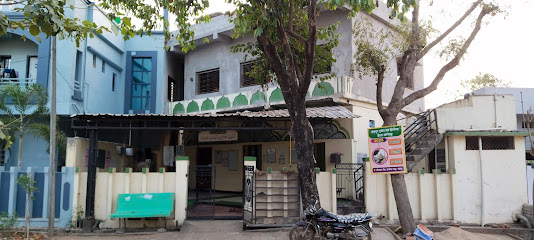
The Madrasa Muhammadia stands as a highly respected municipal educational sanctuary, an active house of prayer, and an indispensable community anchor within the north-central limits of Desaiganj (also prominently designated as Wadsa). Situated within a vibrant residential and commercial trading enclave, this prominent institution functions as an essential socio-religious nucleus. It effectively coordinates daily spiritual discipline, classical scriptural literacy, and localised fellowship for multi-generational trading families, marketplace professionals, and neighbourhood resident groups across Maharashtra's northeastern Vidarbha frontier. Historical and Religious Significance The complex holds an important structural, moral, and theological position within the locality, beautifully capturing the unique development of Desaiganj as the major logistical and trade gateway for the forested Gadchiroli district. Honouring the Prophetic Legacy: Named in profound reverence after the Holy Prophet Muhammad ﷺ, the moniker Muhammadia reflects the institution's primary theological focus. The centre functions as a localised beacon dedicated to promoting spiritual purism, character refinement, absolute monotheism (Tawheed), and strict adherence to the prophetic traditions (Sunnah). Anchored in the Trade Fabric of Desaiganj: Unlike the heavily forested administrative sections of the southern district, the history of this sanctuary is intimately bound to the commercial expansion of Desaiganj, which emerged as a booming railhead and trading centre for timber, agricultural goods, and minerals. Conceived by community elders and local merchants to provide a permanent house of structured moral guidance and worship right beside the central marketplace blocks, the institution has served for decades as a critical refuge where shopkeepers, market hands, and resident families step aside from commercial transactions to study and complete their daily prayers. Establishment: Meeting the steady population growth and rapid commercial development of the town's northern transit grid, the permanent modern masonry structure of the complex was formally established in 1993 (and registered with the State Wakf framework under institutional records such as MSBW/GDC/8/2007). Built completely through community-focused local funding, voluntary neighbourhood labour, and philanthropic contributions from regional mercantile guilds, the property features a naturally well-ventilated, multi-level layout designed to handle regular educational assemblies safely. Sunni Tradition and Liturgy: Operating under the general guidance of the local Ahlus Sunnat Wal Jama'at (Sunni) tradition, matching the deep-rooted theological tapestry of central-eastern Maharashtra, the centre acts as a primary spiritual authority for the local Jamath. It maintains a highly disciplined and strictly punctual schedule for the five obligatory daily prayers (Salah) alongside its primary academic calendar. Educational & Social Anchor: As a dedicated Madrasa, the institution coordinates a well-structured morning and evening curriculum, ensuring that local youth and advanced students receive a solid foundation in Quranic recitation, classical Arabic phonetics (Tajweed), Islamic jurisprudence (Fiqh), and prophetic history. Concurrently, the managing trust handles localised philanthropic campaigns, managing charity networks to distribute food security relief, warm clothing, and emergency seasonal aid to underprivileged families residing within the peripheral sectors of the district. Ramadan Observances: During the holy month of Ramadan, the complex operates with spectacular discipline and spiritual vigour. It hosts extensive nightly Taraweeh prayers—where memorisers recite the holy texts with great precision—and coordinates organised, neighbourhood-wide Iftar (fast-breaking) arrangements designed specifically to comfort local marketplace labourers, travelling transit commuters, and resident families completing their evening journeys. Location and Accessibility: The heritage centre enjoys a highly accessible, centralised position within the urban grid of Desaiganj town, keeping its inner classrooms and prayer halls beautifully insulated from heavy marketplace noise while remaining fully integrated into local public transit routes. Traveller's Note: The Madrasa Muhammadia Desaiganj features a clean, highly functional traditional architectural layout highlighted by a naturally well-ventilated main learning and prayer hall, simple, elegant minarets, a striking central dome, and tidy, organised facilities for ritual purification (Wudu). Renowned across the commercial sector for its quiet, orderly, and deeply meditative environment outside of congregational hours, it provides an exceptionally peaceful retreat for travellers, shoppers, and students looking for a space to reflect away from busy regional transit loops. Visitors are cordially welcome for all five daily prayers, and traditional modest attire is expected when stepping inside the sacred premises.
Year of Built: 1993
Address: Desaiganj
Country: India
State: Maharashtra
District: Gadchiroli
Pincode: 441207
Longitude: 79.95992757246705
Latitude: 20.617292146264926