
Indo Islamic Heritage


.jpeg)
The location is approximately 850 meters southwest of Chirag Delhi bus stand, accessible via Chirag Delhi Bazar Wali Gali. It is also about 500 meters southwest of Chirag Delhi metro station, situated at the center of the southern side of Chirag Delhi village. The nearest airport is Indira Gandhi International Airport (IGI), while Nizamuddin Railway Station is the closest train station.
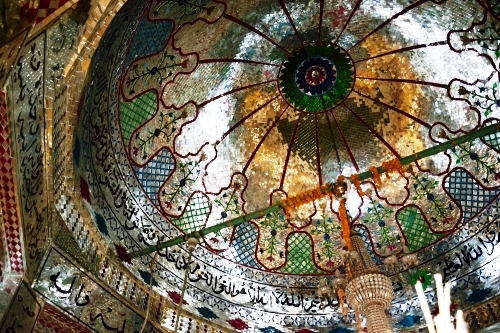
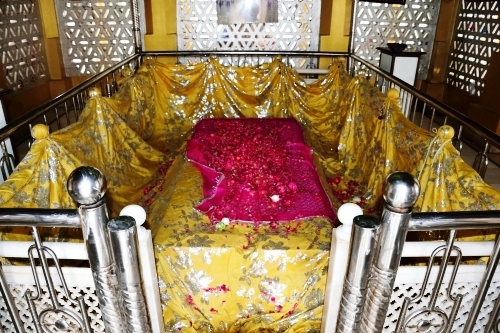
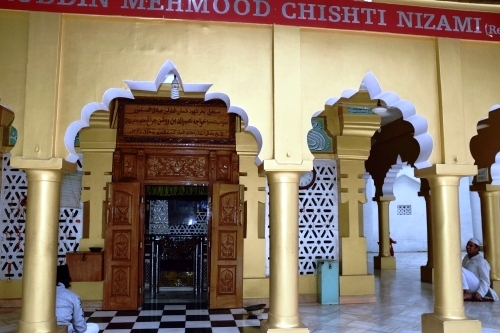
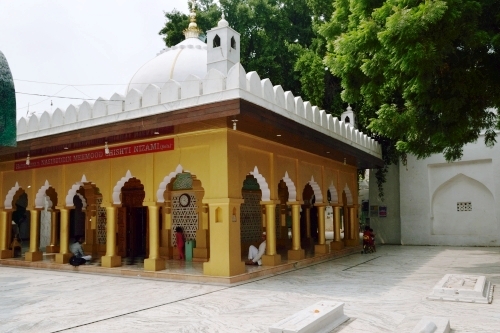
Hazrat Nisiruddin Mahmood Chirag-e-Delhi (1274-1356 A.D.) Hazrat Nisiruddin Mahmood Chirag-e-Delhi was a revered 14th-century mystic-poet and Sufi saint of the Chishti Order. He was a devoted disciple (murid) of the famous Sufi saint Hazrat Nizamuddin Auliya and later became his successor (Khalifa). He was the last significant Sufi saint of the Chishti Order in Delhi and was honored with the title Roshan Chirag-e-Delhi, meaning "Illuminated Lamp of Delhi." His teachings and spiritual guidance left a lasting impact on his followers. He passed away in 1356 A.D. at the age of 82 and was laid to rest in what is now known as Chirag-e-Delhi, named in his honor. Even today, his dargah (shrine) remains an important spiritual and cultural site, attracting thousands of devotees and visitors who come to seek blessings and pay homage. Local / Traditional Description Associated with the Site The dargah follows a deeply rooted tradition of daily rituals and events, collectively known as Khidmat, which refers to the routine service performed within the main tomb. Weekly and monthly ceremonies hold special significance, with the most prominent gathering taking place on Thursday nights, transitioning into Friday. This special event, known as Mahfil (meaning "gathering"), is conducted near the tomb, where devotees engage in prayers, qawwali (devotional music), and spiritual discourse. The dargah continues to serve as a center of faith and Sufi tradition, preserving centuries-old customs and fostering a sense of communal harmony. Architectural Style The tomb of Hazrat Nisiruddin Mahmood Chirag-e-Delhi is an example of the Tughlaq architectural style. This style, which flourished during the rule of the Tughlaq dynasty in medieval India, is characterized by robust construction, minimal ornamentation, and a preference for practical yet imposing structures. The tomb reflects the simplicity and strength that define Tughlaq architecture while incorporating elements of Sufi aesthetics. Description of the Building / Structure The tomb is a significant domed structure with a square base. The central chamber is enclosed within a jail (perforated screen) and is supported by twelve intricately designed pillars. The dome, which is plastered and rises from an octagonal drum, dominates the skyline. The structure features small domed turrets at each of the four corners, adding to its visual appeal. Over the centuries, various changes and restorations have altered the original structure, including modifications to the chajja (eaves), columns, flooring, roofing, and jail screens. A kangura (battlement) pattern runs along the parapet, enhancing the fort-like appearance of the tomb. The entire structure is painted in shades of white and a subtle gold, creating a serene and spiritual ambiance. The courtyard, which serves as a gathering space for visitors, is laid with white marble, adding to the elegance and tranquility of the shrine. Structure Material and Other Components The tomb is primarily constructed using rubble masonry, a technique common in Tughlaq-era architecture, ensuring durability and strength. Over time, later additions and modifications incorporated brick masonry. The flooring has been redone using terrazzo, a composite material known for its polished finish. The outer balustrade is crafted from metal, whereas the inner balustrade, which encloses the main tomb, is made of marble, reflecting the reverence associated with the saint's final resting place. These structural elements, combined with the historical and spiritual significance of the site, make the dargah of Hazrat Nisiruddin Mahmood Chirag-e-Delhi a remarkable example of Delhi?s medieval heritage.
Year of Built: 14th - 15th Century
Address: Dargah Complex, Chirag Delhi
Country: India
State: Delhi
District: South Delhi
Pincode: 110016
Longitude: 77 13 37
Latitude: 28 32 19