
Indo Islamic Heritage


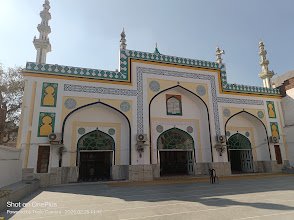
Shahi Jama Masjid, also listed as Jama Masjid and Shahi Jama Masjid Jahagiri, is a historic congregational mosque located at 783, Gurudwara Road, Main Bazar, Sayad Wara, Old Faridabad, Faridabad, Haryana – 121002. Public listings identify the mosque at this exact address, and it is one of the prominent historic religious landmarks of Old Faridabad. The mosque is traditionally associated with the Mughal period and the foundation of Faridabad, with local historical accounts dating its construction to 1605 CE, during the reign of Mughal Emperor Jahangir.
Shahi Jama Masjid is situated in the historic Old Faridabad area, at 783, Gurudwara Road, Main Bazar, Sayad Wara, Faridabad, Haryana 121002. Its location within the old market area places it in the historic urban core of Faridabad, where the mosque continues to function as both a place of worship and a visible reminder of the city’s Mughal-era past. Public directories consistently identify the mosque at this address. The mosque is particularly notable because local historical accounts connect its construction with Sheikh Farid, a Mughal official associated with the establishment of Faridabad in the early 17th century. These accounts state that Sheikh Farid established the settlement in 1605 CE and constructed important facilities, including the Jama Masjid, to support travellers and residents along the important Delhi–Agra route. The mosque’s history is therefore closely connected with the early development of Faridabad. According to the local historical account, the settlement was established in a strategically important location between Delhi and Agra, and facilities such as a mosque, fort, sarai and water reservoir formed part of the infrastructure of the new settlement. An important historical clarification concerns the identity of Sheikh Farid. Local accounts distinguish the Mughal official associated with Faridabad from the much more famous Sufi saint Baba Farid. The two should not be conflated; the Faridabad foundation tradition refers to the Mughal official Sheikh Farid rather than the medieval Chishti saint. The mosque’s architectural character is described in local historical material as reflecting its Mughal-era origins, with a prominent entrance, decorative elements, Quranic inscriptions, parapets and a large central dome. Because the building has continued to function as an active mosque, its present appearance also reflects subsequent maintenance and modifications over time. As a Jama Masjid, its principal religious function is congregational worship. The mosque provides space for the five daily prayers—Fajr, Dhuhr, Asr, Maghrib and Isha—and serves the Muslim community of Old Faridabad. The mosque also serves as a venue for Jumuʿah, the weekly Friday congregational prayer. Friday worship normally includes the Khutbah (sermon) followed by congregational prayer, making the Jama Masjid an important weekly gathering point for the local Muslim community. During Ramadan, the mosque can become particularly active through Taraweeh prayers, Quranic recitation, Iftar arrangements and charitable activities. It may similarly serve the community during Eid al-Fitr and Eid al-Adha, according to local arrangements. Its position in Main Bazar and Sayad Wara is significant because the mosque remains integrated into the everyday life of Old Faridabad. The surrounding market environment gives the mosque a distinctive urban character: a historic religious building situated amid commercial and residential activity. The mosque also has considerable local recognition. Current public listings record a rating of approximately 4.3/5, based on more than 100 reviews, indicating substantial public engagement with the site. The historical significance of the mosque extends beyond religious use. As a structure associated with the early 17th-century development of Faridabad, it forms part of the city’s built heritage and historical memory. The mosque provides a tangible connection between contemporary Old Faridabad and the settlement’s Mughal-period origins. Local historical accounts also mention an old grave within the mosque courtyard, whose identity is not firmly established in the available sources. The same account states that the grave is believed locally to have been added considerably later than the mosque and is visited by people for prayer and remembrance. Because the identity and history of the grave are not independently verified, it is best treated as a local tradition rather than an established historical fact. The mosque’s continued use is also important from a cultural perspective. Unlike a purely archaeological monument, it remains an active place of worship, meaning that its historical significance exists alongside its contemporary religious function. The mosque’s name is variously rendered as Shahi Jama Masjid, Jama Masjid, and Shahi Jama Masjid Jahagiri in public listings. The reference to Jahagiri is consistent with the mosque’s traditional association with the Jahangir-era Mughal period. There is some variation in publicly available historical descriptions, so claims about its exact construction history should be treated with appropriate caution. One historical source independently lists a Jami Masjid in Faridabad as dating to 1605, while a recent local-history account explicitly connects the mosque’s construction with Sheikh Farid and the founding of Faridabad. Today, Shahi Jama Masjid continues to serve the surrounding community as a place for regular worship, Friday prayer, Quranic recitation, Ramadan observance, religious gatherings and community interaction. Its location in Old Faridabad also makes it a notable point of interest for people interested in the city’s historical development. Overall, Shahi Jama Masjid, Old Faridabad, is both an active mosque and an important local heritage landmark. Its traditional association with the establishment of Faridabad in 1605 CE, its Mughal-era character, and its continuing role as a congregational mosque give it significance within the religious and historical landscape of Faridabad.
Year of Built: NA
Address: 783, Gurudwara Rd, Main Bazar, Sayad Wara, Old Faridabad, Faridabad, Haryana
Country: India
State: Haryana
District: Faridabad
Pincode: 121002
Longitude: 77. 317° E
Latitude: 28. 407° N