
Indo Islamic Heritage


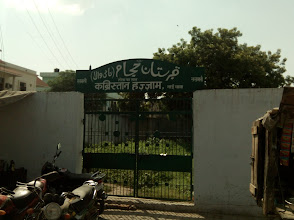
A Poetic Pilgrimage to Kabristan Hajjam, Agra In the heart of Agra, where the shadow of the Taj Mahal weaves tales of eternal love, lies Kabristan Hajjam, a serene yet somber sanctuary that whispers of history, faith, and timeless repose.
A Poetic Pilgrimage to Kabristan Hajjam, Agra In the heart of Agra, where the shadow of the Taj Mahal weaves tales of eternal love, lies Kabristan Hajjam, a serene yet somber sanctuary that whispers of history, faith, and timeless repose. This historic cemetery, nestled amidst the vibrant chaos of Agra’s old city, is more than a resting place—it is a canvas of memory, etched with the quiet dignity of lives past. For the artistic traveler, Kabristan Hajjam offers a contemplative escape, where weathered tombstones and intricate epitaphs invite reflection, and the stillness speaks louder than the bustling streets beyond. A visit here is a journey into Agra’s soul, where history and spirituality converge in a delicate dance of light and shadow. Kabristan Hajjam: A Sanctuary of Stories Kabristan Hajjam, also known as the Hajjam Cemetery, is a historic Muslim graveyard that carries the weight of centuries within its boundaries. Named after the Hajjam community, traditionally known as barbers who also served as surgeons in Mughal times, this cemetery is a testament to Agra’s diverse cultural fabric. The graves, some adorned with delicate carvings and others humbly unadorned, stand as silent narrators of lives once lived—merchants, artisans, and ordinary folk who shaped the city’s past. The architecture of the tombs, with their faded Mughal motifs and Arabic inscriptions, reflects a blend of simplicity and elegance, characteristic of the era’s funerary art. As you wander through the rows of tombstones, the air carries a quiet reverence, broken only by the distant hum of Agra’s streets. The play of sunlight on the aged stone, coupled with the occasional bloom of wildflowers, creates a poignant tableau that beckons artists and photographers to capture its melancholic beauty. For the introspective traveler, Kabristan Hajjam is a place to pause, to sketch the intricate details of a carved epitaph, or to simply listen to the stories whispered by the wind. It is a reminder that even in death, there is art, and in silence, there is poetry. A Cultural and Spiritual Tapestry Beyond its historical significance, Kabristan Hajjam is a living testament to Agra’s pluralistic heritage. The cemetery, though primarily associated with the Muslim community, reflects the city’s syncretic past, where diverse traditions coexisted harmoniously. Visiting during the early morning, when the first rays of light illuminate the graves, or at dusk, when the setting sun casts a golden glow, offers a meditative experience. The surrounding neighborhood, with its narrow lanes and vibrant markets, adds a layer of contrast—life in full color against the quiet repose of the cemetery. For the artistic soul, this juxtaposition is a source of inspiration, a chance to weave narratives of life and legacy through sketches, photographs, or prose. Kabristan Hajjam may not feature on every tourist map, but its quiet beauty and historical resonance make it a treasure for those who seek the soul of Agra. For the artistic traveler, it is a place to reflect, create, and connect with the city’s layered past—a sanctuary where the echoes of history linger in every stone and shadow.
Year of Built:
Address: Near Moti Masjid, Katra Hajjam, Agra, Uttar Pradesh, 282001
Country: India
State: Uttar Pradesh
District: Agra
Pincode: 282001
Longitude: 78.0150°E
Latitude: 27.1780°N