
Indo Islamic Heritage


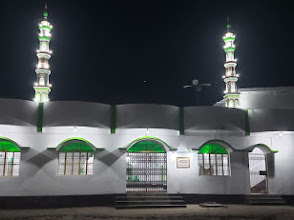
Tucked beside the esteemed Mukhdumpur Madarsa on a quiet lane in Sirnia, Katihar, Masjid Al Kazmi stands as a serene haven for worship and reflection. Likely built in the 1990s alongside the adjacent madrasa, this modest mosque welcomes faithfuls throughout the day—five daily prayers, weekly Jum’ah, and evening tarāwīh during Ramadan. Its soft white walls, simple prayer hall, and small courtyard offer solace amid daily life. For students, elders, and local families, the Adhan’s call is both ritual and refuge—unassuming yet deeply resonant in the heart of Sirnia.
In the calm lanes of Sirnia, near the revered madrasa known for its Hafla recitals and Qur’anic sessions, lies Masjid Al Kazmi—a quiet yet steadfast companion to the journey of faith. Likely established in the 1990s, around the same time as the madrasa’s expansion, it was built through communal effort: parents, teachers, and local patrons donated bricks, labor, and prayers to bring it into being. Today, its simplicity is its strength. The mosque is unadorned: a single prayer hall accommodates around 100 worshippers, its floors laid with prayer mats and its walls painted a calming white. A tiny courtyard catches the afternoon breeze, offering space for quiet dhikr or reflective conversation after prayers. A small ablution area, equipped with taps and basins, sees daily use, especially during the busy rhythms of Jum’ah and Ramadan nights. Five times a day, the Adhan resonates across Sirnia’s narrow bylanes—Fajr at dawn, peaceful and cool; Zuhr and Asr drifting between dust and heat; Maghrib at sunset’s quietude; Isha under soft lamps. Jum’ah Fridays teem with life: the hall fills with devoted worshippers—students fresh from madrasa lessons, shopkeepers pausing their routines, and elders seeking guidance. The khutbah, thoughtful and community‑focused, often touches on moral reminders, local events, or brotherhood. In Ramadan, Masjid Al Kazmi takes on a warm vibrancy. The courtyard is lit with simple lamps, and nightly tarāwīh prayers extend long into the evening. Madrasa teachers sometimes join in, offering tajwīd guidance to eager young learners. Iftār is a quiet affair—dates and water shared among families in humble communion. Though the mosque doesn’t feature on major mapping platforms, it is intimately recognized by its neighbors and by students of the nearby madrasa. It is informally listed in local directories as the 'Masjid near Hafla Mukhdumpur Madarsa', anchoring its identity to the madrasa’s well-known reputation for recitals and moral gatherings. The mosque is managed by a small local committee—secretly formed by parents and elders—who ensure its upkeep. They clean the hall, mend prayer mats, manage minor repairs, and organize funds for essentials like lamps and fans during hot summers. There’s talk among residents of modest improvements: a PA system for clearer Adhan, extra taps for ablution, signage with prayer times, and updates to its dusty walls. But many reflect that Masjid Al Kazmi’s charm lies in its simplicity and continuity. It hasn’t changed much in thirty years—but its role has deepened: within its unadorned walls, friendships have grown, children have memorized verses, and countless souls have sought peace. From the courtyard where a madrasa teacher once taught Tajwīd, to the steady murmur of evening prayer, Masjid Al Kazmi stands as a quiet testament to devotion and community spirit—a humble marker on Sirnia’s spiritual map.
Year of Built: Circa 1990s
Address: Masjid Al Kazmi, Near Mukhdumpur Madarsa Hafla, Sirnia, Katihar – 854103, Bihar, India
Country: India
State: Bihar
District: Katihar
Pincode: 854103
Longitude: 87.5600° E
Latitude: 25.5400° N