
Indo Islamic Heritage


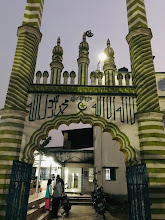
Standing beside the administrative heart of Kishanganj, Kachhari Jama Masjid is a landmark of both faith and civic memory. Located near the Kachhari (court complex), it has quietly served the spiritual needs of locals—lawyers, clerks, vendors, and residents alike—for decades. Built likely in the mid to late 20th century, this masjid offers daily prayers in a tranquil yet accessible setting. Its whitewashed structure, tiled courtyard, and well-kept interiors reflect both simplicity and purpose. Amidst the noise of public offices and passing traffic, the masjid offers a moment of stillness, a pause for reflection, and a space for spiritual anchoring.
Tucked behind the official buildings and corridors of justice in Kishanganj, Kachhari Jama Masjid holds a presence that is both quiet and central. As its name suggests, the masjid sits in close proximity to the Kachhari—the local court complex—and has served generations of people who walk between the worlds of civil life and spiritual duty. The mosque likely dates back to the 1970s or 1980s, established to provide a prayer space for those working in and around the legal and government offices. Its construction was a communal effort—public servants, nearby traders, and townsfolk contributed funds and materials to ensure a clean, dignified space where daily prayers could take place. The building is practical in design: whitewashed exterior walls that reflect the summer sun, a tiled courtyard that remains cool underfoot, and a single prayer hall that accommodates approximately 100–120 worshippers. Inside, the atmosphere is hushed but alive—ceiling fans spin slowly above, the mihrab carved in soft detail at the front, and the calligraphy lining the upper walls is humble yet purposeful. The rhythm of this masjid mirrors the rhythm of the court outside. Around noon, you’ll see advocates stepping in between cases, files tucked under arms, pausing to answer the Adhan. Officers stop by for Zuhr; shopkeepers join for Asr. On Fridays, the masjid fills early—rows of white prayer caps spread from wall to wall, and the khatib’s sermon echoes just faintly through the courthouse compound. The mosque is also a silent witness to time. Its walls have felt the footsteps of clerks preparing for hearings, students revising law books, and elders recounting how the town’s administrative quarters have evolved. It’s a place where paperwork pauses, hearts recalibrate, and routine resumes a little lighter. During Ramadan, the masjid becomes gently festive—iftar is shared in the courtyard with simple dates and water; the taraweeh prayers carry deep sincerity; and night prayers linger as lanterns flicker. Local elders remember how, for years, court officials coordinated with masjid volunteers to ensure prayers and hearings harmonized respectfully. While not grand or tourist-listed, the mosque’s function has always been quietly significant. Modest upgrades—such as a new speaker system, fresh rugs, or a repainted prayer timetable—are made with care. A small donation box stands by the doorway, and the caretaker knows most visitors by name. In a city where faith and function coexist, Kachhari Jama Masjid remains a symbol of this balance. It is a space that doesn’t announce itself but is always noticed—a dependable stop in the daily path of hundreds. More than architecture or ornament, it offers something rarer: consistency, calm, and quiet remembrance in the middle of a bustling town.
Year of Built: Circa 1970s–1980s
Address: Kachhari Jama Masjid, 3WVV+387, Kishanganj, Bihar 733208, India
Country: India
State: Bihar
District: Kishanganj
Pincode: 733208
Longitude: 87.9412° E
Latitude: 26.1020° N