
Indo Islamic Heritage


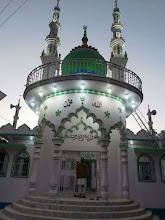
Set in the calm surroundings of Lakhisarai town, this unnamed masjid serves as a peaceful space for local Muslims to gather for daily worship. Tucked away near residential streets, it offers essential amenities for salah, wudhu, and Jum’ah congregations. Though not a grand structure or historically renowned, its role in nurturing faith and discipline is quietly steadfast. Whether it's a soft Adhan at dawn or the heartfelt du‘as during Ramadan nights, this masjid exemplifies the deep connection between faith and everyday life in small-town Bihar—unpretentious, sincere, and ever-welcoming to those seeking closeness to the Divine.
In the modest townscape of Lakhisarai, Bihar—a district known for its spiritual heritage and historic roots—there stands a small yet meaningful masjid near coordinates 53JW+6F9, nestled amidst homes and narrow lanes. Though it may not carry a formal name on public signage, to the locals it is a familiar and cherished spiritual hub. The mosque was likely built in the early 2000s, during a period when Lakhisarai saw a rise in residential development and growing community needs. Constructed through local fundraising and neighborhood effort, it emerged not as a monument of architectural glory, but as a functional place of prayer, close to the hearts and homes of those who built it. The mosque’s architecture is straightforward—whitewashed walls, a single low-rise dome, and possibly a small minaret for the loudspeaker used in calling the Adhan. The entrance opens into a prayer hall that fits approximately 50 to 70 worshippers, suitable for a locality where everyone knows each other by name. The walls are plain but clean, and lined with Qur’anic verses or simple clocks and prayer schedules. Inside, the mihrab marks the Qibla direction, and a small wooden minbar stands to its side for Jum’ah sermons. The floor is covered with prayer rugs—donated and replaced over time by the congregation. Ceiling fans provide ventilation, and tube lights ensure the mosque remains well-lit, especially during Maghrib and Isha prayers. Adjacent to the main hall is the wudhu area, equipped with running taps and a basic drainage system. It is maintained regularly, especially before Friday prayers and during Ramadan, when attendance increases. Volunteers—often youth from the mohalla—keep the space clean and assist the elderly in making ablutions or entering the prayer hall. During Ramadan, the mosque becomes more active. Locals organize iftars, simple but heartfelt, with dates, water, and home-cooked meals. Taraweeh prayers are conducted, often led by a local hafiz or an elder well-versed in Qur’an recitation. On Eid, families gather early in the morning, with men in white kurta-pajamas filling the space for the special Salah, followed by warm greetings and shared sweets. Though small in size, the masjid fosters a strong sense of brotherhood, discipline, and piety. It’s a place where children come to learn basic Qur’anic recitation, where elders exchange greetings after Asr, and where life’s transitions—births, funerals, weddings—are marked with collective prayer and solidarity. Unlisted on major online directories, and perhaps without a formal nameplate, this Lakhisarai masjid reminds us that not every spiritual landmark needs a label. Its value lies not in its grandeur, but in the constancy of worship, the echo of the Adhan, and the peace it offers to those who walk through its doors.
Year of Built: Not Known
Address: Masjid, 53JW+6F9, Lakhisarai, Bihar 811311, India
Country: India
State: Bihar
District: Lakhisarai
Pincode: 811311
Longitude: 86.0886° E
Latitude: 25.1704° N