
Indo Islamic Heritage


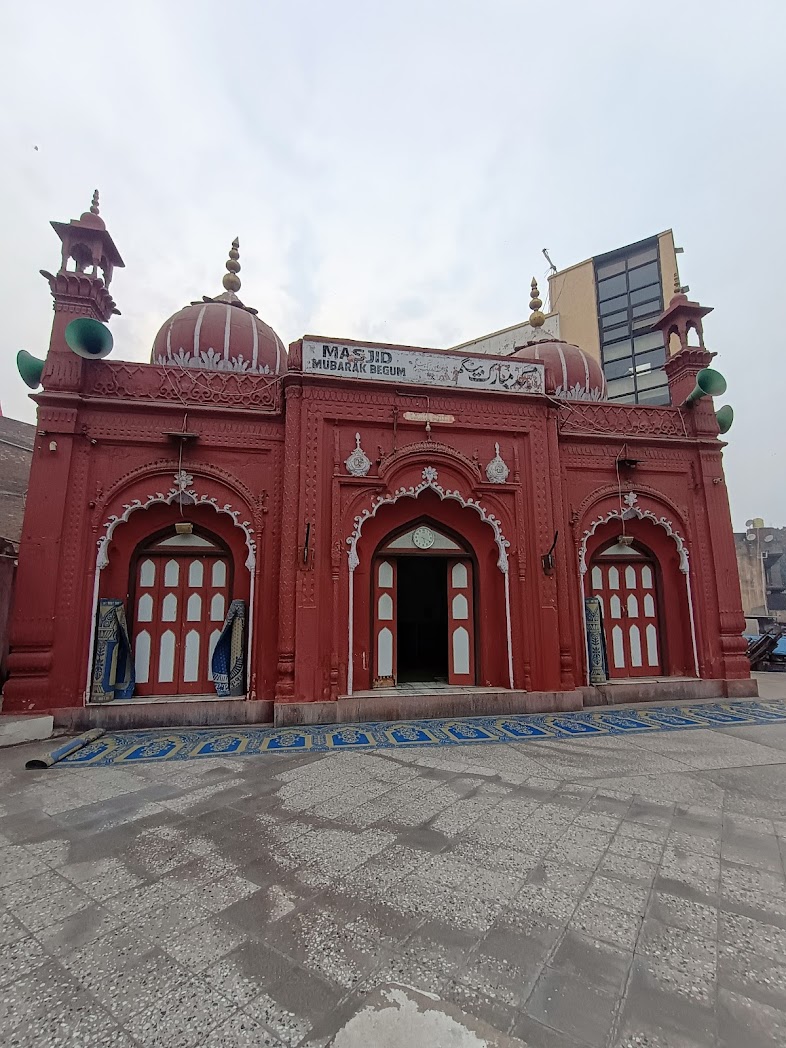
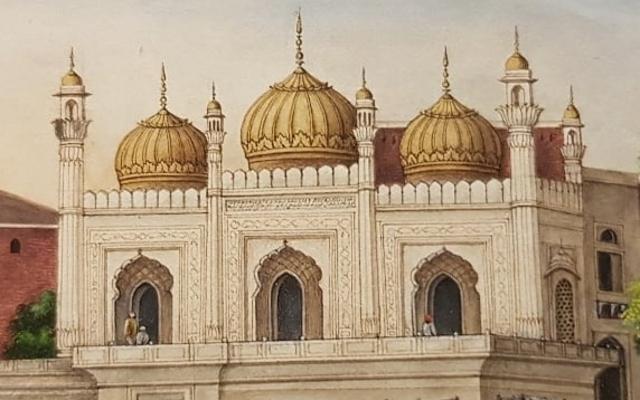
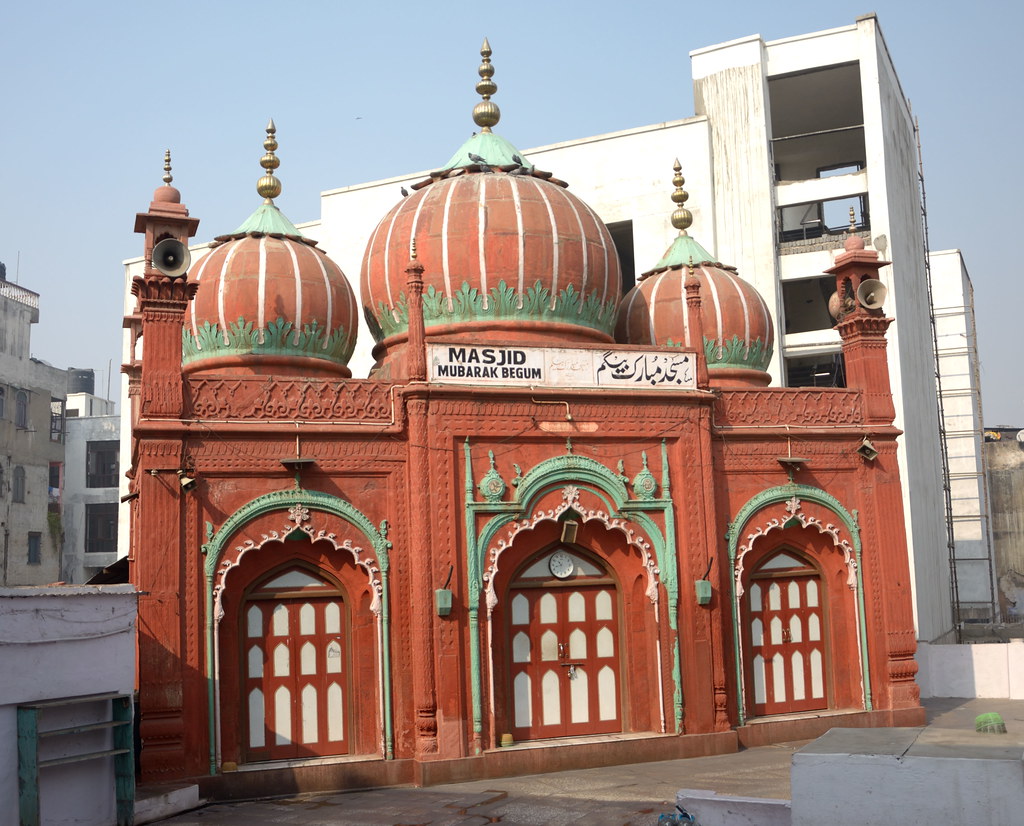
The Mubarak Begum Mosque, often referred to as Randi ki Masjid (Prostitute's Mosque), is a 19th-century red sandstone mosque situated in Hauz Qazi, Shahjahanabad, Delhi, near the Chawri Bazaar metro station. The mosque dates back to the Mughal era and is historically associated with Mubarak Begum, a courtesan who later became a wife of a British officer. The Nearest Bus Stand - Kashmiri Gate, The Nearest Metro Station - Chawri Bazar, Nearest Railway Station- Nizamuddin Railway Station Railway Station Nearest Airport- IGI
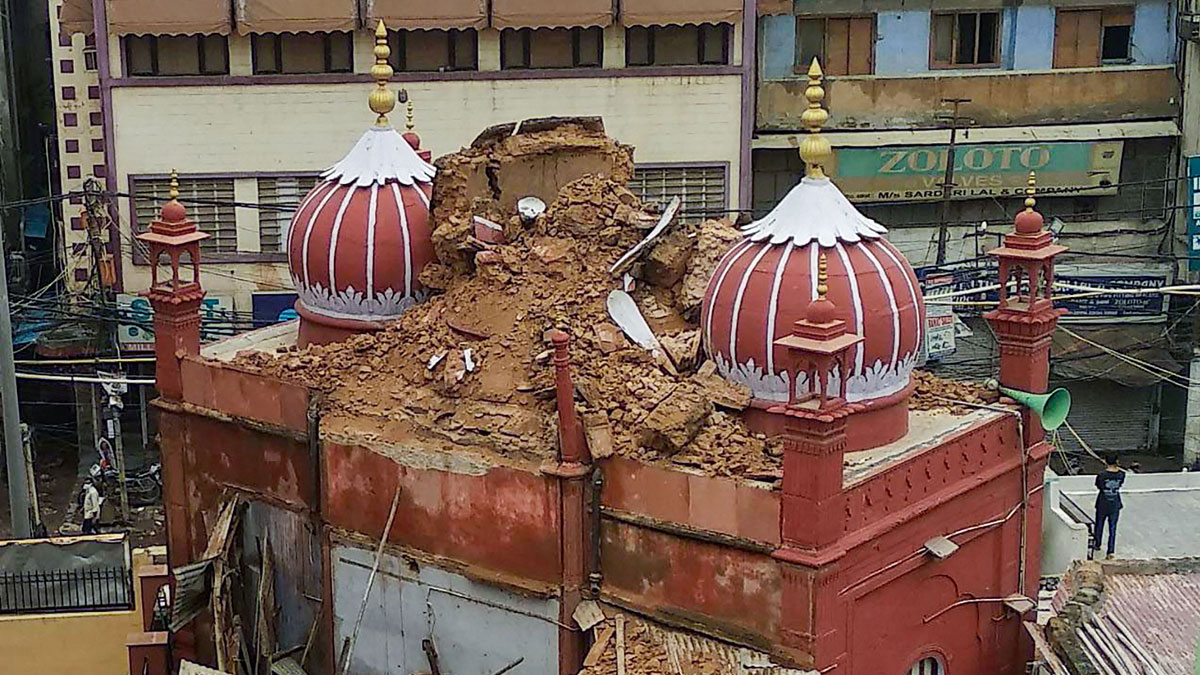
The Mubarak Begum Mosque, also infamously known as "Randi ki Masjid" (Prostitute?s Mosque), is a historical monument built during the Mughal era in the early 19th century. Situated in Hauz Qazi, Shahjahanabad, Delhi, near the Chawri Bazaar metro station, this mosque is constructed from red sandstone and lakhori bricks, reflecting the architectural style of its time. The two-storey structure features a prayer chamber on the upper floor, crowned by three red-and-white striped domes. Beneath each dome, there are three intricately designed arched entrances, exemplifying the elegance of Mughal architecture. Despite its historical significance, the mosque has faced neglect, with its last reported maintenance carried out in 2016. On July 19, 2020, the central dome partially collapsed due to heavy rainfall, underscoring the need for better preservation efforts. Currently, the mosque is under the custody of the Delhi Wakf Board. The mosque holds a unique place in history as one of the few Islamic structures commissioned by a woman during medieval India. It was built in 1823 by Mubarak Begum, a nautch dancer and courtesan who rose to prominence in the Mughal court. Born into a poor Brahmin family, Mubarak Begum began her career as a dancing girl in Pune. Her life took a significant turn when she became associated with David Ochterlony, Delhi?s first British Resident to the Mughal court. Ochterlony, who served in Delhi during 1802 and again in 1822, married Mubarak Begum, an unusual alliance for the time. In her honor, he facilitated the construction of the mosque, marking a groundbreaking moment as a nautch girl, not royalty or aristocracy, commissioned a religious monument. This led to the mosque being colloquially referred to as "Randi ki Masjid." The social context of the time further adds to the mosque?s layered history. During the establishment of the East India Company in India, British military personnel were encouraged to bring their wives or marry Indian women temporarily, as local families were reluctant to marry their daughters to foreign soldiers. Women like Mubarak Begum often became intermediaries in these cultural exchanges, blending Indian and British influences. After Mubarak Begum?s death in 1878, the mosque came under the control of the British administration, reflecting the shifting power dynamics of the period. Today, the Mubarak Begum Mosque stands as a testament to the complex interplay of gender, power, and culture in colonial India. It is one of only three mosques in medieval India constructed by women, making it a rare symbol of female agency in a predominantly patriarchal society.
Year of Built: 19th Century
Address: 4959, Hauz Qazi Chowk, Bazar Sirkiwalan, Kaccha Pandit Main Bazar, Lal Kuan Bazar, Chandni Chowk, New Delhi, Delhi,
Country: India
State: Delhi
District: Central Delhi
Pincode: 110006
Longitude: 77.226
Latitude: 28.65