
Indo Islamic Heritage


.JPG)
.JPG)
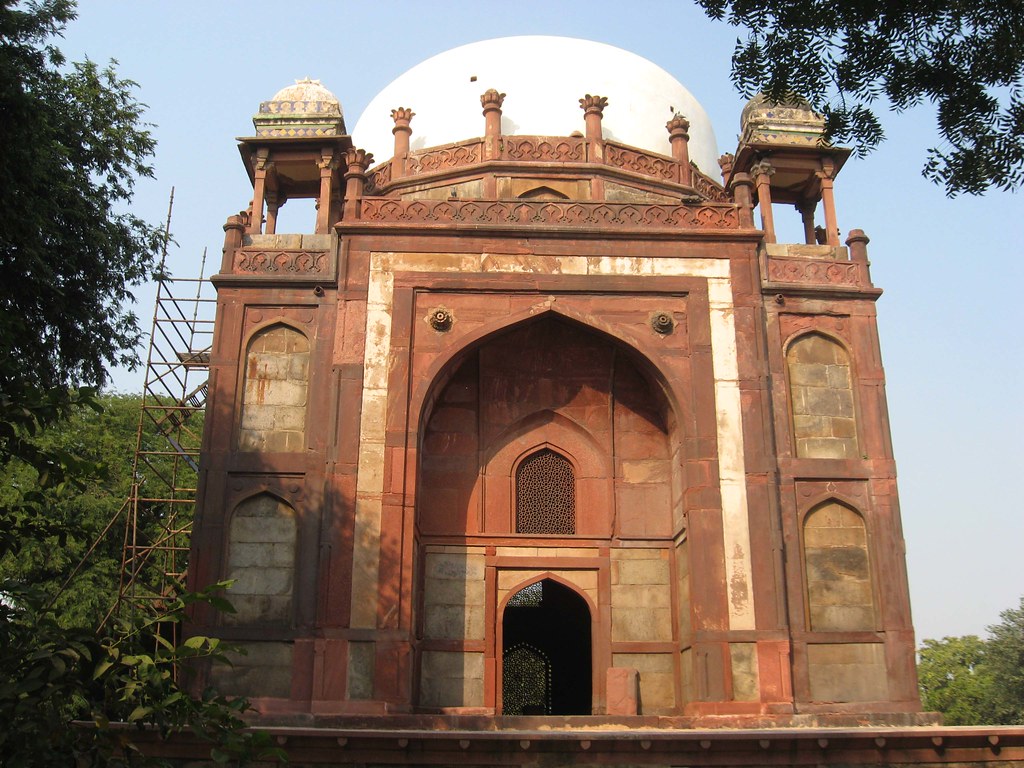
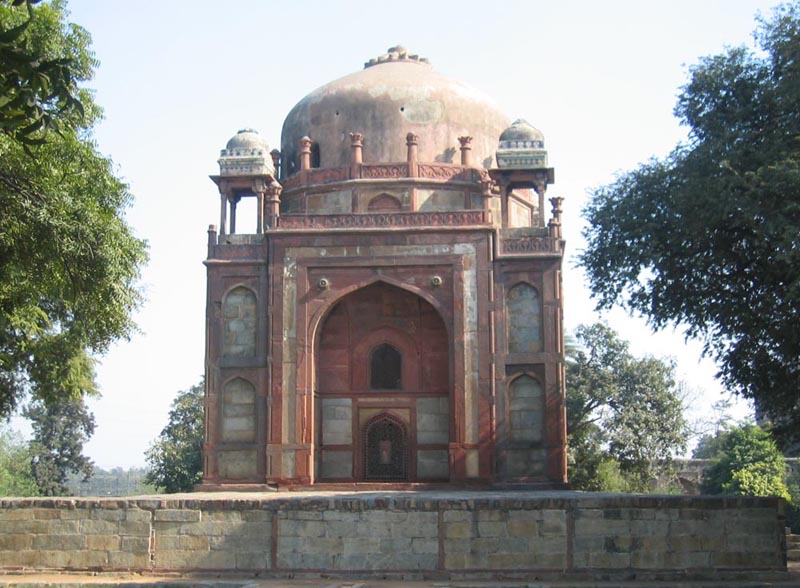
Barber's Tomb, also known as Nai-ka-Gumbad, is a fascinating component of the Humayun's Tomb complex in Delhi, showcasing the subtle elegance of Mughal architecture. Built during the reign of the Mughal emperor Akbar in the 16th century, it is believed to be the final resting place of either Humayun's royal barber or another important attendant. The Nearest Bus Stand - Nizamuddin Ext, The Nearest Metro Station - Hazrat Nizamuddin, Nearest Railway Station- Nizamuddin Railway Station Railway Station Nearest Airport- IGI
The Barber's Tomb, also known as "Nai ka Gumbad," is a prominent structure located in the southeastern quadrant of Humayun's Garden Tomb complex, separated from the wall shared with the Nila Gumbad site by a narrow path. Constructed from red and gray sandstone, the mausoleum rests on a square plinth, with stairs on the southern side leading to its entrance. The tomb follows a symmetrical square plan, featuring chhatris at the top of each corner and incorporating squinch elements in its ceiling and alcoves. Each fa?ade showcases a pair of spandrels adorned with stellate symbols encircled by stylized floral medallions, positioned above a large central alcove with two vertically aligned openings. Except for the entrance, these openings are covered with intricate jali screens that echo the geometric tile patterns found in the entrance chamber of Humayun's Tomb. Notably, the western fa?ade includes a lower jali opening featuring a stone mihrab relief on the exterior, decorated with early Indo-Islamic architectural motifs, and an elaborate interior mihrab with medallion inscriptions and a Sultanate-style temple archway hanging-bell motif. The Barber's Tomb is crowned with a gumbad dome set on an octagonal drum, each side of which is pierced by a single clerestory jali opening. This drum is encircled by a kangura band and flanked by eight corner guldastas, creating a layered effect reminiscent of the dome of Humayun's Tomb. The tomb's vertical fa?ade corners are defined by engaged colonettes that transition into guldastas, which are interconnected by kangura ornamentation mirroring the decorative scheme of both the dome and the main tomb's facades. Inside, the tomb houses two cenotaphs devoid of identifying inscriptions. However, the figure "999" carved on one of the graves suggests a Hijra date corresponding to 1590-91 AD, aligning with the architectural style of the structure.
Year of Built: 16th Century
Address: Bharat Scouts and Guides Marg, Nizamuddin, Humayun's Tomb, Nizamuddin East, New Delhi, Delhi
Country: India
State: Delhi
District: South Delhi
Pincode: 110013
Longitude: 77.2519
Latitude: 28.5923