
Indo Islamic Heritage


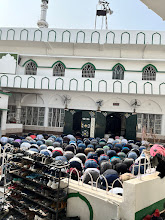
Located in the historically significant area of Kurji, Kurjee Jama Masjid is one of the prominent mosques of north-west Patna. With its peaceful setting just off the busy Kurji main road, this masjid caters to a diverse congregation—from daily wage workers to office-goers and students. Known for its wide prayer hall, dedicated imams, and well-maintained wudu area, the masjid sees large attendance on Fridays and during Ramadan. Deeply embedded in the local community's religious and social life, Kurjee Masjid stands as a vital institution—quiet, spiritual, and reliably present in the rhythms of daily prayer and community gathering.
Tucked away in the bustling yet close-knit neighborhood of Kurji, one of Patna’s oldest riverbank settlements, stands the Kurjee Jama Masjid—a revered place of worship that has served generations of Muslims in the area. Accessible via Kurji Masjid Gali, this mosque stands not only as a site for daily prayer but as a social and cultural hub for the local Muslim population. The history of Kurjee Masjid dates back to the mid-20th century, a period when the Kurji region began transitioning from quiet colonial-era backwater to a populated locality adjacent to the banks of the Ganga. The land was donated by local elders and community leaders, and through collective effort and contributions, the masjid took shape, brick by brick—humble in its beginnings but deeply rooted in community devotion. Today, the masjid stands as a two-story structure with a modest central dome, clean whitewashed walls, and green-tinted windows. Its arched entry gate opens into a tiled corridor leading to the main prayer hall, which can accommodate approximately 200–250 worshippers. On Fridays and during special prayers like Eid and Taraweeh, the courtyard and surrounding lanes are filled with rows of worshippers—shoulder to shoulder in peaceful silence. The mihrab is elegantly designed in simple tilework, and the minbar, made of polished wood, is used during Jumu’ah for sermons on faith, ethics, and community issues. Ceiling fans, wall-mounted clocks, and an electronic prayer time board add to the modern functionality of the space, while still retaining the spiritual calm of traditional masjid design. Adjacent to the prayer hall is a well-maintained ablution area (wudu khana), with ample water supply and cleanliness ensured by the masjid’s volunteer committee. The masjid also maintains a small library shelf, stacked with Urdu and Arabic texts, Qur’anic tafsir, and basic fiqh guides—used by local youths and students who attend after-school madarsa sessions in the evenings. During Ramadan, Kurjee Masjid becomes a site of immense spiritual energy. Iftar spreads are often arranged through local donations, and taraweeh prayers are led by hafiz-e-Qur’an with melodious recitations. On Eid, the lanes of Kurji echo with greetings, while the mosque hosts a sea of prayer mats and heartfelt gratitude. Beyond its religious role, Kurjee Masjid plays a subtle but important role in the local social safety net—hosting zakat distributions, aiding the poor during winter, and acting as a shelter in times of distress such as floods or lockdowns. While not an architectural marvel or tourist site, Kurjee Jama Masjid is priceless to its community—a masjid that stands with dignity, serving faith and fostering quiet unity across generations in one of Patna’s most rooted neighborhoods.
Year of Built: Not Known
Address: Kurjee Jama Masjid, J4R4+HRH, Kurji Masjid Gali, Kurji, Patna, Bihar 800010, India
Country: India
State: Bihar
District: Patna
Pincode: 800010
Longitude: 85.0705° E
Latitude: 25.6379° N