
Indo Islamic Heritage


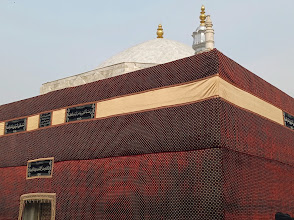
Nestled in the tranquil village of Makanpur, near Kanpur in Uttar Pradesh, the Dargah of Sayyed Badiuddin Qutbul Madar Raz, revered as Zinda Shah Madar, is a spiritual haven radiating serenity and devotion. This sacred Sufi shrine, steeped in centuries-old mysticism, draws pilgrims and seekers from across the globe with its timeless aura and architectural splendor. Known for its vibrant festivals and the famous slogan “Dum Madar Beda Paar” (Madar’s breath ferries across), the dargah is a testament to unity, faith, and the enduring legacy of a saint who lived for 596 years, clad in a single robe, untouched by time.
As you approach Makanpur, a quiet village in Uttar Pradesh, the air hums with an ethereal calm, guiding you toward the Dargah of Sayyed Badiuddin Qutbul Madar Raz, fondly known as Zinda Shah Madar. This sacred shrine, a beacon of Sufi spirituality, feels like a portal to another era, where devotion and mysticism intertwine beneath the shade of ancient trees and weathered stone. The dargah’s white domes and intricate arches rise modestly yet majestically against the rustic backdrop, whispering tales of a saint whose life spanned nearly six centuries, from 242 Hijri (856 CE) to 838 Hijri (1434 CE). Stepping into the dargah’s courtyard, you’re enveloped by an atmosphere thick with reverence. Pilgrims, their faces alight with faith, offer chadars of green and gold, their prayers mingling with the fragrance of incense and the faint echo of qawwalis. The tomb of Hazrat Sayyed Badiuddin, crowned as Qutbul Madar (Pole of the Orbit), lies at the heart of the complex, adorned with floral tributes and surrounded by devotees chanting his praises. The saint, born in Sham (Syria) and a disciple of Hazrat Bayazid Bistami, is said to have fasted for 556 years, embodying asceticism and divine love. His titles—Shamsul Aarfin, Madar-e-Alam, Zinda Wali—reflect the awe he inspired, a legacy that continues to draw souls seeking solace. The dargah’s architecture is a canvas of history, painted by emperors across dynasties. Emperor Ibrahim Sharki Jaunpuri laid the foundation of the tomb, while Emperor Humayun, a devotee, added to its sanctity. Emperor Akbar and Shah Jahan contributed enduring monuments, including the grand Shahjahani Deg, a massive copper vessel that gleams under the sun, and the Alamgeeri Mosque, well, and sarai, crafted by Emperor Aurangzeb. These structures, weathered yet resolute, stand as silent witnesses to the dargah’s evolution, their intricate designs and sturdy stonework evoking a bygone era of imperial patronage. The annual Urs festival transforms Makanpur into a vibrant tapestry of faith and festivity. Pilgrims from as far as Afghanistan, Iraq, and Japan converge, their voices rising in unison to honor the saint who united diverse cultures. The rhythmic beat of daf and the soulful strains of Sufi poetry fill the air, while the aroma of communal meals cooked in the Shahjahani Deg wafts through the crowd. It’s a celebration of unity, where caste, creed, and borders dissolve, embodying the saint’s teachings of universal love. Beyond its spiritual allure, the dargah offers a glimpse into Makanpur’s rustic charm. The nearby Isan River, crossed by the historic Alamgeeri Bridge, reflects the golden hues of dawn, while local markets brim with handicrafts and sweets like jalebi and peda. For the curious traveler, the journey to Makanpur is as much about inner discovery as it is about exploring a hidden gem in Uttar Pradesh’s heartland.
Year of Built: 15th Century
Address: Dargah Sayyed Badiuddin Qutbul Madar, Makanpur Village, Kanpur Nagar, Uttar Pradesh, India – 209202.
Country: India
State: Uttar Pradesh
District: Kanpur Nagar
Pincode: 209202
Longitude: 80.0067° E
Latitude: 26.4655° N