
Indo Islamic Heritage


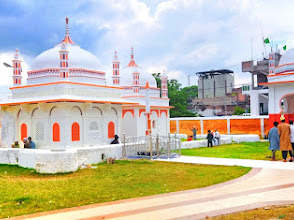
Located along the vibrant Dargah Road in Sultanganj, near the banks of the Ganga, Dargah Ghera Masjid is a historic and spiritually significant mosque for the Muslims of Muhammadpur and surrounding neighborhoods in Old Patna. Adjacent to a local dargah, the mosque holds daily prayers, hosts Friday congregations, and sees devoted footfall during Ramadan. With its whitewashed arches, compact prayer hall, and centuries-old spiritual aura, the masjid is a cornerstone of the area’s religious heritage—where tradition, memory, and faith intersect quietly in the everyday rhythm of Patna’s oldest quarters.
In the narrow, bustling lanes of Sultanganj, one of Patna’s most timeworn and culturally rich neighborhoods, rests the unassuming but revered Dargah Ghera Masjid. Set along Dargah Road, and nestled within the spiritual contours of Muhammadpur, this masjid is closely tied to the Sufi lineage of the area—sharing its courtyard walls with an adjoining dargah (shrine) believed to house the remains of a revered saint whose name echoes in oral lore but is rarely found in written records. Locally known simply as “Ghera Masjid”, the mosque has long served as the principal Jama Masjid for this pocket of the city. Oral history places its origin as far back as the early 20th century, with some suggesting even older roots connected to the dargah's presence. Initially built from lime plaster and clay bricks, the mosque has undergone many small-scale renovations—never losing its original footprint, only gaining strength and stability with each generation’s contributions. The architecture is modest yet steeped in character. A simple arched gateway opens into a rectangular courtyard, which is shared by the mosque and the adjoining dargah compound. To the right stands the masjid’s prayer hall, painted in pale white with green window frames and a flat concrete roof. There is no grand dome or towering minaret—only a short corner turret used for the Adhan, fitted with loudspeakers that echo down the surrounding gullies. The interior of the prayer hall is compact, accommodating around 80–100 worshippers at a time. The floor is lined with plain rugs, and the mihrab, shaped in a rounded arch, is marked with minimal tilework. A small wooden minbar rests to its side for Friday sermons. The masjid committee ensures cleanliness, replacing rugs and maintaining fans especially before Ramadan and Eid. The wudu khana (ablution area) sits at the courtyard edge, fitted with traditional stone basins and steel taps, used diligently by locals before every salah. Spiritual activity peaks during Ramadan, when Taraweeh prayers bring in more worshippers, and community members share iftar in the dargah’s shaded corridor. The courtyard is strung with lights, and quiet Qur’anic recitations continue late into the night. Urs (annual dargah festival) brings an even more intense spiritual convergence, as devotees visit the shrine and attend special prayers at the masjid, blurring lines between ritual and remembrance. While not widely known outside Patna’s Sultanganj belt, Dargah Ghera Masjid remains essential for locals. It is a space where faith and heritage intertwine, where generations return to pray, reflect, and reconnect with a spiritual legacy that quietly endures—even as the modern city rises around it.
Year of Built: Circa early 1900s
Address: Dargah Ghera Masjid, J57J+366, Dargah Road, Sultanganj, Muhammadpur, Patna, Bihar 800006, India
Country: India
State: Bihar
District: Patna
Pincode: 800006
Longitude: 85.1407° E
Latitude: 25.6248° N