
Indo Islamic Heritage


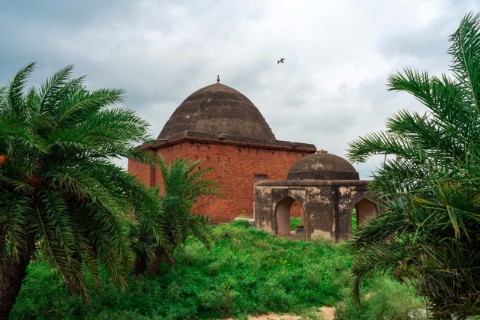
The Ibrahim Baya Maqbara is a revered 13th-century Sufi tomb located in Bihar Sharif, Nalanda district, Bihar. Built in Indo-Arabic architectural style, it houses the resting place of the famed Sufi saint, Mallick Ibrahim Bayu. The site is not only a symbol of Bihar’s deep-rooted Sufi traditions but also a living heritage space frequented by devotees and tourists alike. Its domed structure and spiritual ambience offer a glimpse into medieval Islamic mysticism and local devotion. This historic maqbara stands as a significant monument of communal harmony and spiritual syncretism in the region.
The Ibrahim Baya Maqbara, situated in Bihar Sharif of Nalanda district, is one of the most significant Sufi heritage sites in Bihar. Built in the 13th century, this maqbara is the final resting place of Mallick Ibrahim Bayu, a revered Sufi saint and one of the earliest Islamic missionaries to arrive in the region. Ibrahim Baya was associated with the Suhrawardi Sufi order, and his legacy has had a lasting influence on the spiritual and cultural fabric of the region. The maqbara is a prominent example of Indo-Arabic architecture, showcasing elegant domes, arches, and a serene symmetrical layout. The tomb structure is relatively simple but carries immense historical and spiritual value. Surrounded by landscaped gardens and an atmosphere of tranquility, the maqbara continues to attract thousands of devotees, especially during annual Urs celebrations held in the saint’s memory. These events foster communal harmony, with people from different faiths participating in the spiritual proceedings, offering chadars (sacred cloth), lighting incense, and partaking in qawwali performances. The Maqbara is a living testament to the syncretic traditions of medieval India, where Sufi saints played an integral role in bridging religious and social divides. Ibrahim Baya was known for his egalitarian outlook, simplicity, and his efforts to spread messages of love, unity, and submission to the divine. The narratives associated with him often highlight his humanitarian service and spiritual mentorship to the local communities, regardless of caste or religion. The architectural composition of the maqbara reflects the aesthetic sensibilities of early Islamic architecture in Bihar. The use of locally available materials, minimal ornamentation, and a focus on functional elegance make it unique. The tomb is capped by a modest dome, supported by four corner pillars, and is adorned with inscriptions in Arabic and Persian, praising the saint and referencing Quranic verses. Despite the passage of centuries, the sanctity of the site remains preserved. The maqbara and its adjoining mosque are maintained with the help of local donations and oversight by community caretakers. The surrounding area has grown into a small but vibrant pilgrim town, with stalls selling religious items, offerings, and food for visitors. Ibrahim Baya Maqbara is not only a spiritual center but also a key component of Bihar’s cultural tourism landscape. It offers valuable insights into the history of Islamic mysticism in Eastern India and the role of Sufi saints in shaping Bihar’s inclusive religious traditions. The site is often included in heritage walks, academic tours, and Sufi circuits promoted by the Bihar State Tourism Department. For those interested in spirituality, history, and architecture, the Ibrahim Baya Maqbara offers a deeply enriching experience — a quiet space where the echoes of centuries-old devotion still linger.
Year of Built: 13th Century
Address: Pir Pahari (Hiranya Parvat), Bihar Sharif, Nalanda District, Bihar
Country: India
State: Bihar
District: Nalanda
Pincode: 803101
Longitude: 85.5217
Latitude: 25.1966