
Indo Islamic Heritage


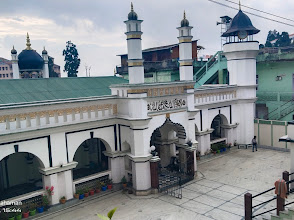
The Jama Masjid of Darjeeling is one of the oldest and most prominent mosques in the hill town, located at Chauk Bazaar. Established during the British colonial period, the mosque reflects a blend of Indo-Islamic architecture suited to the hilly terrain of Darjeeling. Serving as a central place of worship for the local Muslim community, it also represents the cultural harmony of the town, where diverse faiths coexist. The mosque is active with daily prayers, Friday congregations, and religious gatherings, playing a vital role in preserving Islamic traditions amidst Darjeeling’s cosmopolitan society.
The Jama Masjid of Darjeeling, located at Chauk Bazaar, stands as an enduring symbol of the town’s rich cultural and religious diversity. Built during the British colonial era, when Darjeeling was emerging as a hill station of great importance, the mosque was established to serve the spiritual needs of the Muslim community residing in the region. Over the decades, it has grown into not only a religious landmark but also a cultural and social center for the local Muslim population. Architecturally, the mosque presents a graceful blend of Indo-Islamic features. The main prayer hall is spacious, designed to accommodate a large congregation, particularly on Fridays and during Eid celebrations. The façade of the Jama Masjid displays simple yet elegant Islamic motifs, with minarets and domes that add to its traditional character. Its whitewashed walls and arched entrances reflect a design that is modest yet spiritually uplifting, harmonizing with Darjeeling’s hilly landscape. The elevated location of Chauk Bazaar gives the mosque a prominent presence in the town, making it visible from various points. The mosque is not only a religious space but also a hub of communal life. Five daily prayers are held, and the Friday Jummah prayer draws worshippers from across Darjeeling and nearby areas. During the holy month of Ramadan, the mosque becomes a center of activity with special Taraweeh prayers, Quranic recitations, and communal Iftar gatherings. Eid al-Fitr and Eid al-Adha celebrations bring together large numbers of people, emphasizing the mosque’s role in fostering unity and spiritual devotion. Beyond worship, the Jama Masjid plays a role in education and cultural preservation. Religious teachings and Quranic classes are conducted for children and youth, ensuring that younger generations stay connected to Islamic values and traditions. The mosque committee is also engaged in community welfare activities, sometimes extending support to the underprivileged sections of society. The presence of the Jama Masjid in Darjeeling also highlights the multicultural character of the town. Darjeeling, known worldwide for its tea and scenic landscapes, has always been a melting pot of ethnicities and religions—Nepalis, Bengalis, Tibetans, Anglo-Indians, and Marwaris have all contributed to its social fabric. The mosque represents the Muslim community’s significant role in this cosmopolitan setting, standing alongside churches, monasteries, and temples as part of the town’s pluralistic identity. For visitors, the Jama Masjid provides a peaceful and reflective space amidst the hustle of Chauk Bazaar. While it primarily serves the local community, travelers are often drawn to its historical and cultural significance. The mosque remains an enduring testament to the coexistence of faiths in Darjeeling and to the resilience of religious traditions that have thrived in the unique Himalayan environment.
Year of Built: 19th Century (Colonial Period)
Address: Chauk Bazaar, Darjeeling, West Bengal, India
Country: India
State: West Bengal
District: Darjeeling
Pincode: 734101
Longitude: 88.2663
Latitude: 27.0435