
Indo Islamic Heritage


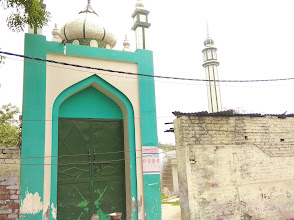
Phatak Wali Masjid is a historic mosque located in Amroha, Uttar Pradesh, India. It is situated near the Double Phatak area, a key locality in the town known for its historical significance dating back to the Mughal era. The mosque reflects the architectural and cultural heritage of Amroha, a city with a rich Islamic history influenced by Sufi saints and Mughal rulers. It serves as a place of worship and community gathering, emblematic of the town's Ganga-Jamuna tehzeeb (syncretic Hindu-Muslim culture).
Amroha, formerly known as a part of the Moradabad district until its separation in 1997, boasts a history spanning over 2,400 years, with roots tracing back to the Bansi Dynasty under Raja Amarjoda around 479 BCE. The region transitioned through Rajput rule (676–1141 CE), invasions by Mahmud of Ghazni in 1093 CE, and later came under the Delhi Sultanate and Mughal Empire. During the Mughal era, particularly under emperors like Shah Jahan, Amroha flourished as a center for trade, agriculture, and Islamic scholarship, with the construction of forts, gates, and religious structures. The Battle of Amroha in 1305 CE, fought between Alauddin Khilji's forces and the Mongols, further cemented its strategic importance. Sufi saints, such as Syed Hussain Sharfuddin Shah Wilayat (a contemporary of Babur), settled here, contributing to the town's spiritual landscape and leading to the establishment of dargahs and mosques that blend Indo-Islamic architecture. Phatak Wali Masjid, named after its proximity to the "phatak" (gate or railway crossing) area—specifically Double Phatak—emerged during this vibrant period of Mughal influence. Historical records from local dealer directories and urban listings reference the Double Phatak locality as a bustling commercial and residential hub since at least the early 20th century, with the mosque serving as a central landmark. the mosque stands as a testament to Amroha's secular ethos, where Hindus and Muslims coexist harmoniously, celebrating festivals like Barawafat (Milad-un-Nabi) with processions starting from nearby Jama Masjid. It hosts daily prayers and community events, contributing to the town's 70% Muslim population's cultural fabric. Amroha's economy, driven by mango cultivation, pottery, handloom weaving, and dholak manufacturing, surrounds the mosque, making it a focal point for local life. Despite challenges like urban development and historical preservation, Phatak Wali Masjid endures as a symbol of the region's enduring Islamic heritage, drawing visitors interested in Uttar Pradesh's lesser-known historical sites.
Year of Built: Not Available
Address: VFRC+M4V, Unnamed Road, Subodh Nagar, Amroha, Uttar Pradesh 244245
Country: India
State: Uttar Pradesh
District: Amroha
Pincode: 244245
Longitude: 78.4650° E
Latitude: 28.9024° N