
Indo Islamic Heritage


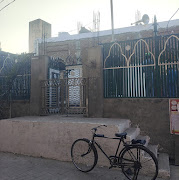
Masjid Qazi Muhammad Fayyaz Sahab is a historic mosque located in the Danishmandan locality of Amroha, Uttar Pradesh, India. It holds cultural and historical significance as a site of worship and community gathering in a region known for its Sufi heritage and long-standing tradition of religious harmony among Muslims, Hindus, and other faiths. The mosque reflects the architectural and spiritual legacy of Amroha's Naqvi Sadat community, descendants of early Sufi saints, and serves as a symbol of the area's Islamic scholarly and noble past. Its precise year of construction remains undocumented in available historical records, but it aligns with the broader Mughal-era developments in the locality, likely from the 16th to 19th century.
Amroha, a historic town in northwestern Uttar Pradesh, has long been a cradle of Islamic scholarship and Sufi spirituality, with Danishmandan emerging as one of its most revered localities. Named after the title "Danishmand" (meaning "possessor of knowledge") bestowed by Mughal Emperor Babur on the Sufi saint Syed Hussain Sharfuddin Shah Wilayat in the early 16th century, Danishmandan became a hub for the Naqvi Sadat community—descendants of the saint who trace their lineage to Imam Ali al-Hadi an-Naqi and the Prophet Muhammad (PBUH). This community, known for their roles as qazis (judges), scholars, and mansabdars (nobles) under Mughal rule, contributed significantly to the region's cultural and religious fabric. Masjid Qazi Muhammad Fayyaz Sahab stands as a testament to this legacy, embodying the mosque's role as a center for prayer, education, and communal unity in a diverse society. The mosque is named after Qazi Muhammad Fayyaz Sahab, a figure from the scholarly Naqvi lineage who likely served as a qazi, upholding Islamic jurisprudence in line with the Hanafi school prevalent in the area. While specific biographical details on Qazi Muhammad Fayyaz Sahab are scarce in documented histories, the naming convention reflects the tradition of honoring local qazis who administered justice and promoted religious learning during the Mughal period. Danishmandan itself was a fortified area with remnants of a 17th-century wall built under Shah Jahan, including the Moradabadi Darwaza (1642 CE), highlighting the locality's strategic and cultural importance. The mosque, integrated into this historic setting, would have been a focal point for daily prayers, Friday congregations, and religious discourses, fostering the Ganga-Jamuna tehzeeb (syncretic Hindu-Muslim culture) for which Amroha is renowned. Even during turbulent times like the 1857 uprising and the 1947 Partition, the town—and by extension localities like Danishmandan—remained free of communal violence, with Muslims (comprising about 70% of the population, including Sunni and Shia sects) coexisting peacefully with Hindus. Architecturally, the mosque aligns with the modest yet enduring style of regional Islamic structures from the Mughal era, featuring elements such as arched entrances and open courtyards typical of mosques in Uttar Pradesh. Though no exact construction date is recorded, it fits within the 16th-19th century timeline of Amroha's Islamic monuments, including nearby sites like the Dargah of Shah Wilayat (built post-739 AH/1337 CE) and Jama Masjid. These structures were often commissioned by local nobles or qazis to serve the growing Muslim population, which included Sayyids who formed the military and administrative elite. The mosque's significance extends beyond worship; it represents the Naqvi Sadat's commitment to moderation, benevolence, and interfaith respect, as evidenced by historical accounts of Hindus participating in Muslim festivals like Muharram processions in Amroha. Annual events such as Urs celebrations at nearby shrines would draw pilgrims, reinforcing the mosque's role in spiritual and social life. Today, Masjid Qazi Muhammad Fayyaz Sahab continues to function as a vital community space in Danishmandan, a bustling area near the Sot River and NH-24 highway. The mosque's preservation underscores Amroha's status as a minority-concentrated district where Islamic heritage promotes harmony, echoing the saintly traditions that shaped the region. As a symbol of enduring faith and scholarship, it invites reflection on the contributions of figures like Qazi Muhammad Fayyaz Sahab to India's pluralistic cultural tapestry.
Year of Built: Not Available
Address: VFWC+V38, Turk Colony, Danishmandan, Amroha, Uttar Pradesh 244245
Country: India
State: Uttar Pradesh
District: Amroha
Pincode: 244245
Longitude: 78.4650° E
Latitude: 28.9024° N