
Indo Islamic Heritage


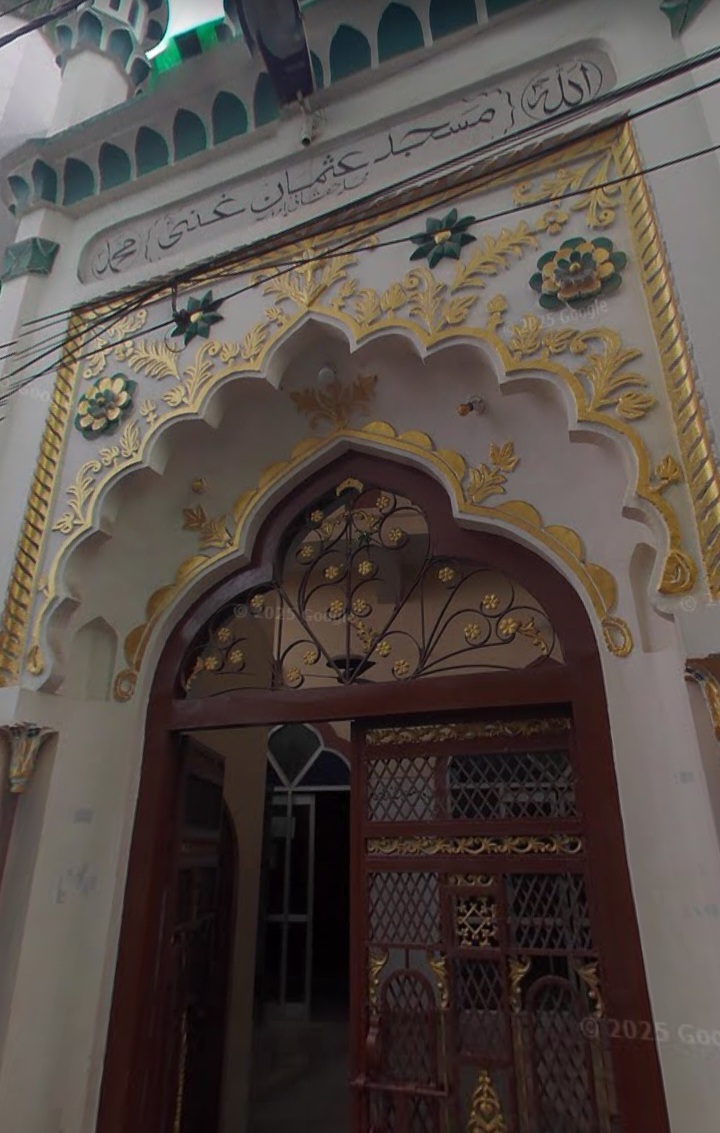
Masjid Usman-e-Gani is a local mosque situated in the heart of Mohalla Haqqani, a residential neighborhood in Amroha, Uttar Pradesh. It serves as a place of worship for the Muslim community, reflecting the city's rich Islamic heritage amid its historical Sufi influences and Mughal-era architecture. The mosque embodies the cultural fabric of Amroha, known for its Sufi shrines and mosques that promote communal harmony and spiritual practices.
Masjid Usman-e-Gani stands as a modest yet integral part of Amroha's Islamic landscape, nestled in the vibrant Mohalla Haqqani neighborhood. Amroha, historically known as a center of Sufi spirituality and cultural confluence since the 11th century, has long been dotted with mosques that trace their roots to the Ghurid and Ghaznavid incursions, evolving through the Delhi Sultanate and Mughal eras. This mosque, named after Hazrat Usman ibn Affan (R.A.), the third Rashidun Caliph revered for his generosity and role in compiling the Quran, contributes to the city's legacy of religious sites that foster community prayer, education, and interfaith respect. Culturally, Masjid Usman-e-Gani plays a vital role in preserving Islamic traditions within Mohalla Haqqani, a locality emblematic of Amroha's diverse Muslim population, including descendants of Sufi saints and artisans. Amroha's history, marked by figures like Syed Husain Sharaf-ud-din Shahvilayat—a prominent Sufi whose shrine draws pilgrims—highlights the region's emphasis on spiritual harmony. The mosque likely hosts daily prayers, Jumu'ah congregations, and Ramadan observances, aligning with the broader Sufi-influenced practices that have defined Uttar Pradesh's Islamic heritage since the 12th century. Its location in a mohalla (neighborhood) underscores the communal aspect of worship, where residents gather not only for salah but also for tarbiyah (moral education) and social support, echoing the tolerant ethos of local Sufi orders like the Chishti and Suhrawardi. Historically, Amroha's mosques, including those from the Mughal period such as the one built by Ambar Sultani, represent architectural and spiritual milestones that survived conquests by Mahmud of Ghazni in 1093 AD and later Mughal expansions. While Masjid Usman-e-Gani's exact origins are not detailed in primary historical texts, it fits into this continuum as a contemporary embodiment of Amroha's enduring Islamic identity. The city's proximity to the Sot River and its role as a marketplace for agricultural produce have long supported such religious institutions, which serve as anchors for the 19.26% Muslim population of Uttar Pradesh. Today, the mosque continues to symbolize resilience and devotion, contributing to Amroha's status as a blend of historical depth and cultural vitality, where mosques like this one sustain the legacy of peaceful coexistence amid the region's ancient roots in the Mahabharata era and medieval Islamic rule.
Year of Built: Not Available
Address: WF48+Q7F, Haqqani Rd, Mohalla Naugaza, Mohalla Haqqani, Amroha, Uttar Pradesh 244221
Country: India
State: Uttar Pradesh
District: Amroha
Pincode: 244221
Longitude: 78.4673° E
Latitude: 28.9044° N