
Indo Islamic Heritage


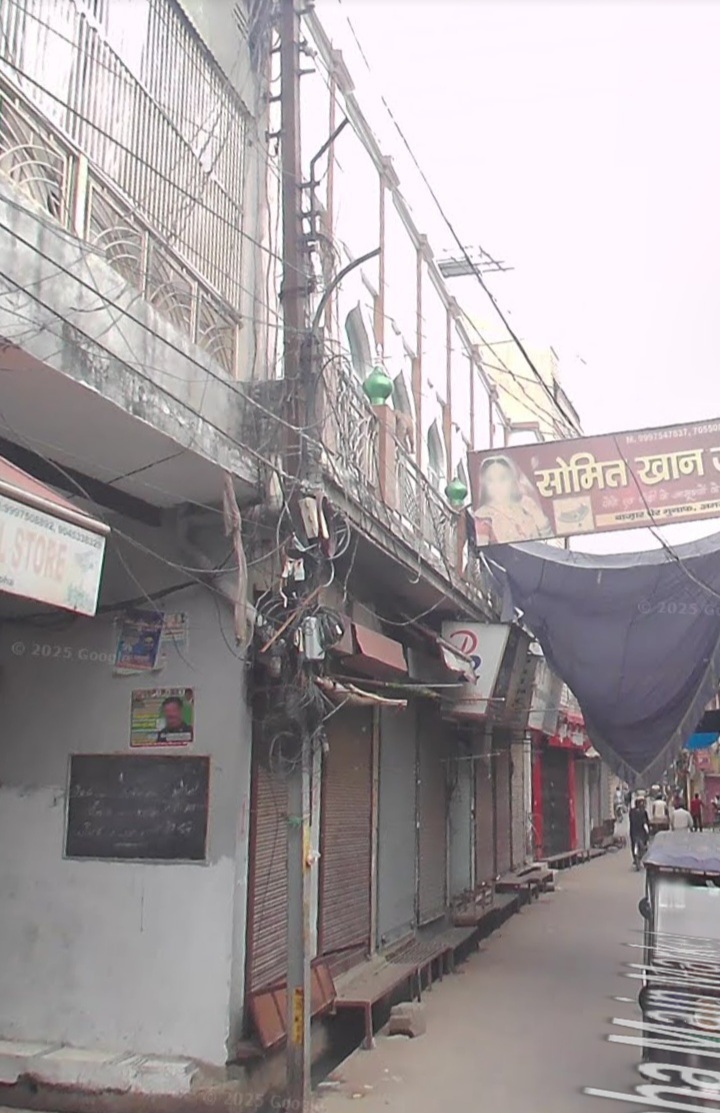
Masjid Uper Wale is a historic mosque located in Mohalla Maja Pota, a traditional neighborhood in Amroha, Uttar Pradesh. It serves as a key religious and cultural site for the local Muslim community, reflecting the architectural and spiritual heritage of the region. Situated near other landmarks like Masjid Saddo and Dargah Jhanda Shaheed, it embodies Amroha's longstanding Islamic traditions dating back to the medieval period. The mosque's name, translating to "Upper Mosque," likely refers to its elevated position in the mohalla. It continues to function as a place of worship, fostering community gatherings and prayers.
Masjid Uper Wale stands as a testament to Amroha's deep-rooted Islamic heritage, nestled in the heart of Mohalla Maja Pota, a vibrant locality known for its historical mosques and dargahs. Amroha, historically part of the Moradabad Sarkar under the Mughal Empire, has been a significant center of Muslim culture since the 12th century, when it was influenced by the Delhi Sultanate and later flourished under Mughal rule. The city's Islamic architecture, including mosques like the one built by Ambar Sultani during the Sultanate period and various Mughal-era structures, underscores its role as a hub for Sufi traditions and religious scholarship. Masjid Uper Wale, though not extensively chronicled in major historical texts, fits within this legacy as a modest yet enduring symbol of communal faith and architectural simplicity typical of regional mosques from the post-Sultanate era. The mosque's construction aligns with the broader historical context of Amroha, where Islamic presence intensified after the conquests of Mahmud of Ghazni in 1093 CE and under rulers like Ghiyasuddin Balban in the 13th century. During the Mughal period, particularly under Shah Jahan (1628–1658), Amroha saw the erection of forts, gates like the Moradabadi Darwaza (1642 CE), and numerous mosques that served as centers for prayer, education, and social cohesion. Masjid Uper Wale, with its probable origins in this timeframe, would have been built using local materials such as brick and lime mortar, featuring typical elements like a mihrab (prayer niche), minbar (pulpit), and an open courtyard for congregational prayers. Its "upper" designation may refer to its slightly elevated site within the mohalla, providing a vantage for the surrounding residential and spiritual landscape. Culturally, the mosque holds value as a focal point for the Pathan and Rohilla Muslim communities in Amroha, who trace their ancestry to Pashtun migrants and have preserved Urdu-speaking traditions alongside Islamic practices. Mohalla Maja Pota itself is dotted with sites like Masjid Saddo and Dargah Jhanda Shaheed, highlighting the area's emphasis on Sufi saints and shrines, such as the nearby tomb of Sheikh Saddu, a revered Muslim figure. Masjid Uper Wale contributes to this tapestry by hosting daily prayers, Friday congregations (Jumu'ah), and occasional community events, reinforcing the mohalla's role in fostering interfaith harmony in a region with a diverse population. Historically, during the 1857 Revolt and British colonial period, such mosques in Amroha served as quiet refuges for locals amid political upheavals, symbolizing resilience and continuity of faith. In the modern context, Masjid Uper Wale remains an active place of worship, integral to Amroha's identity as a district with over 2.5 million residents, where Islam is practiced by a significant portion of the population. Its preservation reflects efforts to maintain Uttar Pradesh's Islamic architectural heritage, akin to protected sites under the Archaeological Survey of India. While not as grand as larger mosques like the Jama Masjid in nearby Delhi, its cultural significance lies in its everyday role in sustaining the spiritual life of Mohalla Maja Pota's residents, echoing Amroha's evolution from a medieval settlement to a contemporary urban center. Visitors and locals alike value it for its serene ambiance and connection to the city's storied past, making it a quiet emblem of historical continuity and religious devotion.
Year of Built: Not Available
Address: MUNAF (UPER WALE, MASJID GHER, Mohalla Maja Pota, Amroha, Uttar Pradesh 244221
Country: India
State: Uttar Pradesh
District: Amroha
Pincode: 244221
Longitude: 78.4650° E
Latitude: 28.9024° N