
Indo Islamic Heritage


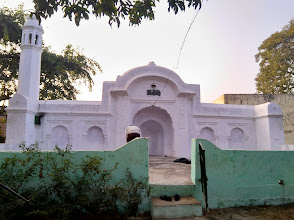
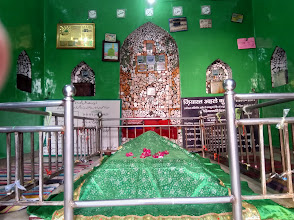
The Shah Nasruddin Chishti Dargah in Fazalpur, Amroha, Uttar Pradesh, is a revered Sufi shrine associated with the 13th-century saint Shah Nasruddin, a Chishti mystic known for his spiritual legacy and folklore of divine protection. The complex includes a historic mosque that serves as a central place of worship, reflecting the Chishti order's emphasis on devotion, tolerance, and community harmony. It attracts devotees seeking blessings, with the mosque facilitating daily prayers and embodying the site's cultural and historical significance in promoting interfaith unity in the region.
The Shah Nasruddin Chishti Dargah in Fazalpur, Amroha, stands as a profound testament to the Chishti Sufi tradition, which originated in Central Asia and flourished in India under saints like Khwaja Moinuddin Chishti. Shah Nasruddin, a contemporary Sufi mystic in the 13th century, is believed to have been a key figure in the Chishti order's early spread in the Doab region between the Ganges and Yamuna rivers. Historical accounts from local folklore and Sufi chronicles describe him as a spiritual guide who emphasized love, humility, and service to humanity, drawing followers from diverse communities in Amroha—a town historically known for its Naqvi Sayyid settlements dating back to 1190 AD from Wasit, Iraq. His life and teachings align with the Chishti silsila's core principles of inner purification and universal brotherhood, making the dargah a culturally valuable site that has fostered interfaith dialogue for over seven centuries. The dargah's historical significance is intertwined with the arrival of Sufi saints in India during the Delhi Sultanate, a period marked by cultural synthesis between Persian mysticism and indigenous traditions. Shah Nasruddin is said to have settled in Amroha around the mid-13th century, establishing a khanqah (Sufi hospice) that became a center for spiritual discourse. According to verified oral histories preserved by caretakers and documented in regional Sufi texts, he interacted with fellow mystics like Syed Sharfuddin Shah Wilayat, who arrived in Amroha from Iraq in 1272 AD. A notable legend recounts Shah Nasruddin advising Shah Wilayat on the challenges of settling in the scorpion-infested area, highlighting the shared spiritual landscape of the region. Shah Nasruddin's demise around 1270-1280 AD led to the construction of his shrine, which quickly became a pilgrimage site. The dargah's enduring appeal lies in its role as a beacon of tolerance; devotees from Hindu, Muslim, and other backgrounds have visited it for generations, seeking solace and witnessing its miracles, such as the protective aura attributed to the saint. This syncretic ethos contributed to Amroha's resilience during invasions, including the Maratha incursions in the 18th century, where local Sayyid communities, descendants of early settlers like Shah Nasruddin, played a defensive role. Central to the dargah complex is its mosque, a simple yet architecturally significant structure built in the 13th century alongside the tomb. Constructed during the early Delhi Sultanate period, the mosque exemplifies Indo-Islamic design with elements like arched mihrabs, geometric motifs, and sandstone elements typical of Sufi shrines in Uttar Pradesh. It serves as the primary place of worship, accommodating daily namaz (prayers) and special congregational events during Urs (the saint's death anniversary). The mosque's layout includes a prayer hall oriented toward Mecca, with a courtyard that allows for communal gatherings, reflecting the Chishti emphasis on collective devotion. Historical records indicate that the structure was likely expanded in the 16th-17th centuries under Mughal influence, as Amroha's Sayyid gentry received patronage from emperors like Akbar, who revered Chishti saints. The mosque's walls feature subtle Quranic inscriptions and floral carvings, symbolizing spiritual enlightenment, and it remains a focal point for zikr (remembrance of God) sessions. Unlike grander imperial mosques, this one embodies humility, aligning with Shah Nasruddin's ascetic life, and continues to host Jumu'ah (Friday) prayers attended by locals, reinforcing the site's role in preserving Islamic heritage amid regional cultural diversity. Culturally, the dargah and its mosque have enriched Amroha's identity as a Sufi hub, influencing Urdu poetry and folk traditions—early Urdu poets like Ismaeel Amrohvi traced their lineage to similar Chishti figures in the area. The site's historical value is evident in its contribution to the Chishti order's legacy, which promoted social reform and harmony during a time of political upheaval. Today, the mosque stands as a verified architectural relic, maintained by hereditary khadims (caretakers), and serves as a living monument to 13th-century Sufism, drawing pilgrims who value its unadorned sanctity over opulence.
Year of Built: Not Available
Address: WF87+34W, Fazalpur, Amroha, Mohammadpur Jati, Uttar Pradesh 244221
Country: India
State: Uttar Pradesh
District: Amroha
Pincode: 244221
Longitude: 78.469°E
Latitude: 28.903°N