
Indo Islamic Heritage


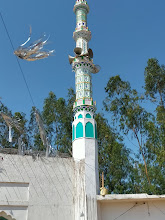
Mubarak Masjid is a modest village mosque located in the rural heartland of Uttar Pradesh, serving as a central place of worship for the Muslim community in Saidpur Khalsa, a village in Dhanora tehsil, Amroha district. It embodies the simple yet enduring Islamic architectural traditions of northern India, fostering daily prayers, community gatherings, and religious education in a predominantly agrarian setting. Historically, it reflects the long-standing Muslim presence in the Rohilkhand region, contributing to the cultural fabric of Amroha, known for its Sufi heritage and syncretic traditions.
Mubarak Masjid, situated in the quiet village of Saidpur Khalsa within Dhanora tehsil of Amroha district, stands as a testament to the deep-rooted Islamic heritage of Uttar Pradesh's Rohilkhand region. Amroha, historically significant for its role under Mughal patronage and as a hub of Sufi saints like Sheikh Saddu, whose shrine graces the district headquarters, has long been a melting pot of Hindu-Muslim cultural exchanges. The mosque, named "Mubarak" meaning "blessed," likely derives its significance from local traditions associating it with spiritual blessings, aligning with the area's legacy of religious tolerance and communal harmony dating back to the medieval period. While specific records of its construction are scarce in available historical archives, such village mosques in the region were typically established during the 18th or 19th century under local Muslim landowners or during the Nawabi era, when Islam spread through agrarian communities in the upper Gangetic plains. The mosque's architecture, though unpretentious, features typical elements of vernacular Indo-Islamic design, including a simple prayer hall oriented towards Mecca, arched entrances, and possibly a minaret or dome suited to the local climate and resources. Culturally, Mubarak Masjid plays a vital role in preserving Islamic practices amid Amroha's diverse populace, where Muslims form a significant portion alongside Hindu communities. It hosts daily congregational prayers (Salah), Friday Jumu'ah sermons, and Ramadan observances, strengthening social bonds in Saidpur Khalsa—a village emblematic of the area's agricultural lifestyle, with fields of sugarcane, wheat, and mango orchards surrounding it. Historically, Amroha's evolution from ancient settlements linked to Hastinapur in the Mahabharata era to a Mughal-era trade center underscores the mosque's place in a continuum of religious sites that have promoted interfaith coexistence. For instance, the district's Jama Masjid and Sufi shrines highlight a shared history of architecture blending Persian, Mughal, and indigenous styles, much like the modest yet functional Mubarak Masjid. In an era of rapid urbanization, this mosque remains a cultural anchor, educating younger generations in Quranic studies and fostering values of charity (Zakat) and community service, thereby upholding the historical significance of Islam in Uttar Pradesh's rural landscapes.
Year of Built: Not Available
Address: VG76+H45, Saidpur Khalsa, Uttar Pradesh 244221
Country: India
State: Uttar Pradesh
District: Amroha
Pincode: 244221
Longitude: 78.4698° E
Latitude: 28.9031° N