
Indo Islamic Heritage


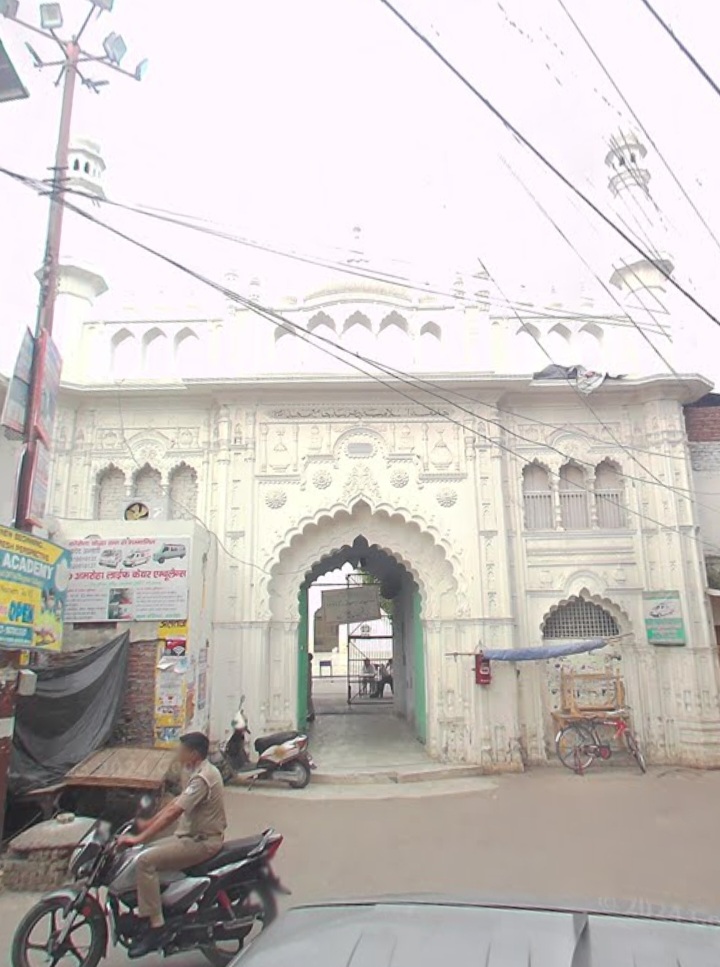
The Badi Masjid in Mohammadi Sarai, Amroha, Uttar Pradesh, is a historic mosque associated with the Delhi Sultanate era, particularly the Slave Dynasty. It features an inscription from the reign of Muiz al-Din Qaiqabad (r. 1286–1290 CE), marking it as a significant early Islamic architectural remnant in the region.
The Badi Masjid, located in the Mohammadi Sarai locality of Amroha (also known as Jyotiba Phule Nagar district), stands as a culturally and historically vital monument from the Delhi Sultanate period. Amroha, situated in the fertile Gangetic plains of Uttar Pradesh, has long been a crossroads of cultural influences, and this mosque exemplifies the architectural and epigraphic legacy of the Slave Dynasty (Mamluk Dynasty), which ruled northern India from 1206 to 1290 CE. The structure is part of the broader Saddo Masjid complex in Mohalla Saddo, though the Badi Masjid itself is distinguished by its historical inscription, making it a key site for understanding early Indo-Islamic heritage. Historically, the mosque's significance is tied to the reign of Muiz al-Din Qaiqabad, the tenth and penultimate sultan of the Slave Dynasty. Qaiqabad, grandson of Sultan Ghiyas ud din Balban and son of Bughra Khan (ruler of Bengal), ascended the throne in 1286 CE amid political intrigue in Delhi. His brief rule was marked by internal conflicts, including tensions with his father and the rise of regent Malik Firuz, but it also saw the commissioning of inscriptions that affirmed his authority. The Badi Masjid bears one of only four surviving inscriptions from Qaiqabad's era, and uniquely, it records his full titles, providing invaluable insights into the administrative and titulary conventions of the time. This epigraph, located within the Saddo Masjid complex, dates to approximately 1286–1290 CE, aligning with the sultan's short reign before his deposition and death in 1290 CE. The inscription's artistic quality, executed by a skilled hand, highlights the patronage of calligraphy and epigraphy under the Slave sultans, blending Persian influences with local craftsmanship. Architecturally, the Badi Masjid follows the modest yet functional style typical of early Sultanate mosques in northern India. Constructed primarily from local stone and possibly incorporating elements from pre-existing structures, it features a simple prayer hall oriented toward the qibla (direction of Mecca). The current form shows signs of later reconstructions, with a late-Mughal aesthetic overlay, suggesting renovations over centuries to preserve its sanctity. The original structure likely included arched mihrabs (niches indicating the qibla direction) and possibly corbelled elements, though much of the early fabric has been altered due to time and neglect. Despite its decrepit state today—described as in extreme disrepair and contested property—the mosque's inscription remains a primary source for historians studying the transition from the Slave Dynasty to the Khalji era. Entry to the site is restricted without local guidance, underscoring its vulnerability, but it continues to symbolize the enduring Islamic presence in Amroha, a town known for its Sufi saints and mango orchards. Culturally, the Badi Masjid contributes to Amroha's rich tapestry as a center of Islamic scholarship and spirituality. The region, historically part of the Doab between the Ganges and Yamuna rivers, witnessed waves of Muslim settlement from the 12th century onward, fostering syncretic traditions. The mosque's association with Qaiqabad's era reflects the sultan's efforts to consolidate power through religious endowments, promoting Islam while navigating Hindu-majority territories. In the broader context of Uttar Pradesh's heritage, it parallels other Sultanate-era mosques like those in nearby Hansi and Barwala, emphasizing the dynasty's architectural footprint. Today, amid ongoing preservation challenges, the Badi Masjid serves as a reminder of India's pluralistic past, where monuments like this bridged diverse communities despite political upheavals. Its verified historical details, drawn from epigraphic records, affirm its role as a cornerstone of medieval Indian history.
Year of Built: Not Available
Address: WF48+363, Badi masjid mohammadi saraye, Amroha, Uttar Pradesh
Country: India
State: Uttar Pradesh
District: Amroha
Pincode: 244221
Longitude: 78.4650° E
Latitude: 28.9024° N