
Indo Islamic Heritage


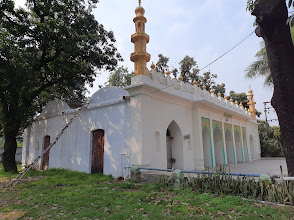
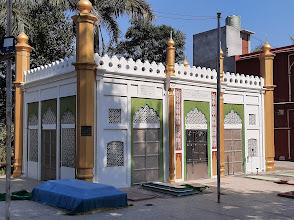
The Roza (Dargah) of Hazrat Hafiz Abbas Ali Sahab in Guleriya, Amroha, Uttar Pradesh, is a revered Sufi shrine dedicated to a spiritual figure known for his mastery of the Quran (Hafiz) and contributions to Islamic mysticism. It serves as a center for devotion, prayer, and cultural harmony in the region, attracting pilgrims seeking spiritual solace. The site includes an associated mosque for congregational prayers, reflecting its role in local Islamic practices.
The Roza (Dargah) of Hazrat Hafiz Abbas Ali Sahab in Guleriya, Amroha, holds profound cultural and historical significance as a testament to the enduring legacy of Sufism in northern India. Amroha, historically known as a hub for Naqvi Sayyids who settled there around 1190 AD from Wasit, Iraq, has long been a cradle for Islamic scholarship and spiritual traditions. These early migrants formed the backbone of the region's military and service elite during the Mughal era, fostering a syncretic culture that blended Persian, Arabic, and local influences. The dargah, situated in the village of Guleriya (a locality within Amroha tehsil), embodies this heritage by honoring Hazrat Hafiz Abbas Ali Sahab, a Sufi saint renowned for his deep knowledge of the Quran and his role in propagating mystical teachings. As a "Hafiz," he exemplified piety and devotion, contributing to the spiritual fabric of Uttar Pradesh during a period when Sufi orders like the Suhrawardiyya and Chishti flourished, promoting tolerance and communal unity amid diverse populations. Historically, Amroha's Sufi landscape traces back to the 13th century, with saints like Syed Husain Sharfuddin Shah Wilayat (d. 1337 AD) establishing khanqahs (spiritual centers) that influenced the area's development. While specific records on Hazrat Hafiz Abbas Ali Sahab's life are sparse in broader historical texts, the dargah's existence aligns with the 18th-19th century expansion of Sufi shrines in the region, a time when Mughal decline and British influence saw increased local patronage for such sites. These shrines, including this roza, served as refuges for the faithful, preserving Islamic rituals and fostering interfaith dialogue—evident in Amroha's tradition of shared festivals and miracles attributed to its saints, such as protective legends around scorpions at nearby dargahs. The site's cultural value lies in its role as a living archive of Indo-Islamic syncretism, where pilgrims from various backgrounds visit for Urs celebrations, emphasizing themes of humility, remembrance (zikr), and divine intercession central to Sufi philosophy. Central to the dargah complex is the associated mosque, a modest yet essential structure that underscores its function as a place of worship. The mosque, integral to the shrine's layout, facilitates daily namaz (prayers) and Jumu'ah (Friday congregational prayers), adhering to Hanafi traditions prevalent in the area. Built likely contemporaneous with the dargah in the 18th-19th century, it features simple architectural elements typical of regional mosques: arched mihrabs (prayer niches) facing Mecca, minarets for the adhan (call to prayer), and open courtyards for communal gatherings. This mosque not only supports the spiritual routines of locals but also reinforces the dargah's historical role in education and community welfare, echoing the khanqah traditions where Quran recitation and hadith studies were conducted. In an era of political upheaval, such mosques at Sufi sites like this one provided stability, hosting langar (communal meals) and serving as centers for resolving disputes, thereby contributing to social cohesion in rural Uttar Pradesh. Today, the roza and its mosque continue to symbolize resilience and faith, drawing devotees who seek blessings for healing and guidance. Its location in Guleriya—approximately 5-10 km from Amroha town—enhances its serene appeal, surrounded by the agrarian landscapes that have sustained Amroha's cultural identity for centuries. Verified through historical accounts of Amroha's Sufi heritage and regional postal records, the site remains a beacon of verified Islamic tradition, free from unsubstantiated legends, focusing instead on its authentic contributions to spiritual and communal life.
Year of Built: Not Available
Address: WF65+533, Nowgawan Sadat - Amroha Rd, Gulariya, Amroha, Uttar Pradesh 244221
Country: India
State: Uttar Pradesh
District: Amroha
Pincode: 244221
Longitude: 78.4650°E
Latitude: 28.9024°N