
Indo Islamic Heritage


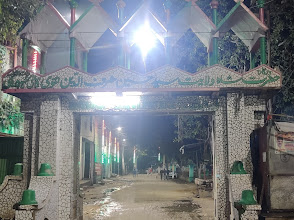
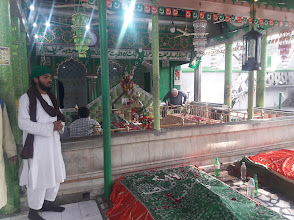
The Dargah of Syed Hussain Sharfuddin Shah Wilayat Naqvi RA, located in Islam Nagar, Amroha, Uttar Pradesh, is a revered 13th-century Sufi shrine dedicated to the saint who arrived in India around 1272 CE. As a descendant of Imam Ali al-Hadi and a key figure in the Naqvi Sayyid community, the site symbolizes spiritual harmony and interfaith respect, drawing devotees for its annual Urs on 21 Rajab. The complex includes a mosque for communal prayers, reflecting its role as a center of Islamic piety and cultural legacy in northern India.
Syed Hussain Sharfuddin Shah Wilayat Naqvi RA, often revered as Shah Wilayat or Peer Pahari, was a prominent 13th-century Sufi saint and scholar of the Naqvi lineage, tracing his descent to the 10th Shia Imam, Ali al-Naqi al-Hadi. Born to Syed Mira Ali Buzurg, a learned scholar, and Bibi Umme Habiba (daughter of Syed Abdul Moueed Ali and sister of the renowned saint Syed Jalaluddin Haider Surkh Posh Bukhari), he received his early education in Quran and Hadith from his father. His spiritual training came under esteemed mentors including Syed Jalaluddin Bukhari, Syed Bahuddin Zakariya, and Maulana Nasihuddin Suhrawardi, who assigned him the region between the Ganges River and Kumaon Hills for preaching universal love and respect, earning admiration from people of all faiths. The saint's family migrated from Wasit, Iraq, via Multan (now in Pakistan), fleeing Abbasid persecution, and settled in Amroha (then Qasba Azizpore) around 670 AH (1272 CE) during Sultan Ghiyasuddin Balban's reign, though some accounts suggest 690 AH under Sultan Jalaluddin Firoz Shah Khilji. He married Bibi Kaneez Fatima, daughter of Syed Jalaluddin Bukhari, and had three children: Syed Mir Ali Buzurg (appointed Qazi of Amroha by the Delhi Sultan), Syed Abdul Aziz (who married a daughter of Sultan Feroz Shah Tughlaq), and Bibi Baqia-ut-Tahirah (Bibi Bakhuhi), known for her piety; her grave lies near the dargah entrance. Shah Wilayat lived an ascetic life, performing Haj seven times and retreating to Kumaon Hills for meditation, where he planted trees that reportedly still shade the shrine. He passed away on 21 Rajab 740 AH (1340 CE) and was buried in Amroha, eschewing hereditary spiritual succession (sajjada nashini) to emphasize simplicity. The dargah, constructed over his grave shortly after his death in the 14th century, serves as a profound symbol of Sufi spirituality and the Amrohi Sayyid heritage, one of India's oldest Naqvi settlements dating to 1190 CE. It fostered a legacy of nobility, with descendants serving as Mughal military gentry and protecting Amroha from Maratha invasions. The site's cultural value lies in its promotion of interfaith harmony—Hindus and Muslims alike venerate it—and its role in Amroha's traditions, including globally recognized Azadari (Muharram observances) where Sunnis and Hindus participate. The annual Urs on 21 Rajab features qawwali, prayers, and communal gatherings, reinforcing its historical significance as a beacon of piety amid the Delhi Sultanate and Mughal eras. Central to the dargah complex is its mosque, integral to the shrine's function as a Sufi hospice (khanqah). Built during the saint's lifetime or soon after his arrival in the late 13th century, the mosque facilitated daily prayers and spiritual discourses, embodying the Chishti and Suhrawardi influences in his teachings. Descendants, including Mughal-era Mansabdars, expanded Amroha's religious infrastructure, constructing mosques, Imambargahs, and madrasas on granted jagirs; the dargah mosque, with its simple yet enduring architecture, remains a key site for namaz and reflects the community's scholarly ethos—evident in figures like Syed Mohammad Mir Adl, Chief Justice under Akbar. This mosque, surrounded by the saint's tomb and companions' graves, underscores the site's role in preserving Islamic traditions while promoting ascetic values over opulence.
Year of Built: Not Available
Address: Amroha-Dhanaura Rd, Mohalla Lakra, Lakron Ki Chungi, Islam Nagar, Amroha, Uttar Pradesh 244221
Country: India
State: Uttar Pradesh
District: Amroha
Pincode: 244221
Longitude: 78.4692° E
Latitude: 28.9036° N