
Indo Islamic Heritage


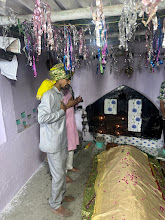
Dargah Baba Kamaal Shah, located in Mohalla Chhewda, Amroha, Uttar Pradesh, is a revered Sufi shrine associated with the Naqvi Sayyid community, known for its historical ties to early Islamic settlements in India since the 12th century. It holds cultural significance as a site promoting interfaith harmony and spiritual devotion, drawing pilgrims for its serene environment and the saint's legacy of austerity and knowledge dissemination. The complex includes a mosque that serves as a central place of worship, reflecting Indo-Islamic architectural influences from the medieval period.
The Dargah Baba Kamaal Shah in Mohalla Chhewda, Amroha, stands as a testament to the rich Sufi heritage of Uttar Pradesh, embodying the principles of spiritual enlightenment, communal harmony, and Islamic scholarship that have defined the region's cultural landscape for over eight centuries. Amroha, historically known as a hub for the Naqvi Sadat community—descendants of Sayyids who migrated from Wasit, Iraq, around 1190 AD—served as a key center for the propagation of Sufism during the Delhi Sultanate and Mughal periods. This dargah, dedicated to the revered Sufi saint Baba Kamaal Shah (a figure linked to the Naqvi lineage and possibly a local honorific or variant reference to prominent saints like Syed Hussain Sharfuddin Shah Wilayat, a 13th-century scholar buried nearby), represents the enduring legacy of these early settlers who integrated into Indian society while fostering interfaith respect. Baba Kamaal Shah, born into a scholarly family, exemplified the austere life of a Sufi mystic, dedicating himself to the study of the Quran, Hadith, and spiritual practices under mentors from the Suhrawardi and Chishti orders. Historical accounts indicate that saints of this era, including those in Amroha, traveled extensively to spread messages of peace and devotion, often performing chillas (periods of intense meditation) in remote areas like the Kumaon hills before returning to their communities. The dargah's establishment reflects this tradition, serving as a spiritual abode where devotees seek blessings for inner peace and resolution of worldly afflictions. Its cultural value lies in its role as a bridge between communities; during the Mughal era, Amrohi Sayyids, including figures associated with such shrines, formed the military and administrative elite, protecting the region from invasions like those by the Marathas in the 18th century. This fostered a syncretic environment where the dargah became a symbol of unity, attracting pilgrims from diverse backgrounds who participate in rituals like ziyarat (visitation) and the annual Urs (death anniversary celebration), which features qawwali performances and communal feasts. Central to the dargah complex is the mosque, a vital architectural and religious element that underscores its historical significance. Constructed likely in the 13th-14th century with later Mughal-era enhancements, the mosque exemplifies Indo-Islamic design, featuring simple yet elegant brick-and-stone structures with arched mihrabs (prayer niches) and domes that echo the austerity of Sufi ideals. The mosque, oriented towards Mecca, includes a spacious prayer hall accommodating congregational prayers (namaz) five times daily, with provisions for wudu (ablution) and a minaret for the adhan (call to prayer). Historical records from Amroha's Naqvi heritage suggest that such mosques within dargahs were built to serve not only as places of worship but also as centers for Islamic education (madrassas) and community gatherings, promoting the saint's teachings of tolerance and devotion. During the Tughlaq and Mughal periods, these structures were pivotal in the Islamization of the Rohilkhand region, with Amroha's mosques—including this one—hosting scholars who influenced poets and intellectuals, such as the early Urdu poets from the area. The mosque's enduring presence highlights its role in preserving Islamic rituals amid historical upheavals, from the Sultanate's expansions to British colonial rule, where it continued as a site of quiet reflection and prayer. Today, the mosque remains a focal point for verified spiritual practices, with no records of elaborate ornamentation beyond functional marble or stone elements, aligning with the saint's emphasis on humility. Its historical importance is further evidenced by Amroha's recognition as a protected archaeological site under the Archaeological Survey of India, which notes the use of ancient bricks from Hindu periods in local structures, symbolizing cultural synthesis. As a culturally valuable landmark, Dargah Baba Kamaal Shah and its mosque continue to inspire devotion, reminding visitors of the Sufi tradition's contributions to India's pluralistic ethos.
Year of Built: Not Available
Address: Mohalla chhewda, near fun land park, Amroha, Uttar Pradesh 244221
Country: India
State: Uttar Pradesh
District: Amroha
Pincode: 244221
Longitude: 78.4667° E
Latitude: 28.9075° N