
Indo Islamic Heritage


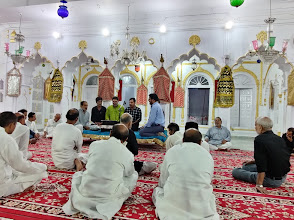
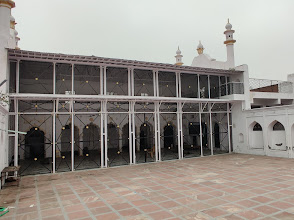
Azakhana Husainia Darbar-e-Shahwilayat, also known as Bara Imambara (Husainiya-Darbar-e-Shahwilayat), is a historic Shia religious complex in Amroha, Uttar Pradesh, dedicated to the commemoration of Imam Husayn and associated with the legacy of Sufi saint Syed Hussain Sharfuddin Shahwilayat. Built as an azakhana (mourning hall) and imambara, it serves as a key site for Muharram observances and spiritual gatherings, reflecting the rich Shia heritage of the Naqvi Sadat community in the region.
The Azakhana Husainia Darbar-e-Shahwilayat stands as a culturally and historically significant landmark in Amroha, embodying the enduring Shia Muslim traditions of mourning and devotion in northern India. Located in the heart of Mohallah Lakra, this imambara—often referred to interchangeably as Bara Imambara Husainiya—functions primarily as an azakhana, a dedicated space for the ritualistic remembrance of the martyrdom of Imam Husayn ibn Ali at the Battle of Karbala in 680 CE. As a husayniyya, it facilitates spiritual practices, religious education, and annual commemorations, particularly during Muharram, drawing devotees from across Uttar Pradesh and beyond. Its architecture and purpose align with the broader South Asian tradition of imambaras, which emerged as multipurpose halls for Shia rituals, distinct from mosques, and often integrated with elements like mosques for daily prayers. Historically, the imambara's significance is intertwined with the Naqvi Sadat community of Amroha, descendants of Sayyids who trace their lineage to the 10th Imam, Ali al-Naqi al-Hadi, and who settled in the region around 1272 CE under the Delhi Sultanate. The town of Amroha itself gained prominence through the arrival of Syed Hussain Sharfuddin Shahwilayat (d. 1336 CE), a Sufi saint from Wasit, Iraq, whose spiritual legacy fostered a syncretic cultural environment blending Shia devotion with local Sufi influences. While Shahwilayat's dargah in Danishmandan is a separate site renowned for its miraculous scorpions that do not harm visitors, the Azakhana Husainia Darbar-e-Shahwilayat honors his broader "darbar" (court) of wilayat (sainthood) by serving as a center for Husayni rituals. Authentic historical accounts, such as those preserved in local chronicles like Tareekh-e-Wastiya, indicate that the structure was erected by Musammat Sakeena Khatoon, a notable benefactress in the 19th century, during a period when Shia endowments proliferated under Mughal and post-Mughal patronage in Uttar Pradesh. This era saw the construction of similar complexes, like the nearby Azakhana Wazeer-un-Nisa (built in 1802 CE with an integrated mosque), highlighting Amroha's role as a hub for Naqvi scholars and artisans who contributed to religious architecture. Culturally, the imambara plays a vital role in preserving Shia practices amid Amroha's diverse populace, where Muslims form a significant urban majority alongside Hindus. It hosts majlis (assemblies) reciting the events of Karbala, nohas (elegies), and processions that promote communal harmony, echoing the saint's message of piety and simplicity. The site's inclusion in the Shia Central Waqf Board's records underscores its protected status as a waqf property, ensuring its maintenance for future generations. In a region marked by historical events like the Battle of Amroha (1305 CE) during Alauddin Khilji's reign, this imambara symbolizes resilience and spiritual continuity, making it an essential repository of verified Shia history in Uttar Pradesh.
Year of Built: 19th Century
Address: WF57+CGF, Mohalla Lakra, Fazalpur, Amroha, Uttar Pradesh 244221
Country: India
State: Uttar Pradesh
District: Amroha
Pincode: 244221
Longitude: 78.4675° E
Latitude: 28.9044° N