
Indo Islamic Heritage


.png)
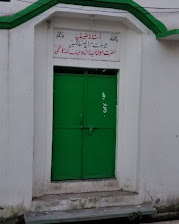
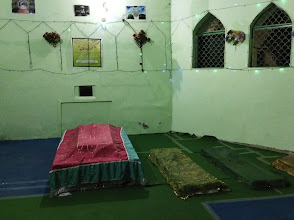
Hazrat Syed Shah Zaifullah Kazmi (Rh.A), also referred to in lineage as an ancestor of the revered Syed Muhammad Khaleel Kazmi Chishti (known as Allama Khaki), was a prominent Islamic scholar and Sufi figure from the Kazmi Naqvi Sayyid family in Amroha, Uttar Pradesh. As part of a historic lineage tracing back to Imam Musa Kazim (A.S.), he contributed to the spiritual and scholarly heritage of the region. The associated mosque, part of the Dargah complex in Mohalla Katkui (also spelled Katkoi), serves as a key site for prayer and reflection, embodying the enduring Sufi traditions of the Amrohi Sayyids who settled in the area around 1190 AD from Wasit, Iraq. The site holds cultural value for promoting interfaith harmony and Islamic learning in northern India.
The Kazmi family, to which Hazrat Syed Shah Zaifullah Kazmi (Rh.A) belongs, represents one of the oldest Naqvi Sadat settlements in India, with roots in Amroha dating back to approximately 1190 AD. This community of Sayyids, descendants of Imam Musa Kazim through 35 generations, migrated from Wasit in Iraq and played a pivotal role in the socio-religious landscape of Uttar Pradesh during the Delhi Sultanate and Mughal eras. Hazrat Syed Shah Zaifullah Kazmi is documented in the family genealogy as a key figure in this lineage, specifically as the great-grandfather of Hazrat Syed Muhammad Khaleel Kazmi Chishti (1896–1959), a renowned Sufi scholar titled "Khatim-ul-Muhaddiseen" and "Qudwat-us-Salikeen." This connection underscores his historical significance as a link in a chain of pious scholars who emphasized Islamic jurisprudence, Sufi mysticism, and community welfare. The Amrohi Sayyids, including the Kazmi branch, formed the military and administrative gentry under Mughal rule, with many serving as Mansabdars (nobles) responsible for maintaining garrisons and estates. By the end of the Mughal period, over 116 families from this lineage held such positions in Amroha, fostering a culture of piety, tolerance, and scholarship. They constructed mosques, madrasas, and imambargahs, contributing to the architectural and spiritual fabric of the region. During the Maratha invasions in the 18th century, Amrohi Sayyid soldiers are credited with protecting the area, preserving its heritage amid regional turmoil. Hazrat Syed Shah Zaifullah Kazmi's era aligns with this period of consolidation, where family members like his descendants advanced Islamic education and Sufi practices, influencing figures such as Allama Syed Ahmad Saeed Kazmi (1913–1986), who later migrated to Pakistan and became a leading Barelvi scholar. The mosque associated with the Dargah of Syed Liqaul Amin Kazmi Khaleeli (likely referring to a revered family elder or title in the lineage, possibly linked to "Liqa-ul-Amin" as an honorific) is situated within the Dargah complex in Mohalla Katkui, a historic neighborhood in Amroha. This mosque exemplifies Indo-Islamic architecture typical of 18th-19th century constructions in the region, featuring elements like arched prayer halls and minarets adapted from Mughal styles. It serves as a central place of worship for the local Muslim community, particularly the Sunni Barelvi sect, and hosts daily prayers, Quranic recitations, and annual Urs observances commemorating Sufi saints. The structure promotes cultural value by drawing pilgrims for spiritual reflection, emphasizing themes of devotion and unity drawn from the Kazmi family's teachings. Historically, such mosques in Amroha were built on family estates (jagirs) awarded for scholarly and military services, reinforcing the site's role in preserving Islamic traditions amid colonial transitions in the 19th century.
Year of Built: Not Available
Address: WF6F+P4X, Near Masjid-e-Zaifiya(Chaupal, Katkui, Amroha, Uttar Pradesh 244221
Country: India
State: Uttar Pradesh
District: Amroha
Pincode: 244221
Longitude: 78.46984° E
Latitude: 28.90314° N