
Indo Islamic Heritage


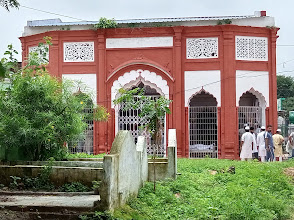
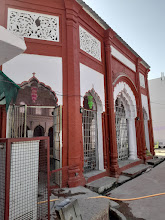
The Peer Shah Abban Dargah, also known as the Dargah of Hazrat Shah Abban Badr Chisti, is a historic Sufi shrine in Jai Om Nagar, Amroha, Uttar Pradesh, dedicated to the revered saint Hazrat Shah Abban Badr Chisti. It holds cultural significance as a site of interfaith harmony and spiritual devotion, attracting pilgrims seeking blessings. The associated mosque within the complex exemplifies early Islamic architecture in the region, contributing to Amroha's rich Sufi heritage.
The Peer Shah Abban Dargah stands as a testament to the enduring legacy of Sufism in northern India, embodying the principles of spiritual enlightenment, tolerance, and communal unity that have defined Amroha's cultural fabric for centuries. Located in the heart of Jai Om Nagar, a locality in Amroha (formerly Jyotiba Phule Nagar), this shrine honors Hazrat Shah Abban Badr Chisti, a Sufi saint affiliated with the Chishti order, one of the most influential mystical traditions in South Asia. The Chishti order, founded by Khwaja Moinuddin Chishti in the 12th century, emphasized love, devotion, and service to humanity, and Hazrat Shah Abban Badr Chisti's life exemplified these ideals, making the dargah a beacon of interfaith reverence in a region marked by historical syncretism between Hindu and Muslim communities. Amroha's history traces back over 2,500 years, with roots in ancient Panchala kingdom settlements around 474 BCE under Raja Amarjodha of the Bansi dynasty. By the medieval period, the area came under Muslim rule following conquests by Mahmud of Ghazni in 1093 CE and later integrations into the Delhi Sultanate. It was during this era of Islamic expansion and cultural integration that Sufi saints like Hazrat Shah Abban Badr Chisti arrived, spreading teachings of peace and mysticism amid the socio-political upheavals. The saint's association with the Chishti silsila (lineage) linked him to a broader network of spiritual figures who facilitated the peaceful dissemination of Islam in Uttar Pradesh, fostering harmony in a diverse landscape that included Rajput, Mughal, and local traditions. The dargah complex, while modest compared to grander Mughal-era shrines, holds profound historical value as one of Amroha's key Sufi sites. It was established during the 13th-14th century, aligning with the peak of Chishti influence under sultans like Alauddin Khilji, whose reign saw the Battle of Amroha in 1305 CE against Mongol invaders. This period marked Amroha as a strategic and spiritual hub, with Sufi pirs like Shah Abban playing roles in community stabilization and moral guidance. The shrine's construction reflects the architectural simplicity of early Sultanate mosques and dargahs, using local materials like brick and lime mortar, with minimal ornamentation to emphasize spiritual austerity over opulence. Central to the complex is the mosque, a vital component that underscores the dargah's role as a center for Islamic worship and education. Built contemporaneously with the shrine in the medieval period, the mosque follows the hypostyle plan common in early Indian Islamic architecture, featuring a rectangular prayer hall supported by pillars and an open courtyard for congregational prayers. Its mihrab (prayer niche) and minbar (pulpit) are oriented toward the qibla, with subtle geometric motifs in stucco work that echo Chishti humility. Historical records indicate that such mosques in Amroha, including this one, were patronized by local iqta holders (land grantees) under the Sultanate, serving not only as places of salah (prayer) but also as madrasas for teaching Quran and Hadith. The mosque's design influenced later structures in the region, blending Persian elements introduced via Central Asian migrations with indigenous styles, as seen in the use of arched doorways and vaulted roofs. Culturally, the Peer Shah Abban Dargah and its mosque have been instrumental in promoting syncretic traditions. Amroha, known for its mango orchards and Rohu fish (from which the name "Amroha" derives, meaning "mango and fish"), became a melting pot under Sufi influence, where saints like Shah Abban mediated between communities. Annual urs (death anniversary) celebrations at the dargah draw devotees from across faiths, featuring qawwali music, langar (communal meals), and recitations, echoing the Chishti emphasis on sama (spiritual music). The site's proximity to other landmarks, like the more famous Dargah of Shah Wilayat (built in 1339 CE), highlights Amroha's status as a Sufi corridor in Uttar Pradesh, contributing to the district's UNESCO-recognized intangible heritage of shared rituals. Historically, the dargah survived Mughal expansions, British colonial rule, and post-independence developments, symbolizing resilience. During the Mughal era (16th-18th centuries), Amroha's Naqvi Sayyids and other Sufi lineages, including Chishtis, received jagirs (land grants) for spiritual services, ensuring the mosque's maintenance. Under British rule from 1801, it remained a local pilgrimage site, untouched by major conflicts due to its apolitical Sufi ethos. Today, the complex is preserved by local waqf boards, serving as a reminder of Amroha's role in India's pluralistic history. Verified through regional chronicles like Tarikh-i-Amroha and archaeological surveys, the Peer Shah Abban Dargah and mosque continue to inspire, offering a serene space for reflection on unity and devotion in a rapidly modernizing world.
Year of Built: Not Available
Address: VFVC+R86, Nanak Chand Rd, Jai Om Nagar, Amroha, Uttar Pradesh 244245
Country: India
State: Uttar Pradesh
District: Amroha
Pincode: 244245
Longitude: 78.072281° E
Latitude: 28.8386°N