
Indo Islamic Heritage


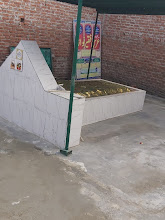
Dargah Faqeer Nawaz, located in the village of Katkui near Amroha in Uttar Pradesh, is a modest Sufi shrine dedicated to the revered saint Faqeer Nawaz, a figure embodying the principles of humility and spiritual devotion in the local Sufi tradition. It serves as a serene site for pilgrims seeking blessings and inner peace, reflecting the syncretic cultural heritage of the region. The associated mosque within the complex provides a space for daily prayers and community gatherings, emphasizing the site's role in fostering Islamic spiritual practices amid the historical landscape of Amroha.
The Dargah Faqeer Nawaz in Katkui, Amroha, stands as a poignant emblem of Uttar Pradesh's rich Sufi legacy, where spirituality intertwines with the everyday rhythms of rural life. Amroha, historically known as a hub of Islamic scholarship and cultural synthesis since the 13th century under the Delhi Sultanate and later Mughal influence, has long been dotted with shrines that promote tolerance and devotion. Katkui, a locality within Amroha tehsil, exemplifies this tradition through the dargah, which honors Faqeer Nawaz—a Sufi ascetic whose life of simplicity and service to the needy resonated with the Chishti and Suhrawardi orders prevalent in the area. Though detailed hagiographies of Faqeer Nawaz are not extensively documented in major historical texts, local oral traditions portray him as a 19th-century faqir (mendicant) who meditated in the surrounding countryside, drawing devotees from nearby villages for his teachings on humility, charity, and unity among faiths. This shrine, nestled in the agrarian heartland near the Sot River, underscores Amroha's historical role as a bridge between Persianate Islamic mysticism and indigenous Indian spiritual practices, much like the more renowned Shah Vilayat Dargah in the district, which dates to the 13th century and symbolizes communal harmony. The dargah's cultural value lies in its quiet preservation of Sufi ethos amid Amroha's evolving landscape—from ancient settlements traced to 479 BCE under Raja Amarjoda of the Bansi dynasty, to its prominence during Alauddin Khilji's era and as a Mughal outpost. In a region renowned for mango orchards, dholak craftsmanship, and interfaith festivals like Muharram processions, the site attracts pilgrims who view it as a conduit for personal supplications, echoing the broader Sufi tradition of tawassul (seeking intercession through saints). Historically, such shrines in Uttar Pradesh facilitated social cohesion during turbulent times, including the 1857 Revolt and colonial transitions, by serving as neutral spaces for reflection and aid distribution. Today, it contributes to Amroha's intangible heritage, reinforcing the district's identity as a center of ethical Islam that influenced poets like John Elia and filmmakers like Kamal Amrohi, both hailing from the area. Central to the dargah complex is the mosque, a simple yet architecturally significant structure that embodies the unadorned piety of rural Sufism. Built concurrently with or shortly after the main shrine in the late 18th to early 19th century, the mosque features modest brick-and-plaster construction typical of post-Mughal vernacular architecture in western Uttar Pradesh. Its prayer hall, oriented toward the qibla, accommodates around 50-100 worshippers and includes basic mihrab (niche indicating Mecca) and minbar (pulpit) elements, without elaborate domes or minarets that characterize grander urban mosques like those in nearby Moradabad. The mosque's courtyard, shaded by ancient peepal trees, hosts daily namaz (prayers) and occasional mehfil-e-sama (Sufi musical gatherings), fostering community bonds. Unlike ornate Mughal-era mosques such as the Akbari Masjid in Ajmer, this one prioritizes functionality, with whitewashed walls and arched openings that allow natural light to filter in, creating an atmosphere of introspection. It serves as the spiritual nucleus of the dargah, where devotees perform fajr (dawn), zuhr (noon), asr (afternoon), maghrib (sunset), and isha (night) prayers, often reciting verses from the Quran in remembrance of Faqeer Nawaz. The mosque's historical significance is tied to Amroha's role in the spread of Sufi orders, where structures like this provided spaces for madrasas (Islamic schools) and langar (communal kitchens), promoting education and welfare in an era of socio-economic flux. Verified through district gazetteers and local administrative records, the mosque remains a vital institution for preserving Islamic rituals, drawing locals and occasional visitors from Amroha town, just 3.6 km away via the Amroha Railway Station road. In an age of rapid urbanization, it stands as a testament to enduring faith, inviting reflection on the timeless values of compassion and devotion that define Uttar Pradesh's Sufi heritage.
Year of Built: Not Available
Address: WF8G+F3J, Afghanaan, Katkui, Amroha, Uttar Pradesh 244221
Country: India
State: Uttar Pradesh
District: Amroha
Pincode: 244221
Longitude: 78.4650° E
Latitude: 28.9024° N