
Indo Islamic Heritage


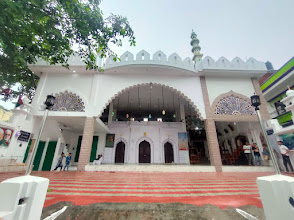
Azakhana Waliya, located in Mohalla Pachdara, Amroha, Uttar Pradesh, is a historic Shia Islamic congregation hall (imambargah) established in 1802 (1226 Hijri). It serves as a key site for Muharram observances and houses the oldest madrasa in Amroha, Noor Ul Madaris. The structure includes an adjacent mosque and spans over 1,000 square yards, reflecting early 19th-century Islamic architecture in the region.
Azakhana Waliya, also known as Azakhana Wazeer-un-Nisa or the Great Imambargah, stands as a significant Shia heritage site in the historic town of Amroha, Uttar Pradesh. Established in 1802 (1226 Hijri) by Musammat Wazir-un-Nisa, wife of Syed Kabir Raza (son of Muhammad Raza) and daughter of Syed Karim Raza (son of Syed Ali Raza), the azakhana was constructed as a memorial for her daughter. This period marked a time of cultural and religious flourishing under Mughal influences in the region, with Amroha serving as a center for Naqvi Sayyids who had settled there since the 12th century. The site was built in the Danishmandan area, a locality named after the Sufi saint Syed Hussain Sharaf-ud-din Shah Wilayat, reflecting the deep-rooted Shia traditions in Amroha. The azakhana functions primarily as a husseiniya, a hall dedicated to the mourning rituals of Muharram, commemorating the martyrdom of Imam Hussain at the Battle of Karbala. It hosts daily majlis (gatherings) at 4:00 PM during Muharram and 10:00 AM in Safar (from the 11th to 19th of Safar). Key events include the Tazia procession on the 10th of Muharram starting at 8:00 AM, which proceeds to the Karbala in Danishmandan near the railway station. Another Tazia procession occurs on the 20th of Safar at 8:00 AM, featuring the recitation of Amroha's specific marsiya (elegy) "Qaid se choot ke Jab Syed E Sajjad aae." The site is also the starting point for the Zanjeer ka Matam (chain self-flagellation) on the 8th of Muharram. Additionally, a Shab-e-Bedari (night vigil) is observed on the 14th of Safar, and majlis are held from the 18th to 21st of Ramzan. A notable relic is a white tasbih (prayer bead) displayed on the evening of the 10th Muharram, which is said to turn red in commemoration of Imam Hussain's martyrdom. Architecturally, the original structure from 1802 included an integrated mosque, emphasizing its role in both congregational prayers and Shia rituals. The current building was extensively rebuilt in 1946 by Syed Mehdi Raza Taqvi, a descendant in the lineage, preserving its historical essence while adapting to contemporary needs. The complex covers more than 1,000 square yards (gaz) and houses Noor Ul Madaris, Amroha's oldest madrasa, which continues to provide Islamic education. This madrasa underscores the azakhana's enduring contribution to religious scholarship in the community. Azakhana Waliya remains under the care of descendants of its founders, such as Syed Hadi Raza Taqvi, maintaining its status as a vital center for Shia observances in Amroha. Its location in Mohalla Pachdara, an area with early Naqvi settlements, highlights the site's integration into the town's Shia heritage, distinct from nearby Sunni mosques and Sufi shrines like Dargah Shah Wilayat. The azakhana exemplifies the architectural and cultural legacy of Shia Islam in northern India, focusing solely on mourning practices and education without broader unrelated historical narratives.
Year of Built: Not Available
Address: WF48+MQF, Mohalla Pachdara, 244221
Country: India
State: Uttar Pradesh
District: Amroha
Pincode: 244221
Longitude: 78.4650° E
Latitude: 28.9024° N