
Indo Islamic Heritage


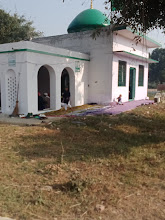
Molvi Barkatullah Sahab Mazar, located in Amroha, Uttar Pradesh, is a revered Islamic shrine dedicated to Maulana Barkatullah Bhopali (1854–1927), a prominent Indian Muslim scholar, revolutionary, and freedom fighter. Known for his role as Prime Minister of the first Provisional Government of India in exile (established in Kabul, Afghanistan, in 1915), the mazar serves as a site of spiritual reflection and historical significance, attracting visitors interested in India's independence struggle and Sufi traditions. The shrine emphasizes his scholarly contributions in languages like Urdu, Persian, and Arabic, and his advocacy for Pan-Islamic unity against colonial rule.
The Molvi Barkatullah Sahab Mazar stands as a poignant testament to the life and legacy of Maulana Barkatullah Bhopali, a key figure in India's freedom movement and Islamic scholarship. Born on July 7, 1854, in Itawra Mohalla, Bhopal (now Madhya Pradesh), Barkatullah was educated in Arabic, Persian, Urdu, and English at institutions like Sulaimaniya School in Bhopal. He later pursued advanced studies in Bombay and London, mastering seven languages including Turkish, German, and Japanese. Despite his humble origins, he excelled academically, becoming a professor of Urdu at Tokyo University in Japan and contributing to global discourse on Islamic thought and anti-colonialism. Barkatullah's revolutionary zeal led him to collaborate with figures like Lala Hardayal and Raja Mahendra Pratap. In 1913, he co-founded the Ghadar Party in San Francisco, aimed at mobilizing Indians abroad against British rule. His most notable achievement came on December 1, 1915, when he served as Prime Minister of the Provisional Government of India in Kabul, with Raja Mahendra Pratap as President and Maulana Ubaidullah Sindhi as Home Minister. This government-in-exile sought alliances with global powers like Germany, Turkey, and Afghanistan to overthrow British imperialism, reflecting Barkatullah's vision of Hindu-Muslim unity and Pan-Islamic solidarity. He traveled extensively, meeting leaders such as Kaiser Wilhelm II and Lenin, and authored works like Bolshevism and Islamic Nations, which explored synergies between socialist ideals and Islamic principles for liberating the oppressed. After his death on September 20, 1927, in San Francisco due to illness, his body was initially buried in Sacramento City Cemetery, California. In 1928, following repatriation efforts by his followers, his remains were brought to Amroha, Uttar Pradesh, where the mazar was constructed as a permanent shrine. Amroha, a historic town northwest of Moradabad near the Sot River, was chosen for its cultural and scholarly significance, aligning with Barkatullah's roots in northern India's Muslim intellectual circles. The mazar, situated in the Danishmandan area near the railway station, features a simple yet dignified structure typical of Islamic shrines, with a dome and prayer spaces that host annual commemorations of his urs (death anniversary). It draws pilgrims and historians, underscoring Barkatullah's role in fostering interfaith harmony and resistance against colonialism. In 1988, Bhopal University was renamed Barkatullah University in his honor, further cementing his contributions. The mazar remains a focal point for reflection on his scholarly translations of the Quran into Urdu and his advocacy for education and justice, embodying the enduring spirit of Islamic resistance in India's historical narrative.
Year of Built: Not Available
Address: WF99+998, Amroha, Uttar Pradesh 244221
Country: India
State: Uttar Pradesh
District: Amroha
Pincode: 244221
Longitude: 78.4650° E
Latitude: 28.9024° N