
Indo Islamic Heritage


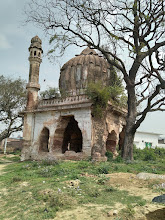
Maqbara Qutub Khan is a historical Islamic mausoleum (tomb) located in Katkui, a locality within Amroha city, Uttar Pradesh. It serves as the burial site of Qutub Khan, a notable figure from the Islamic historical period in the region. The structure reflects traditional Indo-Islamic architectural elements and stands as a lesser-known but significant heritage site associated with the area's Muslim history during the medieval era.
Maqbara Qutub Khan, situated in the Katkui area of Amroha, represents a poignant example of Islamic funerary architecture in northern India. Amroha, historically part of the broader Moradabad region under Mughal administration, has long been a center of Islamic cultural and religious significance, with influences dating back to the Delhi Sultanate and Mughal eras. The mausoleum is dedicated to Qutub Khan, whose identity ties into the lineage of local Muslim nobility or scholars during the transitional period of Islamic rule in Uttar Pradesh. Historical accounts of the region indicate that Amroha was governed by figures appointed under sultans like Behram Shah (1240-1242 AD), who placed Malik Jalaluddin as the local hakim, setting the stage for enduring Islamic structures like this tomb. Architecturally, the Maqbara embodies the simplicity and elegance characteristic of regional Indo-Islamic tombs from the medieval period. Constructed primarily from local materials such as brick and possibly red sandstone, it features a domed cenotaph typical of mausoleums built to honor revered individuals. The design likely includes arched entrances and Quranic inscriptions, common in such sites to invoke spiritual reverence, though specific details on ornamentation remain sparse due to limited preservation records. Unlike grander Mughal tombs like those in Delhi or Agra, Maqbara Qutub Khan maintains a modest scale, emphasizing its role as a local shrine rather than a monumental edifice. It is part of Amroha's cluster of Islamic heritage sites, which trace their origins to the 13th-17th centuries when the area was integrated into the Delhi Sultanate and later Mughal domains. The site's historical context is rooted in Amroha's evolution as a settlement. Originally known as Amar Jodh Nagar under ancient rulers like Raja Amarjodha (circa 474 BC), the region saw Rajput control until the 12th century, after which Islamic governance took hold. By the 13th century, under the Delhi Sultanate, Amroha became a key administrative post, with fortifications and religious structures emerging during the reigns of sultans who extended influence from Delhi. Qutub Khan's era aligns with this period of consolidation, where local leaders and scholars contributed to the spread of Islamic practices. The mausoleum, therefore, not only commemorates an individual but also symbolizes the enduring Muslim presence in the Doab region between the Ganga and Yamuna rivers. Today, Maqbara Qutub Khan remains a site of quiet reflection for the local Muslim community, though it is not as prominently maintained as major national monuments. Its location in Katkui, a residential locality near Amroha's central areas, makes it accessible yet understated, preserving its authenticity away from heavy tourism. Visitors interested in Uttar Pradesh's Islamic heritage can appreciate it as a testament to the region's layered history, where structures like this one quietly preserve narratives of faith, governance, and cultural synthesis from centuries past.
Year of Built: Not Available
Address: WF7F+FWP, Afghanaan, Katkui, Amroha, Uttar Pradesh 244221
Country: India
State: Uttar Pradesh
District: Amroha
Pincode: 244221
Longitude: 78.4675° E
Latitude: 28.9044° N