
Indo Islamic Heritage


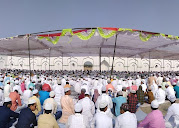
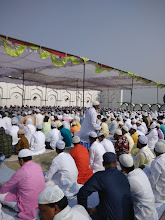
Eidgah Masjid in Akbarpur, Ambedkar Nagar, Uttar Pradesh, is a traditional open-air prayer ground primarily used for Eid al-Fitr and Eid al-Adha congregational prayers. It serves as a key religious site for the local Muslim community in this historic town, reflecting the Islamic architectural and cultural heritage of the Awadh region. The site embodies the simplicity of Eidgah structures, with an expansive open space for large gatherings and a basic mihrab for leading prayers.
Eidgah Masjid, located in the heart of Akbarpur—the administrative headquarters of Ambedkar Nagar district in Uttar Pradesh—stands as a vital Islamic landmark in the Awadh region. This Eidgah, or open-air mosque, is designed specifically for the performance of Eid prayers, aligning with the Sunnah tradition of conducting these special congregational salahs in expansive outdoor spaces away from regular mosques. The structure features a simple yet functional layout, including a large prayer ground capable of accommodating thousands of worshippers, a prominent mihrab (prayer niche) oriented towards the Qibla, and minimal built elements to emphasize communal unity during festivals. Unlike ornate urban mosques, Eidgahs like this one prioritize openness and accessibility, allowing for massive gatherings without the constraints of enclosed walls, which is essential for the two major Eids celebrated annually by Muslims. Historically, Akbarpur's Eidgah Masjid emerged during a period when Awadh was under the influence of the Nawabs of Awadh and later British colonial administration, a time when Islamic community infrastructure flourished alongside the region's agricultural and cultural developments. The town of Akbarpur itself traces its roots to ancient times, mentioned in the Ramayana as Shravan Kshetra, but the Eidgah represents the enduring Muslim presence in the area since the Mughal era. The site is situated along the banks of the Tamsa River (also known as Tons), which divides Akbarpur into residential and commercial zones, providing a serene riverside setting that enhances its role as a peaceful place of worship. Local Muslims from Akbarpur and surrounding villages converge here for Eid prayers, fostering a sense of brotherhood and religious observance in line with Islamic principles. The Eidgah's significance extends beyond prayers; it serves as a community hub during Eid celebrations, where families gather post-prayer for festivities, reinforcing social bonds in Ambedkar Nagar's diverse population. Architecturally, it adheres to the traditional Eidgah form prevalent in northern India—flat open maidan (field) with a low wall or platform for the imam, often without minarets or domes to maintain modesty and functionality. While specific records of its construction are sparse, such structures were typically built in the 18th-19th centuries under local patronage, possibly during the reign of Nawab Shuja-ud-Daula or his successors, who promoted Islamic sites across Awadh. Today, it remains an active site, maintained by the local Muslim community and waqf authorities, symbolizing the continuity of Islamic traditions in Uttar Pradesh's rural-urban landscape. Visitors to the area can appreciate its role in preserving cultural heritage, though it primarily functions as a place of worship rather than a tourist attraction.
Year of Built: Not Available
Address: 8P9P+HQ5, Ambedkar Nagar, Uttar Pradesh 224149
Country: India
State: Uttar Pradesh
District: Ambedkar Nagar
Pincode: 224149
Longitude: 82.5367° E
Latitude: 26.4304° N