
Indo Islamic Heritage


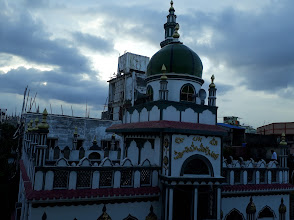
Lakhi Bibi Masjid, situated in Janbazar, Taltala, Kolkata, is a historic mosque with strong cultural and architectural significance. Known for its Mughal-era design, it reflects the synthesis of faith and artistry in Bengal’s Islamic heritage. The mosque is named after Lakhi Bibi, and it continues to serve as a place of prayer and community gathering for local residents. With its elegant domes, arched entrances, and distinct architectural detailing, the masjid preserves a centuries-old legacy. It stands as a spiritual and historical landmark in central Kolkata, drawing worshippers and visitors who seek both devotion and a glimpse into Bengal’s Islamic past.
The Lakhi Bibi Masjid, located at Imdad Ali Lane in the Janbazar area of Taltala, Kolkata, is a striking example of Bengal’s Islamic architectural legacy. Built during the late Mughal period, the mosque carries with it a sense of antiquity and reverence. The name itself, “Lakhi Bibi Masjid,” connects it to the memory of Lakhi Bibi, after whom the structure was named, suggesting a personal history and legacy interwoven into the mosque’s foundation. Architecturally, the mosque reflects the Mughal-Bengal style, characterized by simple yet elegant domes, minarets, and arches that remain distinct from other monumental Mughal structures found in North India. The use of traditional lime plaster, red bricks, and ornamental motifs speak of the craftsmanship of its time. Unlike the more grandiose mosques of Delhi or Agra, Lakhi Bibi Masjid is comparatively modest, yet its proportions and detailing highlight the aesthetic sensibilities of Bengal’s builders. The prayer hall is supported by multi-cusped arches and a mihrab (prayer niche) decorated with Islamic calligraphy and motifs, anchoring the faithful in their spiritual practice. The mosque’s location in Janbazar makes it particularly significant, as the area itself is steeped in history. During the colonial era, Janbazar was a thriving center of trade, culture, and settlement, and the Lakhi Bibi Masjid served as a spiritual hub for the growing Muslim community. Even today, the mosque plays a vital role in community life, hosting daily prayers, Friday congregations, and religious festivities such as Eid. The Lakhi Bibi Masjid also serves as a historical reminder of the pluralistic nature of Kolkata, where diverse religious communities have coexisted for centuries. It is nestled within a bustling locality where markets, residences, and schools surround the sacred space, blending seamlessly with daily life. The mosque is not just a monument of the past but a living institution, continuing its role as a spiritual sanctuary for worshippers. Beyond its spiritual function, the mosque also attracts heritage enthusiasts, architects, and researchers interested in Bengal’s Islamic past. Though not as widely documented as other historical mosques, it contributes richly to Kolkata’s religious and cultural topography. Its survival amidst rapid urbanization is a testament to the efforts of the local community to preserve its sanctity and historical value. The Lakhi Bibi Masjid is, therefore, more than just a religious structure—it is a cultural landmark that embodies the intersection of history, spirituality, and architecture. It continues to echo with prayers that have been offered across centuries, providing a sacred continuity that connects past generations to the present. In the broader narrative of Kolkata’s Islamic monuments, Lakhi Bibi Masjid stands as a subtle yet powerful reminder of the city’s layered heritage.
Year of Built: Not Known
Address: Imdad Ali Ln, Janbazar, Taltala, Kolkata, West Bengal, India
Country: India
State: West Bengal
District: Kolkata
Pincode: 700016
Longitude: 88.3644° E
Latitude: 22.5595° N