
Indo Islamic Heritage


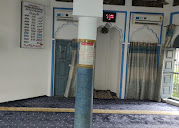
The Masjid Kurnditola, a modest local mosque nestled in the village of Kurnditola within Azamgarh district, Uttar Pradesh, stands as a serene place of worship for the local Muslim community. Reflecting the simple yet enduring architectural traditions of rural Islamic sites in eastern Uttar Pradesh, it serves as a focal point for daily prayers and community gatherings. Established as a neighborhood mosque, it embodies the historical Islamic heritage of the region, which traces its roots to the 17th-century founding of Azamgarh amid the broader Mughal influence in northern India.
Nestled in the verdant plains of eastern Uttar Pradesh, the Masjid Kurnditola represents a quintessential example of a local Islamic architectural gem in rural India, quietly preserving the spiritual and cultural legacy of the region's Muslim inhabitants. Azamgarh district, where the mosque is located, has a rich tapestry of Islamic history intertwined with the broader narrative of northern India's medieval and early modern eras. The district itself was founded in 1665 by Azam, son of Vikramajit, a descendant of Gautam Rajputs who embraced Islam, establishing it as a center of local governance and religious life under the shadow of Mughal authority. This historical context underscores the mosque's significance, as Kurnditola— a small village in the Azamgarh tehsil—emerged as part of the agrarian landscape that supported early Islamic communities in the area, particularly following the integration of the region into the Gorakhpur division during the late 18th century under East India Company rule. The Masjid Kurnditola, though not a grand imperial edifice like the Jama Masjid in nearby urban centers, exemplifies the understated elegance of vernacular mosque architecture prevalent in Purvanchal (eastern Uttar Pradesh). Constructed primarily from local materials such as brick and lime mortar, the structure features a simple rectangular prayer hall oriented towards the qibla (direction of Mecca), with a modest mihrab (niche indicating the prayer direction) and minbar (pulpit) that facilitate congregational prayers. Its design likely draws from the Indo-Islamic styles adapted to rural settings, characterized by flat roofs, arched doorways, and minimal ornamentation—elements that echo the practical adaptations seen in mosques built during the Nawabi period (18th-19th centuries) when local rulers and communities commissioned places of worship to serve dispersed populations. While exact blueprints or inscriptions are not widely documented due to its local status, the mosque's enduring presence suggests it has withstood the test of time, serving as a hub for Jumu'ah (Friday) prayers and religious education for generations of villagers. Historically, the mosque's establishment aligns with the expansion of Islamic practices in Azamgarh following the district's formal creation in 1832, when it was carved out from the larger Jaunpur and Ghazipur territories. During this era, as British colonial administration took hold, local mosques like Kurnditola became vital centers for community resilience amid socio-economic changes, including the shift from feudal land systems to revenue-based agriculture. The village of Kurnditola itself lies in a fertile belt along the tributaries of the Tons River, which has sustained agricultural communities since ancient times, with the area's Islamic roots possibly tracing back to Sufi influences or migrations from Awadh in the 18th century. Though specific events tied to the mosque—such as endowments or renovations—are not prominently recorded in historical archives, its role in fostering communal harmony and daily devotion mirrors that of other modest Islamic sites in Uttar Pradesh, contributing to the region's reputation as a cradle of sages and saints, as noted in official district gazetteers. Today, the Masjid Kurnditola continues to function as an active place of worship, accommodating the spiritual needs of Kurnditola's residents in a district where Islam has been a cornerstone of cultural identity since the 17th century.
Year of Built: Not Available
Address: 357M+R8R, kurnditola, Azamgarh, Uttar Pradesh 276001
Country: India
State: Uttar Pradesh
District: Azamgarh
Pincode: 276001
Longitude: 83.2000° E
Latitude: 26.0833° N