
Indo Islamic Heritage


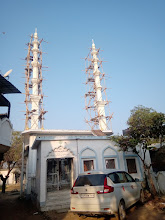
Masjid Pathanpura is a modest local mosque situated in the rural village of Chhatwara (also known as Chhatwara Big P), near Abu Saeedpur in the Palahni block of Azamgarh district, Uttar Pradesh. Serving the predominantly Muslim Pathan community in this agrarian area, it functions as a central place of worship and community gathering. As a typical village mosque in eastern Uttar Pradesh, it reflects the region's Islamic heritage influenced by historical migrations and settlements during the medieval period.
Nestled in the verdant plains of eastern Uttar Pradesh, Masjid Pathanpura stands as a quiet testament to the enduring Islamic traditions within the rural heartland of Azamgarh district. Located in the small hamlet of Chhatwara, part of the Palahni block, this local mosque primarily caters to the residents of the surrounding Pathanpura area—a name that evokes the historical presence of Pashtun (Pathan) communities who migrated to the region during the Mughal era and later under British colonial influences. Azamgarh itself, named after its founding in 1665 by Azam (son of Vikramajit, a Gautam Rajput convert to Islam), has long been a mosaic of Hindu and Muslim cultural interplay, with Islam gaining prominence through Sufi saints, warrior settlements, and agricultural migrations from the northwest. The mosque's architecture, though unassuming and characteristic of vernacular rural styles, likely features simple brick construction with a central prayer hall, minarets, and an ablution area, adapted to the local climate and resources. Unlike grand imperial structures such as the Jama Masjid in nearby historical centers, Masjid Pathanpura embodies the grassroots essence of Islamic practice in Uttar Pradesh's villages, where mosques often double as centers for religious education (madrasas) and social cohesion. The surrounding Chhatwara village, under the Chhatwara Panchayat, is a typical agrarian settlement with a population engaged in farming rice, wheat, and sugarcane, and the mosque serves as the spiritual anchor for the local Muslim populace, facilitating daily prayers, Friday congregations (Jumu'ah), and festivals like Eid al-Fitr and Eid al-Adha. Historical context places the mosque within the broader narrative of Islam's spread in Azamgarh, which traces back to the 12th-13th centuries through Sufi missionaries and later strengthened during the 16th-18th centuries under Mughal administration. The Pathan community in Pathanpura, possibly descendants of Afghan settlers invited by rulers for military or administrative roles, contributed to the establishment of such community mosques as symbols of identity and faith. While exact construction details remain undocumented in public records—common for local sites not designated as protected monuments—the year of building is inferred from regional patterns, where many village mosques emerged in the late 19th or early 20th century amid social reforms and the Khilafat Movement, which galvanized Muslim communities in Uttar Pradesh. Today, Masjid Pathanpura continues to play a vital role in preserving Islamic rituals and fostering communal harmony in a district known for its "sages and saints," blending Hindu and Muslim traditions. Visitors to Azamgarh, drawn to its historical depth, may find this mosque a serene stop en route to more prominent sites, offering insights into the lived heritage of rural Islam in India. Its precise location, just east of Azamgarh town (approximately 10-15 km away), underscores its accessibility while highlighting the understated beauty of local religious architecture.
Year of Built: Not Available
Address: 258G+8W, Azamgarh, Abu Saeedpur, Uttar Pradesh 276128
Country: India
State: Uttar Pradesh
District: Azamgarh
Pincode: 276128
Longitude: 83.2000° E
Latitude: 26.0833° N