
Indo Islamic Heritage


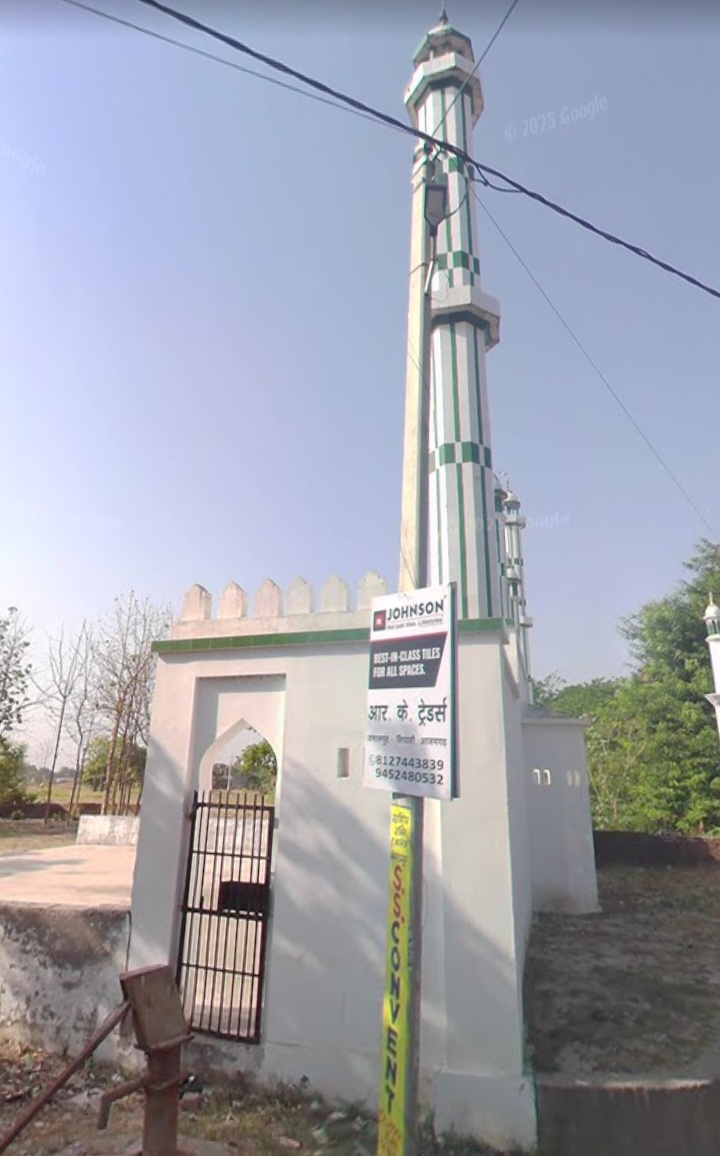
Eidgah Chhatwara is a modest yet significant open-air prayer ground and local mosque in the village of Chhatwara, near Chandeshwar in Azamgarh district, Uttar Pradesh. Serving as a central venue for Eid al-Fitr and Eid al-Adha congregational prayers, it reflects the enduring Islamic traditions in rural eastern Uttar Pradesh, fostering community unity in a region steeped in historical cultural synthesis.
Nestled in the verdant plains of Azamgarh district, Eidgah Chhatwara stands as a humble testament to the region's layered Islamic heritage, where ancient practices of communal worship intertwine with the agrarian rhythms of rural life. Located in the village of Chhatwara within the Palhni block, this local eidgah—distinct from grand urban mosques—embodies the simplicity and resilience of grassroots Islamic observance in Uttar Pradesh's Purvanchal heartland. As an open-air enclosure designed specifically for Eid prayers, it aligns with the traditional South Asian concept of an eidgah, a spacious ground reserved for large-scale congregational salat during the two major Islamic festivals, Eid al-Fitr marking the end of Ramadan and Eid al-Adha commemorating Prophet Ibrahim's devotion. Azamgarh's historical backdrop provides essential context for understanding Eidgah Chhatwara's cultural significance. The district, once part of the ancient Kosala kingdom during the time of the Buddha, evolved into a nexus of Hindu-Muslim syncretism under Mughal influence. Founded in 1665 by Azam, son of Vikramajit—a Gautam Rajput who embraced Islam—the town of Azamgarh became a hub for Islamic scholarship and architecture, with descendants like Azmat establishing nearby settlements such as Azmatgarh. This era of transition, marked by interfaith marriages and conversions, laid the groundwork for enduring Muslim communities in villages like Chhatwara and Chandeshwar. Though specific records of Eidgah Chhatwara's construction remain elusive in documented histories, such local eidgahs typically emerged in the 17th-18th centuries amid Mughal provincial expansions, serving as vital spaces for prayer in areas lacking elaborate masjids. The site's likely origins trace to this period, when open grounds were formalized with basic mihrabs (prayer niches) and qibla walls to accommodate growing Muslim populations in rural parganas. Architecturally unadorned yet functional, Eidgah Chhatwara features a raised platform typical of traditional eidgahs, enclosed by low brick walls oriented toward Mecca, with a simple arched mihrab for the imam. Unlike ornate urban counterparts such as Delhi's Jama Masjid, its design prioritizes communal accessibility over grandeur, allowing hundreds of villagers to gather under the open sky. This modesty underscores its role as a living heritage site: a place where generations have performed takbir recitations, offered sacrificial prayers, and shared iftar meals, reinforcing social bonds in a predominantly agricultural community. The surrounding landscape, with its fertile fields along the Tons River tributary, enhances the site's serene ambiance, evoking the Prophet Muhammad's emphasis on natural settings for worship. Today, Eidgah Chhatwara continues to pulse with spiritual vitality, drawing locals from Chhatwara and nearby Chandeshwar for dawn-to-midday Eid assemblies. It symbolizes the quiet persistence of Islamic practices in Uttar Pradesh's countryside, where such sites preserve oral histories of faith amid modern challenges. Visitors seeking a glimpse of authentic rural devotion will find in it not monumental splendor, but the profound simplicity of a community's unbroken thread to its past.
Year of Built: Not Available
Address: 258J+M53, Chandeshwar, Haidarabad Urf Chhawara, Azamgarh, Uttar Pradesh 276128
Country: India
State: Uttar Pradesh
District: Azamgarh
Pincode: 276128
Longitude: 26.0671° N
Latitude: 83.1838° E