
Indo Islamic Heritage


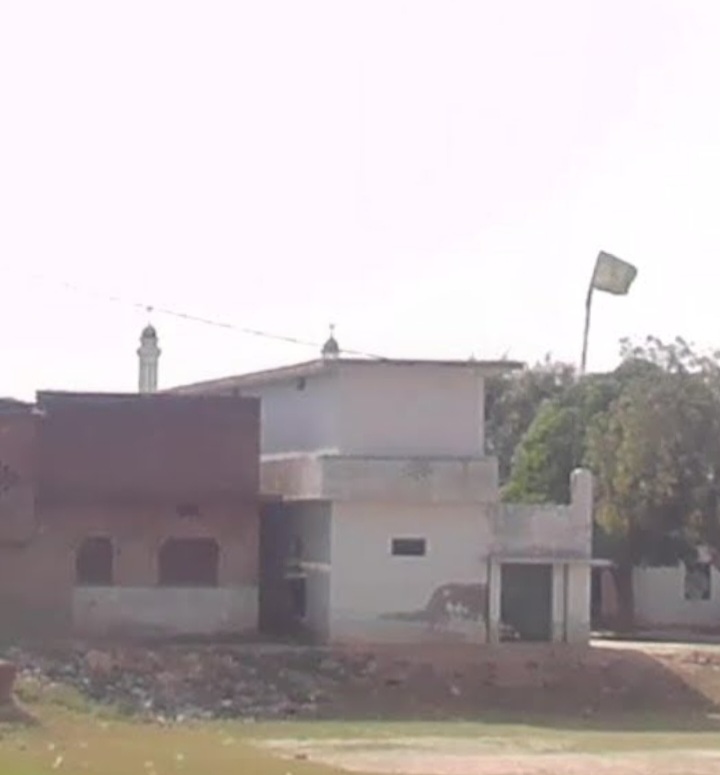
Jumma Masjid in Harbanshpur stands as a modest yet enduring symbol of Islamic faith in rural Uttar Pradesh, serving as the central congregational site for the local Muslim community in Azamgarh district. Built in the early 20th century, this simple Friday mosque reflects the understated architectural traditions of provincial India, with a focus on functionality and communal worship rather than grandeur. It hosts weekly Jumu'ah prayers and remains a vital spiritual hub for villagers, embodying the quiet resilience of local Islamic heritage amid the fertile Gangetic plains.
Nestled in the verdant landscapes of Harbanshpur, a small village in the Harbanshpur Block of Azamgarh district, Jumma Masjid emerges as a poignant testament to the deep-rooted Islamic traditions that have woven themselves into the fabric of eastern Uttar Pradesh. Azamgarh itself, named after its founding in 1665 by Azam—a descendant of Gautam Rajputs who embraced Islam—has long been a cradle for spiritual and cultural synthesis, where Hindu and Muslim communities coexist amid the lush fields of the Tons River basin. Within this context, Jumma Masjid, constructed in the early 20th century, represents the evolution of local mosque architecture from the opulent Mughal influences of earlier eras to more pragmatic, community-driven designs suited to rural life. The mosque's origins trace back to a period of relative stability in the region following the consolidation of British colonial administration in the late 19th and early 20th centuries, when local Muslim populations sought to establish enduring places of worship amid agrarian settlements. Though precise records of its founding are scarce—typical for modest provincial structures—its build likely dates to around 1900–1920, a time when Azamgarh saw incremental development in religious infrastructure to accommodate growing village populations. Funded and erected by local patrons and community efforts rather than imperial decree, the masjid was envisioned not as a monumental edifice but as a practical sanctuary for daily salat and the solemn Friday congregation, or Jumu'ah, which draws worshippers from surrounding hamlets. Architecturally, Jumma Masjid adheres to the unadorned vernacular style prevalent in rural Uttar Pradesh, eschewing the intricate domes, minarets, and red sandstone facades of grander Mughal counterparts like Delhi's Jama Masjid. Instead, it features a compact rectangular prayer hall constructed primarily from locally sourced bricks and lime mortar, with a flat or gently pitched roof supported by sturdy pillars. The mihrab—a niche indicating the direction of Mecca—serves as the focal point, often marked by subtle geometric motifs carved into the plaster, echoing the Islamic prohibition on figurative art while invoking a sense of serene devotion. A modest courtyard, enclosed by low walls, provides space for ablutions and overflow gatherings during peak prayer times, fostering an intimate atmosphere that contrasts with the vast enclosures of urban mosques. Though not a protected heritage site, its enduring form speaks to the adaptive ingenuity of local builders, who prioritized durability against the region's monsoon floods and seismic whispers over aesthetic extravagance. At its heart, Jumma Masjid pulsates with the rhythms of communal life. Every Friday, as the adhan echoes across the paddy fields, villagers in traditional attire converge for the Jumu'ah sermon and prayer, reinforcing bonds of faith and solidarity in a community where Islam has flourished since the 17th century. The mosque also hosts occasional Ramadan taraweeh prayers and Eid celebrations, transforming its humble confines into a beacon of joy and reflection. In an era of rapid modernization, this local gem preserves not just bricks and mortar but the intangible essence of Islamic continuity—the quiet recitation of the Quran under flickering lamps, the shared iftar meals in the courtyard, and the intergenerational transmission of spiritual values. Today, accessible via the narrow village lanes off the Azamgarh-Mau highway, Jumma Masjid invites reflection on the understated beauty of India's provincial Islamic heritage. It stands as a humble counterpoint to the district's more famed sites, reminding visitors that history in Azamgarh is as much about the everyday sanctuaries of the faithful as it is about royal legacies. For those tracing the threads of Muslim devotion in the heartland, this unassuming mosque offers a profound, if understated, chapter in the subcontinent's storied tapestry.
Year of Built: Not Available
Address: 25GJ+FG2, Harbanshpur, Sarai Sadi, Uttar Pradesh 276128
Country: India
State: Uttar Pradesh
District: Azamgarh
Pincode: 276128
Longitude: 83.25° E
Latitude: 26.15° N