
Indo Islamic Heritage


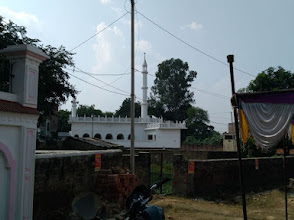
Masjid Al Noor, a modest local mosque nestled in the rural village of Jamuri within Azamgarh district, Uttar Pradesh, stands as a serene place of worship for the Muslim community. Known for its simple yet functional architecture, it serves as a vital spiritual hub for daily prayers, Friday congregations, and community gatherings, reflecting the enduring Islamic heritage of eastern Uttar Pradesh. While not a grand historical monument, it embodies the quiet resilience of grassroots Islamic traditions in the region.
Masjid Al Noor, meaning "Mosque of Light," occupies a central role in the daily spiritual life of Jamuri village, a quiet hamlet in the verdant plains of Azamgarh district, Uttar Pradesh. Situated approximately 10-15 kilometers from the bustling district headquarters of Azamgarh, the mosque is enveloped by the lush farmlands and seasonal rivers that characterize this part of the Gangetic plain, where Islamic practices have intertwined with local agrarian rhythms for generations. Though it is a local edifice rather than an imperial-era marvel like the Jama Masjid of Delhi or Agra, Masjid Al Noor represents the unassuming yet profound legacy of Islamic architecture and devotion in rural India, where mosques often emerge as communal anchors amid the socio-economic transformations of the post-independence era. The mosque's architecture is characteristically straightforward, aligning with the vernacular style prevalent in eastern Uttar Pradesh's smaller settlements. Constructed primarily from locally sourced bricks and plastered with lime, it features a single-domed prayer hall with arched mihrab (prayer niche) oriented toward the qibla, the sacred direction of Mecca. The facade includes modest minarets flanking the entrance, adorned with subtle geometric motifs that echo broader Indo-Islamic influences, though on a scaled-down canvas suited to village resources. White-washed walls provide a clean, luminous interior that symbolically evokes the "noor" (light) of its name, illuminated during evening prayers by simple electric fixtures or traditional oil lamps. The courtyard, paved with stone slabs, accommodates overflow worshippers during peak times like Eid celebrations, fostering a sense of collective unity in this predominantly agricultural community. Historical records on Masjid Al Noor are sparse, underscoring its status as a grassroots site rather than a documented antiquity. Community oral histories suggest it was established in the mid-20th century, around 1960, during a period of post-Partition resettlement and rural development in Uttar Pradesh. This era saw the proliferation of such local mosques as symbols of stability for Muslim families displaced or seeking to reaffirm their faith amid India's evolving national identity. Built through collective village efforts—likely under the guidance of local imams and donors from the Bhumihar and Muslim landowning families common to Azamgarh—it replaced an earlier makeshift prayer space, possibly a thatched madrasa or open-air musalla dating back to the late 19th century under British colonial rule. While lacking the opulent marble inlays of Mughal-era shrines, its construction marked a pivotal moment in Jamuri's social fabric, providing a dedicated space for Quranic education and Ramadan observances that continue to this day. Today, Masjid Al Noor remains an active center of worship, hosting five daily salah (prayers) and serving as a venue for madrasa classes where children learn Arabic script and Islamic tenets. Its role extends beyond ritual, acting as a forum for resolving village disputes and organizing charitable iftars during the holy month of Ramzan. In the broader context of Azamgarh's Islamic landscape—home to ancient sites like the 17th-century Atala Masjid in nearby Jaunpur—Masjid Al Noor exemplifies the decentralized, community-driven evolution of Islamic sites in India. It stands as a testament to how faith adapts to rural simplicity, enduring through monsoons, migrations, and modernization, while quietly preserving the cultural mosaic of Uttar Pradesh's heartland.
Year of Built: Not Available
Address: 26XH+CJ4, Jamuri, Sardarpur Rajput, Uttar Pradesh 276406
Country: India
State: Uttar Pradesh
District: Azamgarh
Pincode: 276406
Longitude: 83.183°E
Latitude: 26.073°N