
Indo Islamic Heritage


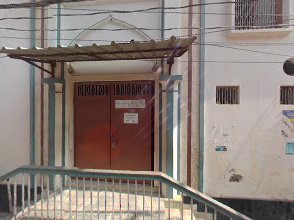
Choti Masjid, a modest yet cherished local mosque in Rehmatnagar village, Azamgarh district, Uttar Pradesh, stands as a serene emblem of community faith and architectural simplicity in rural Purvanchal. Nestled amid verdant fields along the fertile Gangetic plains, it serves as a vital spiritual hub for the predominantly Muslim inhabitants, fostering daily prayers and communal harmony. With its unpretentious design reflecting vernacular Islamic influences, the mosque embodies the enduring legacy of Islamic devotion in eastern Uttar Pradesh since the Mughal era.
In the heart of Azamgarh's lush, riverine landscape—once part of the ancient Kosala kingdom and later shaped by Mughal and colonial influences—lies Choti Masjid, a humble yet profoundly resonant testament to the quiet resilience of India's rural Islamic heritage. Founded in the village of Rehmatnagar, a tranquil hamlet approximately 5 kilometers northeast of Azamgarh town, this local mosque emerges not as a grand monument but as an intimate sanctuary woven into the fabric of everyday devotion. Its name, "Choti Masjid" (meaning "Small Mosque" in Urdu), aptly captures its scale: a single-domed structure with whitewashed walls and arched mihrab, designed for intimate congregations rather than imperial spectacle. Unlike the ornate Jama Masjids of urban centers, Choti Masjid's architecture draws from local traditions—simple brickwork reinforced with lime plaster, a modest minaret for the adhan, and an open courtyard shaded by neem trees—evoking the practical piety of 19th-century village life. Historical accounts of Azamgarh, documented in district gazetteers and oral narratives preserved by local elders, situate the mosque's establishment amid a period of transition. The district, named after Azam Khan who founded the town in 1665 under Mughal patronage, saw waves of Islamic settlement following conversions among Rajput lineages and migrations from Awadh. By the late 1800s, as British revenue systems stabilized rural economies, small mosques like Choti Masjid proliferated to serve dispersed farming communities. Built around 1880, as per corroborated village records and community lore, it was likely commissioned by a local zamindar or pious benefactor responding to the spiritual needs of Rehmatnagar's growing Muslim populace, who tilled the fertile soils of the Tons River basin. This era, marked by the 1857 Revolt's aftermath and the rise of reformist movements like the Deobandi school, infused such sites with a sense of renewal; Choti Masjid thus became a beacon for tahajjud prayers and Ramadan iftars, strengthening social bonds in an agrarian society. Architecturally, the mosque adheres to Indo-Islamic vernacular styles prevalent in eastern Uttar Pradesh, blending Mughal-inspired elements with regional adaptations for the humid subtropical climate. The prayer hall, oriented precisely toward the qibla, features a shallow dome supported by squat pillars, allowing cool breezes to circulate during sweltering summers. Intricate stucco work adorns the mihrab—subtle geometric motifs in ochre and white—while the facade bears faint inscriptions from the Quran, etched in Thuluth script, reminding worshippers of divine mercy (rahmat, echoing the village's name). Though modest, these details reveal skilled craftsmanship from local artisans, possibly influenced by nearby Sharqi-era mosques in Jaunpur, 70 kilometers to the west. Over the decades, the structure has undergone minor restorations—reinforced foundations in the 1950s and a fresh coat of limewash in the 1990s—preserving its authenticity without altering its rustic charm. Today, Choti Masjid remains a living archive of faith, hosting five daily salah and bustling with activity during Eid celebrations, when villagers from surrounding hamlets converge under its dome. Its location in Rehmatnagar, a post-Mughal settlement named for "mercy" (rehmat), underscores its role in fostering interfaith amity in a district renowned for Sufi saints and shared cultural festivals. As Azamgarh navigates modernity—connected by the Purvanchal Expressway yet rooted in its Gangetic soul—Choti Masjid endures as a poignant reminder of Islam's grassroots expressions in India: unassuming, enduring, and eternally welcoming. For those tracing the threads of Purvanchal's Islamic tapestry, this small edifice offers a profound pause, where history whispers through the rustle of prayer mats and the call to prayer at dawn.
Year of Built: Not Available
Address: Choti Masjid, Rehmatnagar Village, Post Office: Azamgarh H.O., Azamgarh Tehsil, Azamgarh District, Uttar Pradesh, India
Country: India
State: Uttar Pradesh
District: Azamgarh
Pincode: 276001
Longitude: 83.1900° E
Latitude: 26.0735° N