
Indo Islamic Heritage


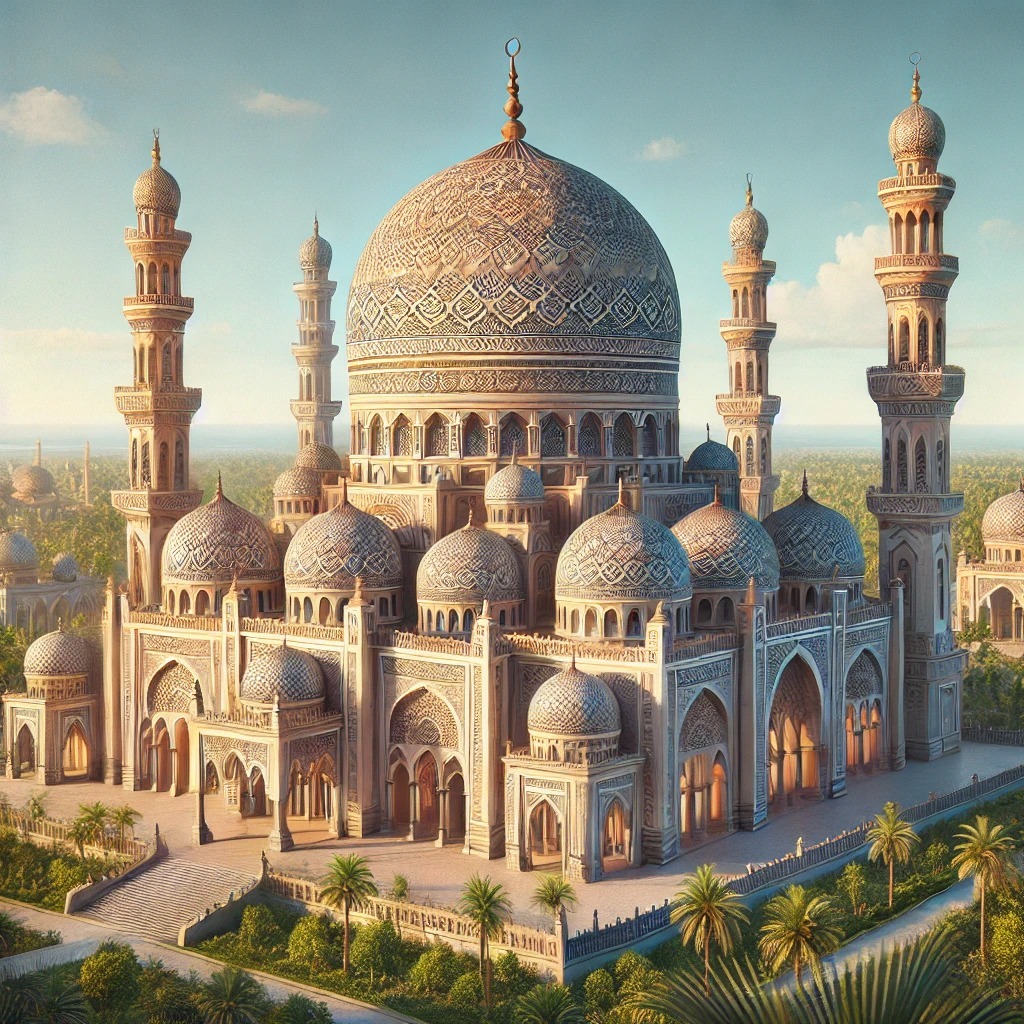
Nestled within the secure confines of the Police Lines in Marhaya, this modest yet enduring mosque stands as a quiet testament to the syncretic traditions of Islamic worship in colonial-era Uttar Pradesh. Constructed to serve the spiritual needs of Muslim personnel in the British Indian police establishment, it reflects simple Indo-Islamic architecture adapted to a functional public campus. With its unadorned prayer hall and serene courtyard, the Masjid Police Line Campus remains an active place of daily congregational prayers, embodying the resilience of local Muslim devotion amid Azamgarh's layered historical landscape.
The Masjid Police Line Campus in Marhaya, Azamgarh, emerges as a subtle yet significant chapter in the tapestry of Uttar Pradesh's Islamic heritage, particularly within the context of 19th-century colonial infrastructure. Azamgarh itself traces its origins to 1665, when it was founded by Azam Khan, son of Vikramajit—a descendant of Gautam Rajputs who had embraced Islam—marking the town's early integration into the Mughal cultural sphere. However, the mosque's story unfolds later, during the British consolidation of power in the region following the East India Company's acquisition of Azamgarh in 1801. As part of broader administrative reforms, police lines—self-contained compounds for law enforcement personnel—were established across northern India to maintain order in post-Mughal territories. These campuses often incorporated essential community facilities, including places of worship, to foster stability and accommodate the diverse religious needs of recruits drawn from local Muslim and Hindu populations. Erected around the mid-1850s, shortly after the formal organization of the United Provinces Police under British oversight, the mosque was purpose-built to serve the resident constables, officers, and their families stationed at the Marhaya Police Lines. This timing aligns with the post-Second Anglo-Maratha War era, when British authorities expanded policing infrastructure in eastern Uttar Pradesh to counter residual unrest from the declining Nawabi influences in nearby Awadh. Unlike the grand imperial mosques of the Mughal period—such as Delhi's Jama Masjid or Agra's own 17th-century counterpart—the Masjid Police Line Campus embodies a pragmatic, utilitarian aesthetic. Its structure features a rectangular prayer hall oriented toward the qibla (Mecca), constructed primarily from locally sourced brick and lime mortar, with minimal ornamentation to suit the compound's utilitarian ethos. The facade includes a modest arched mihrab (prayer niche) and shallow side iwans (vaulted halls), evoking subtle echoes of Indo-Islamic design while prioritizing functionality over grandeur. A small ablution pond adjoins the courtyard, facilitating wudu (ritual washing) in line with traditional Islamic practices, and the overall layout accommodates up to 200 worshippers during peak times like Jummah (Friday) prayers. What elevates this local mosque beyond its modest scale is its role as a living archive of Azamgarh's socio-religious continuity. The district, once part of the ancient Kosala kingdom and later a Mughal frontier zone, has long been a cradle of Islamic scholarship and devotion, with influences from Sufi saints and reformist movements shaping its spiritual fabric. The mosque's placement within the police campus underscores the British policy of religious accommodation to ensure loyalty among Muslim recruits, many of whom hailed from the surrounding Purvanchal heartland. Over the decades, it has witnessed the ebb and flow of India's turbulent history—from the 1857 Revolt, when Azamgarh became a hotbed of resistance led by figures like Maulvi Ahmadullah Shah, to the independence struggle and the post-Partition realignments that reinforced its role as a communal anchor. Today, maintained by the Uttar Pradesh Police Wakf Board, the mosque continues to host five daily salah (prayers), Ramadan taraweeh sessions, and Eid celebrations, drawing a congregation of serving officers, retirees, and nearby residents from Marhaya's mixed Hindu-Muslim neighborhoods. Architecturally, the site's simplicity belies its cultural resonance: the flat-roofed domelets over the mihrab, plastered in white lime for a clean, reflective surface, recall the understated elegance of provincial mosques built during the transition from Mughal to colonial rule. No elaborate minarets pierce the skyline here—practicality dictated low profiles in secure compounds—but the structure's enduring brickwork, weathered yet intact, speaks to the craftsmanship of local artisans who blended Persian-inspired arches with vernacular techniques. Restoration efforts in the late 20th century, overseen by district authorities, have preserved its original footprint while adding subtle modern reinforcements, ensuring it withstands Azamgarh's humid subtropical climate, characterized by heavy monsoons and temperatures exceeding 40°C in summer. In the broader narrative of India's historical Islamic sites, the Masjid Police Line Campus may lack the opulence of monuments like Bhopal's Taj-ul-Masajid or the antiquity of Assam's Panbari Mosque, but it holds a unique position as a bridge between eras. It symbolizes the everyday piety that sustained Muslim communities through colonial subjugation and nation-building, offering a serene respite amid the campus's administrative bustle. For visitors seeking an authentic glimpse into Azamgarh's understated Islamic legacy—away from tourist circuits—this mosque invites quiet reflection on faith's quiet persistence, its call to prayer echoing across the Tamsa River plains as it has for over 170 years.
Year of Built: Not Available
Address: 353M+CQ6, Marhaya, Azamgarh, Uttar Pradesh 276001
Country: India
State: Uttar Pradesh
District: Azamgarh
Pincode: 276001
Longitude: 83.1835° E
Latitude: 26.0537° N