
Indo Islamic Heritage


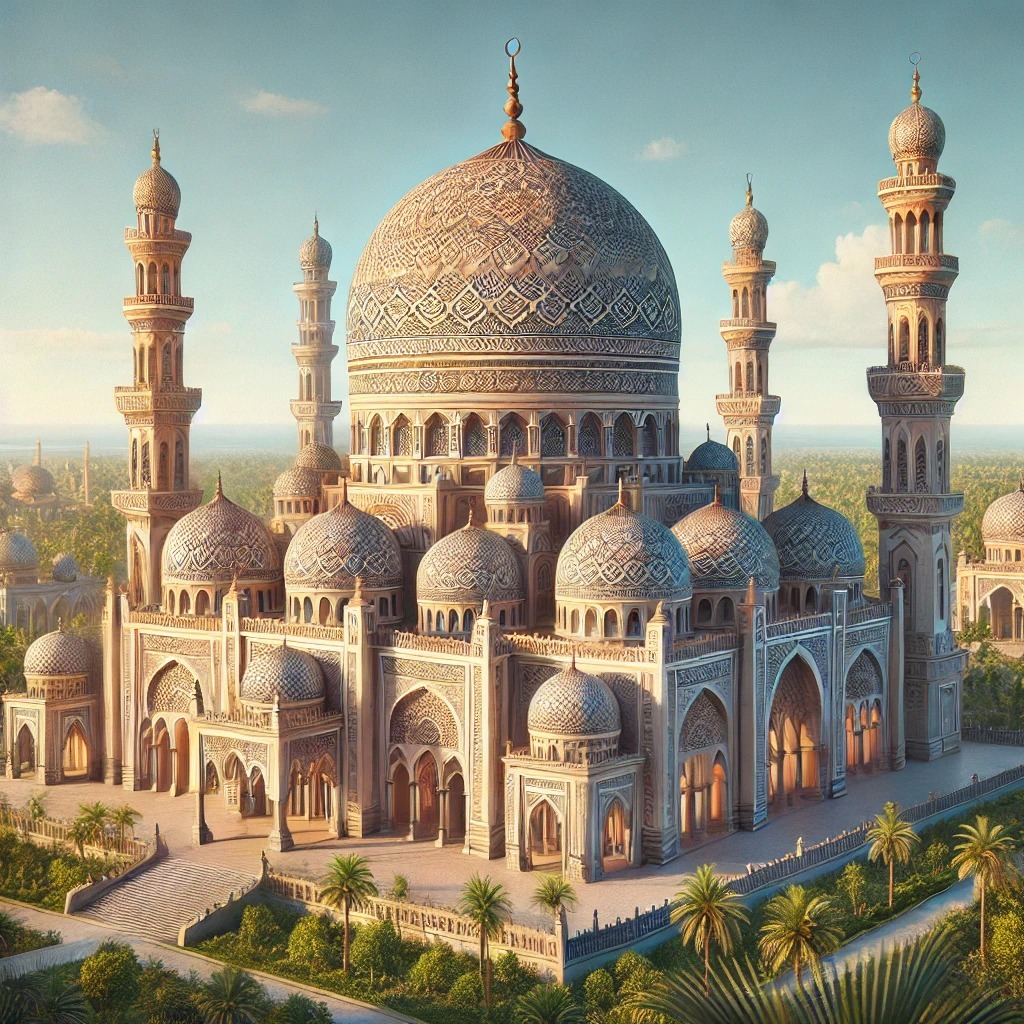
Eidgah Sidhari is a modest yet enduring open-air prayer ground and local mosque in the rural heart of Azamgarh, Uttar Pradesh. Serving as a vital community hub for Eid al-Fitr and Eid al-Adha congregational prayers, it reflects the simple, functional Islamic architecture typical of Awadh region's vernacular style. Nestled amid verdant fields along the Tamsa River, this site embodies the quiet spiritual legacy of Muslim communities in eastern Uttar Pradesh, drawing locals for solemn gatherings twice a year while standing as a subtle testament to the area's Mughal-influenced heritage.
In the fertile plains of eastern Uttar Pradesh, where the Tamsa River winds through ancient landscapes once part of the Kosala kingdom, lies Eidgah Sidhari—a humble yet historically resonant Islamic site in Sidhari village, Azamgarh district. Established amid the socio-cultural transformations of the Mughal era, this Eidgah exemplifies the unadorned yet purposeful design of South Asian prayer enclosures, crafted for communal worship rather than ornate display. Unlike the grand imperial mosques of Delhi or Lucknow, Eidgah Sidhari represents the grassroots evolution of Islamic practice in rural India, where faith intertwined with agrarian life and local governance. The site's origins trace back to the 17th century, contemporaneous with the founding of Azamgarh town in 1665 by Azam Khan, son of Vikramajit—a Gautam Rajput descendant who embraced Islam and received land grants from Mughal authorities. This period marked a surge in Islamic infrastructure across Awadh, as Muslim landowners and Sufi influencers fostered community spaces for religious observance. Though precise construction records remain elusive, the Eidgah's form aligns with Mughal provincial styles: an expansive rectangular courtyard, typically elevated 4-6 feet above the surrounding terrain for acoustic clarity during sermons, enclosed by sturdy brick walls on three sides, with the eastern facade open to the horizon. The western wall, facing Mecca, features a central mihrab—a recessed niche for the imam—adorned with a simple four-centered arch, a hallmark of Indo-Islamic engineering that ensured durability against monsoonal rains and seismic shifts common to the Gangetic plain. At its core, Eidgah Sidhari functions as a musalla, or open mosque, reserved primarily for the two Eids. On these auspicious mornings, hundreds from Sidhari and neighboring hamlets—Marhaya, Raidopur, and Katghar Sadar—gather at dawn, their footsteps echoing across the 148-by-137-foot enclosure (approximate dimensions based on regional Eidgah norms). The air fills with the resonant takbir chants and the fragrance of attar, as families in crisp attire reaffirm bonds of ummah (community) under the vast sky. Beyond these festivals, the site occasionally hosts Friday prayers or taraweeh during Ramadan, underscoring its role as a neighborhood masjid in a predominantly agrarian Muslim populace. Its modest minbar (pulpit), likely a stepped brick platform, facilitates imams in delivering khutbahs that weave Quranic wisdom with local ethos, emphasizing themes of gratitude and sacrifice resonant with the harvest cycles of Uttar Pradesh. Architecturally, the Eidgah's restraint speaks volumes about its historical context. Constructed from locally sourced bricks and lime mortar, it eschews the domes and minarets of urban counterparts, prioritizing functionality over opulence—a pragmatic choice in a region prone to flooding from the Tamsa. Subtle reinforcements, such as stilted arches and corner buttresses, hint at influences from nearby Mughal outposts like Jaunpur's Atala Masjid (c. 1400), adapted for rural resilience. Over centuries, the structure has weathered the 1857 Sepoy Mutiny—when Azamgarh's Rautara landowners, both Hindu and Muslim, rallied against British rule—and subsequent independence movements, silently witnessing the district's transition from pargana fiefdoms to modern tehsils. Eidgah Sidhari endures as a living archive of Azamgarh's syncretic heritage, where Islam's call harmonizes with the Bhojpuri folk rhythms of daily life.
Year of Built: Not Available
Address: 25XR+25M, Sidhari, Azamgarh, Uttar Pradesh 276001
Country: India
State: Uttar Pradesh
District: Azamgarh
Pincode: 276001
Longitude: 83.1877° E,
Latitude: 26.0449° N